More Prompts:

Best prompts for LIM for writing using technical reports using LIM

12 practical, copy-ready prompts for a Language/Instruction Model (LIM) to author, edit, and adapt technical reports. Each entry includes a concise instruction, a short explanation of intent, a realistic example input, and recommended AIs optimized for the task.


GPT-5
Claude Opus 4
Claude Sonnet 4
Gemini 2.5 Pro
Gemini 2.5 Flash
You've probably stared at a blank document, knowing you need to turn your brilliant technical work into a polished report but feeling completely stuck on where to start. Maybe you've wrestled with AI assistants that give you generic advice when you need specific, actionable help with methods sections, executive summaries, or compliance checklists. The frustration of having cutting-edge research trapped in messy notes while deadlines loom is all too real.
These 12 battle-tested prompts transform that struggle into streamlined success by giving you precise instructions for every part of technical report writing. From generating structured outlines and writing reproducible methods sections to creating stakeholder briefs and compliance mappings, each prompt delivers exactly what you need without the guesswork. Instead of spending hours figuring out how to communicate with your AI assistant, you'll have copy-ready prompts that turn your raw technical work into professional reports that impress reviewers, satisfy stakeholders, and get results.
1
Generate a structured technical report outline from a project brief
You are a technical report author. Given the project brief below, produce a structured outline with main sections, subsections, and 1-2 sentence notes on what to include in each subsection. Prioritize clarity, reproducibility, and traceability. Keep the outline suitable for a 10–20 page engineering report. Project brief: {PASTE_BRIEF_HERE}
Create a detailed, sectioned outline (headings and subheadings) tailored to the brief so the author can expand each section into a full report.
2
Write a concise executive summary from a full report
You are an experienced technical communicator. Given the report text or report excerpts below, write an executive summary of 300–500 words that includes objective, methods in one sentence, three major results with quantification, significance, and three prioritized recommendations. Use clear, non-technical phrasing suitable for senior stakeholders. Report excerpts: {PASTE_REPORT_TEXT_HERE}
Generate a 300–500 word executive summary highlighting objectives, key methods, principal results, significance, and top 3 recommendations.
3
Draft a reproducible Methods section with protocol and equipment list
You are writing the Methods section of a technical report. Using the input below, produce: (1) a short overview, (2) a numbered step-by-step protocol with parameters and tolerances, (3) a list of equipment with model and calibration frequency, and (4) any data-processing commands or pseudo-code necessary to reproduce results. Experiment description: {PASTE_EXPERIMENT_DESCRIPTION_HERE}
Produce a step-by-step Methods section including materials, equipment (with model numbers), calibration procedures, data acquisition settings, and pseudo-code or commands needed to reproduce experiments or analyses.
4
Compose a Results section that summarizes data, tables, and statistics
You are drafting the Results section. Given the numeric outputs, tables, and statistical test results below, write a Results section with descriptive text referencing tables/figures, include exact p-values or confidence intervals, and a brief plain-language interpretation of each result. Do not include discussion or recommendations. Raw outputs: {PASTE_TABLES_AND_STATS_HERE}
Transform raw results and statistical outputs into a well-structured Results section with clear references to figures/tables and concise interpretation of statistical tests.
5
Generate figure captions and plotting instructions from data
You are a report illustrator. Given the dataset description and the desired figure type, produce a concise, informative caption and a ready-to-run plotting snippet (matplotlib or ggplot2) that creates the figure as described. Include axis labels, units, recommended color palette, error bar instructions, and suggested file export settings. Dataset description: {PASTE_DATA_DESCRIPTION_HERE} Desired figure: {LINE/PARITY/BAR/HEATMAP}
Create publication-ready figure captions and explicit plotting commands (e.g., matplotlib or ggplot2) to produce recommended charts, axes, labels, and legend order.
6
Convert raw lab notes into a polished experimental report subsection
You are an editorial assistant. Transform the raw lab notes below into a 2–3 paragraph formatted subsection suitable for a technical report, keeping all measurements, timestamps, and key observations. Clarify vague entries (flagging assumptions), and present data consistently with units and uncertainties. Raw notes: {PASTE_LAB_NOTES_HERE}
Turn unstructured lab notes into a cohesive subsection with proper tense, clear measurements, timestamps, and numbered observations suitable for insertion into Methods or Results.
7
Produce prioritized technical recommendations with impact and cost estimates
You are an engineering advisor. Given the findings summary below, produce 3–5 prioritized technical recommendations. For each recommendation include: rationale, estimated performance improvement (percent or absolute), rough cost bracket (low/medium/high with example ranges), implementation complexity (low/med/high), and main risk or uncertainty. Findings summary: {PASTE_FINDINGS_SUMMARY_HERE}
From findings, produce 3–5 prioritized recommendations with expected performance impact, rough cost estimate brackets, implementation complexity, and key risks.
AI Flow Chat

Stop Losing Your AI Work

Tired of rewriting the same prompts, juggling ChatGPT and Claude in multiple tabs, and watching your best AI conversations disappear forever?

AI Flow Chat lets you save winning prompts to a reusable library, test all models in one workspace, and convert great chats into automated workflows that scale.
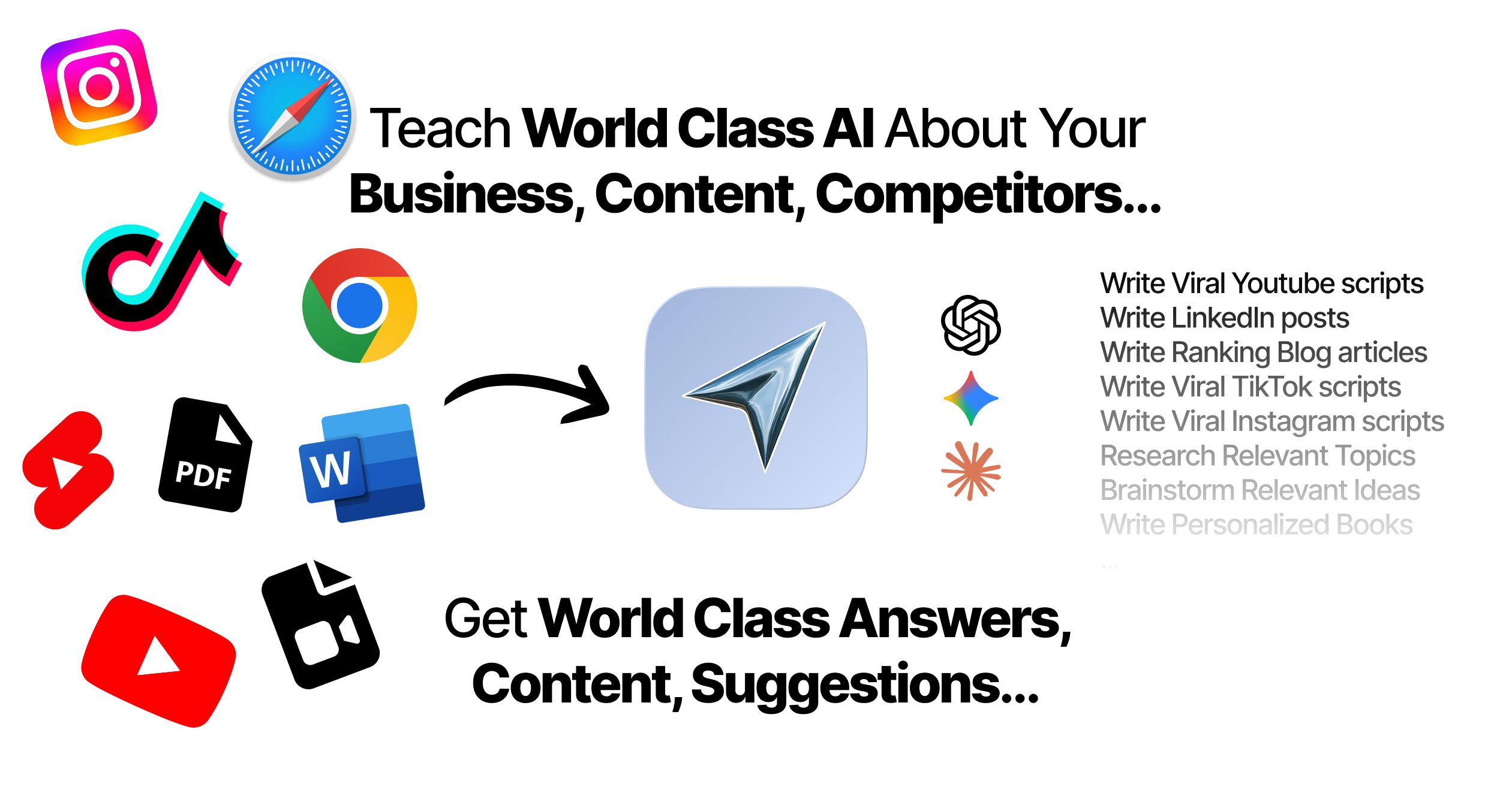

Teach World Class AI About Your Business, Content, Competitors… Get World Class Answers, Content, Suggestions...
AI Flow Chat powers our entire content strategy. We double down on what’s working, extract viral elements, and create stuff fast.
Video thumbnail

Reference Anything

Bring anything into context of AI and build content in seconds

YouTube

PDF

DOCX

TikTok

Web

Reels

Video Files

Twitter Videos

Facebook/Meta Ads

Tweets

Coming Soon

Audio Files

Coming Soon

Choose a plan to match your needs

Upgrade or cancel subscriptions anytime. All prices are in USD.

Basic

For normal daily use. Ideal for getting into AI automation and ideation.

$30/month
  • See what Basic gets you
  • 11,000 credits per month
  • Access to all AI models
  • 5 app schedules
  • Free optional onboarding call
  • 1,000 extra credits for $6
Get Started

No risk, cancel anytime.

ProRecommended

For power users with high-volume needs.

$100/month
  • See what Pro gets you
  • 33,000 credits per month
  • Access to all AI models
  • 10 app schedules
  • Remove AI Flow Chat branding from embedded apps
  • Free optional onboarding call
  • 2,000 extra credits for $6
Get Started

No risk, cancel anytime.

Frequently Asked Questions

Everything you need to know about AI Flow Chat. Still have questions? Contact us.