More Prompts:

Best prompts for LIM for writing using creative storytelling

13 copy-ready, practical prompts designed to use LIM (Language-Image/Interactive Model) techniques to generate, refine, and visualize creative storytelling across genres and formats. Each prompt is concise, specific, and includes a realistic example output you can use immediately.


Claude Opus 4
GPT-5
Claude Sonnet 4
Gemini 2.5 Pro
Gemini 2.5 Flash
You've spent hours crafting what you thought was a brilliant story prompt for AI, only to get back generic, flat responses that feel like they came from a creative writing textbook. The frustration is real when you know there's a goldmine of storytelling potential locked away in these language models, but you can't seem to find the right key to unlock it.
These 13 battle-tested prompts transform your AI from a hesitant writing assistant into a creative powerhouse that generates vivid, multi-layered stories with built-in visual elements. From magical realism anchored in sensory details to interactive story branches with color-coded perspectives, each prompt is designed to extract the kind of rich, imaginative content that actually sparks your creativity instead of stifling it. You'll go from wrestling with bland AI outputs to having a reliable system that consistently delivers story elements so vivid and engaging that they practically illustrate themselves.
1
Magical-Realism Short Story with Sensory Anchors
Write a 900–1,200 word magical-realism short story set on an urban commuter train. Use a first-person unreliable narrator who collects lost objects. Include three LIM-style sensory anchors (a metallic taste, a cotton-smoke scent, and the feeling of a ripple under the skin) woven into metaphors. End on an ambiguous but emotionally resonant note. Keep prose lyrical, with 2–3 sentences per paragraph.
Generate a short story in contemporary magical realism that uses LIM-style visual and sensory anchors to ground fantastical events. Specify narrator voice, length, and three vivid tactile/metaphor anchors.
2
Four-Act YA Sci-Fi Serial Outline
Create a four-episode YA sci-fi serial outline (900–1,000 words total). For each episode give: logline, three major beats, a LIM visual anchor for the episode's climactic scene (concise: 7–12 words), and the episode's emotional arc. Keep language direct and usable for a writers' room.
Produce a clear serial outline for four episodes. Use LIM imagery suggestions for each episode to help visualize key scenes and emotional beats.
3
Character Deep-Dive with Imageable Traits
Create a 300–400 word deep-dive for a protagonist: name, age, occupation, core conflict, three visual motifs LIM should emphasize (short phrases), three sensory habits (sound, scent, touch), three contradictory desires. Provide a one-sentence low-stakes scene to reveal the character's habit.
Build a three-dimensional character with physical, sensory, and visual details that LIM can convert into concept art or moodboards.
4
Rewrite for Tone and Visual Density
Rewrite the following paragraph in a moody, cinematic tone and increase visual density using LIM prompts: "He walked through the market and felt uneasy." Produce two versions: Version A (moody, slow-building) and Version B (urgent, staccato). Add three image captions LIM can use to illustrate the scene.
Take an existing paragraph and rewrite it with a specified tone and increased visual detail suited for LIM-driven illustrative work.
5
Dialogue-Only Scene with Subtext
Write a 500–600 word dialogue-only scene between two estranged siblings meeting in a flooded bookstore. Include five parenthetical LIM cues (no longer than 8 words each) that imply visuals or sound (e.g., (rain freckles the window)). Keep subtext clear: one sibling holds a secret.
Write a scene composed only of dialogue. Use stage-direction-like LIM cues that imply visuals and subtext without breaking the format.
6
Microfiction with Constraints
Write three microfiction pieces, each exactly 100 words, on the theme of "small betrayals." For each, include one LIM color anchor (single color word) and one LIM texture anchor (two-word phrase). Keep voice distinct across the three pieces.
Produce ultra-short fiction with tight constraints to spur creativity and precise imagery for LIM outputs.
7
Scene-by-Scene Emotional Arc Map
Given the one-sentence premise: "An amateur cartographer redraws a town to hide a lost lake," produce a 10-scene map. For each scene give: scene goal, protagonist emotion (single word), obstacle, and a 6–10 word LIM visual cue to inspire illustrations.
Turn a draft premise into a scene list with precise emotional goals and imageable LIM cues for each scene.
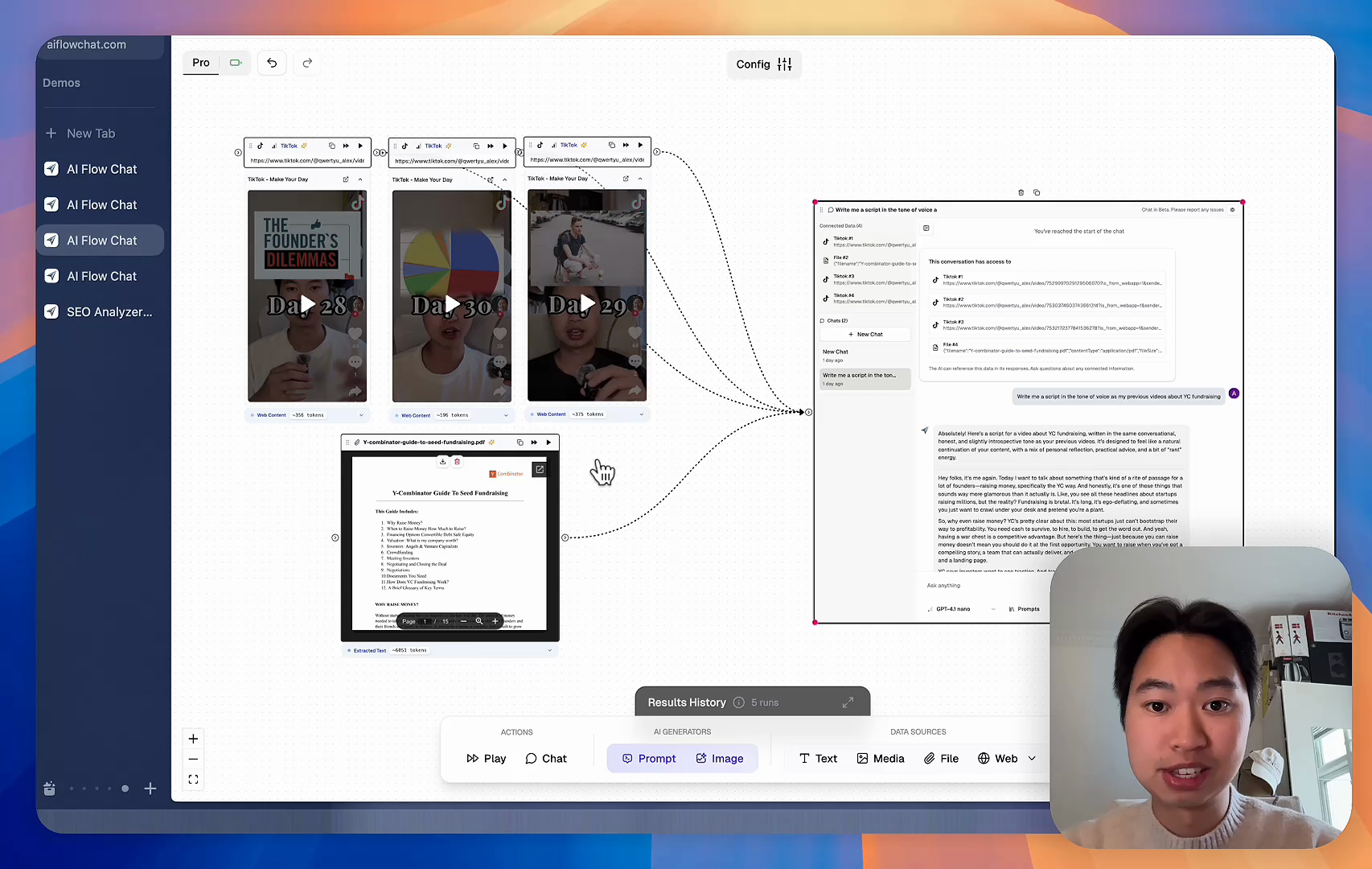
AI Flow Chat

Stop Losing Your AI Work

Tired of rewriting the same prompts, juggling ChatGPT and Claude in multiple tabs, and watching your best AI conversations disappear forever?

AI Flow Chat lets you save winning prompts to a reusable library, test all models in one workspace, and convert great chats into automated workflows that scale.
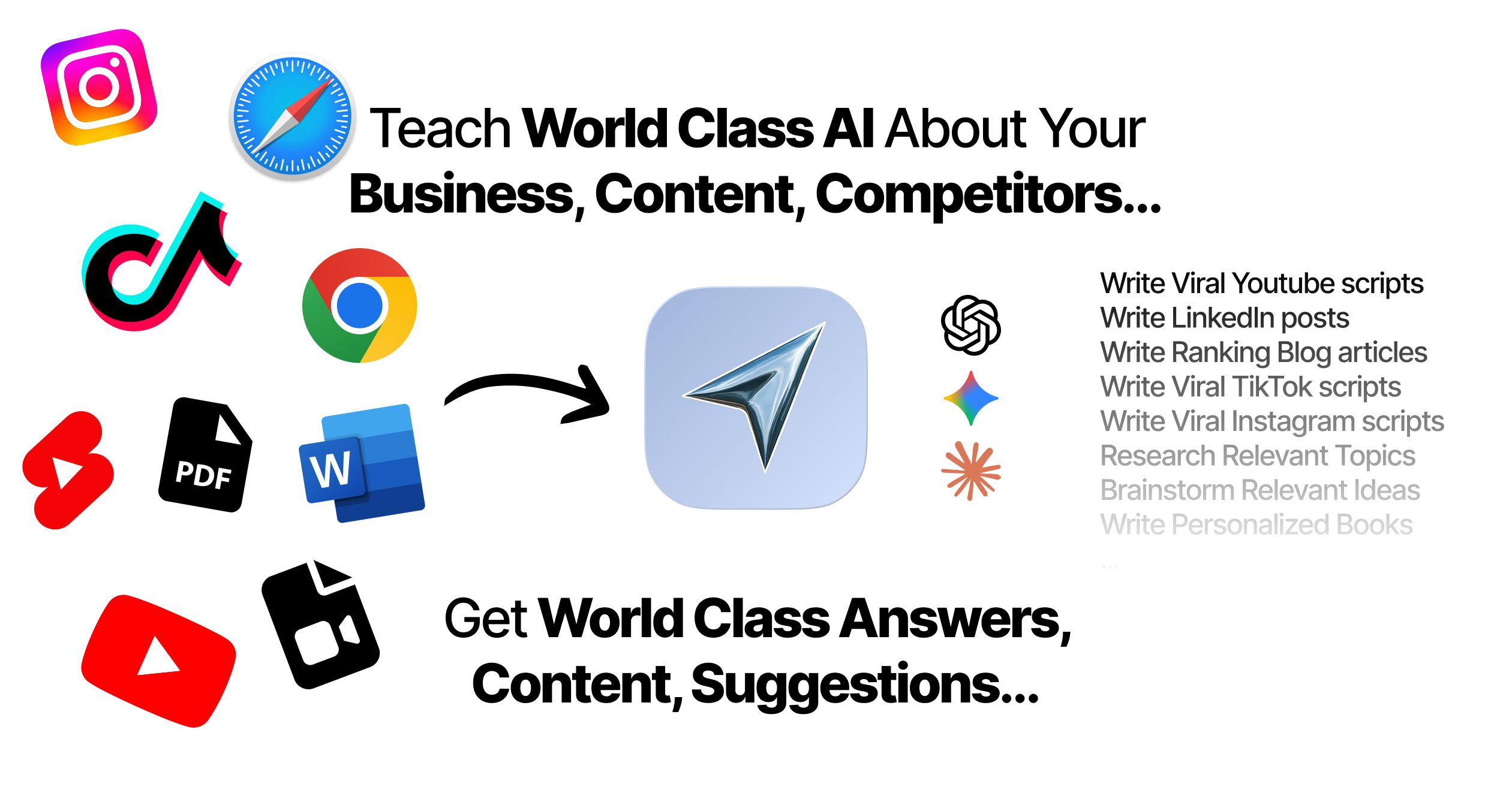
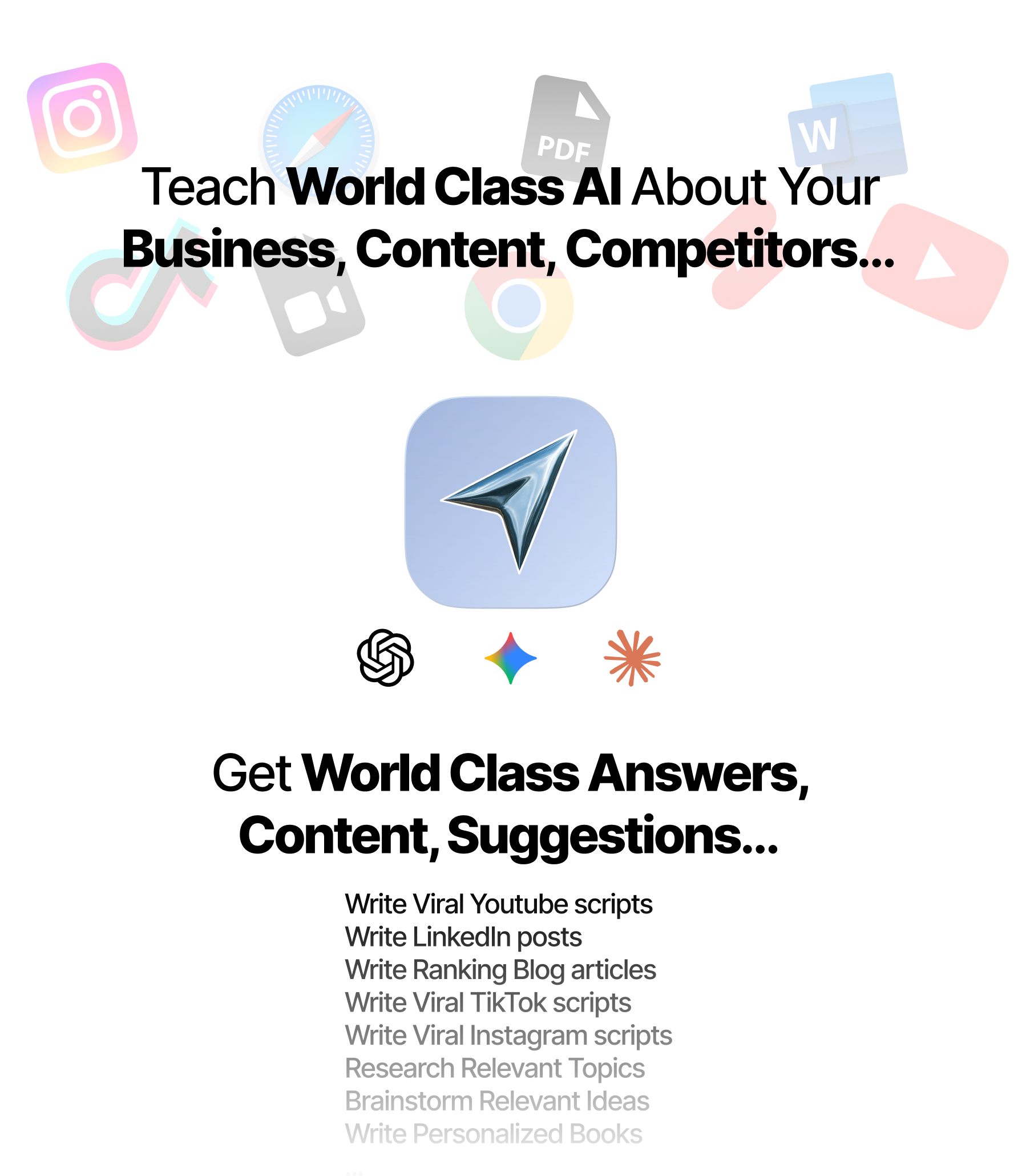
Teach World Class AI About Your Business, Content, Competitors… Get World Class Answers, Content, Suggestions...
AI Flow Chat powers our entire content strategy. We double down on what’s working, extract viral elements, and create stuff fast.
Video thumbnail

Reference Anything

Bring anything into context of AI and build content in seconds

YouTube

PDF

DOCX

TikTok

Web

Reels

Video Files

Twitter Videos

Facebook/Meta Ads

Tweets

Coming Soon

Audio Files

Coming Soon

Choose a plan to match your needs

Upgrade or cancel subscriptions anytime. All prices are in USD.

Basic

For normal daily use. Ideal for getting into AI automation and ideation.

$30/month
  • See what Basic gets you
  • 11,000 credits per month
  • Access to all AI models
  • 5 app schedules
  • Free optional onboarding call
  • 1,000 extra credits for $6
Get Started

No risk, cancel anytime.

ProRecommended

For power users with high-volume needs.

$100/month
  • See what Pro gets you
  • 33,000 credits per month
  • Access to all AI models
  • 10 app schedules
  • Remove AI Flow Chat branding from embedded apps
  • Free optional onboarding call
  • 2,000 extra credits for $6
Get Started

No risk, cancel anytime.

Frequently Asked Questions

Everything you need to know about AI Flow Chat. Still have questions? Contact us.