More Prompts:

Best LIM Prompts for Writing Academic Essays

Thirteen copy-ready prompts that apply the LIM (List, Integrate, Modify) method to each stage of composing academic essays: enumerate goals and sources, integrate evidence into argument, and iteratively modify for clarity, structure, and citation accuracy.


Claude Opus 4
GPT-5
Claude Sonnet 4
Gemini 2.5 Pro
Gemini 2.5 Flash
You've been there before: staring at a blank document at 2 AM, knowing exactly what you want to argue but having no clue how to structure it academically. The cursor blinks mockingly as you wonder if there's a systematic way to transform your scattered research into a polished essay that actually makes sense. What if I told you there's a method that breaks down every stage of academic writing into clear, actionable steps?
These 13 LIM prompts transform academic writing from overwhelming chaos into a manageable process by applying the List, Integrate, Modify framework to every stage of essay composition. From crafting laser-focused thesis statements to generating perfect citations, each prompt guides you through specific tasks like building evidence-rich outlines, synthesizing literature reviews, and responding to peer feedback with confidence. Instead of drowning in research and struggling with structure, you'll have a clear roadmap that turns your ideas into compelling academic arguments that professors actually want to read.
1
LIM Thesis & Research Goals
Using the LIM method (List, Integrate, Modify), do the following for an academic essay: 1) List up to 8 focused research goals and subquestions for the topic: "{{topic}}"; 2) Propose 3 alternative thesis statements ranked by specificity and testability; 3) Integrate brief evidence lines (1-2 sentences) that would support the top thesis; 4) Modify the top thesis to a final sentence suitable for a 1200–1500 word essay. Output labeled sections: Research Goals, Alternate Theses, Evidence Integration, Final Thesis.
Produce a precise thesis and a prioritized research goal list using LIM's first step (List), then refine the thesis (Modify).
2
LIM Structured Outline with Evidence Slots
Apply LIM: 1) List a logical 5–7 section outline for an academic essay on "{{topic}}" aimed at {{audience}}; for each section include 2 evidence slots that name the type of source required (e.g., longitudinal study, government report) and a 1-line explanation of how that evidence will support the argument; 2) Integrate citations placeholders in APA format (Author, Year) where appropriate; 3) Modify section headings to be concise and analytical (avoid generic labels). Return the final outline with Evidence Slot and Citation fields under each heading.
Generate a hierarchical outline with dedicated slots for evidence and citations, then refine headings for clarity.
3
LIM Literature-Review Synthesis
Using LIM, produce a concise literature-review synthesis for the topic "{{topic}}" and research question "{{research_question}}": 1) List 6–8 recurring themes or findings in the literature with 1-line source tags (Author, Year); 2) Integrate these themes into two coherent paragraphs that contrast major perspectives and note gaps; 3) Modify language to emphasize how the gap justifies the present essay. Ensure citation placeholders (Author, Year) are included inline.
List key themes, integrate citations into synthesized paragraphs, and modify for argumentative flow.
4
LIM Evidence Integration for Paragraphs
Follow LIM to write one body paragraph for an essay with thesis "{{thesis}}": 1) List the single claim the paragraph will make and the citation(s) to use (Author, Year); 2) Integrate the citation(s) into a 100–150 word paragraph that summarizes the evidence and connects it directly to the claim; 3) Modify the paragraph to remove passive language and strengthen the claim's link to the thesis. Output Claim, Draft Paragraph, and Revised Paragraph.
Draft a body paragraph that integrates a specific citation and explains its relevance, then refine wording for clarity and academic tone.
5
LIM Counterargument and Rebuttal
Using LIM, for thesis "{{thesis}}": 1) List 4 credible counterarguments or limitations; 2) Integrate at least one empirical source or logical rationale to rebut each counterargument (cite Author, Year); 3) Modify each rebuttal into a single 2–3 sentence paragraph suitable for inclusion in the essay. Return labeled Counterargument and Rebuttal pairs.
List plausible counterarguments, integrate evidence-based responses, and modify the rebuttal to be concise and academically persuasive.
6
LIM Abstract and Keywords
Apply LIM to write a 150–200 word abstract for an essay on "{{topic}}" with research question "{{research_question}}" and findings summary "{{findings_summary}}": 1) List Purpose, Methods, Results, Conclusion bullets; 2) Integrate those bullets into a coherent abstract using academic tone and inline key metrics; 3) Modify to 150–200 words and return 5 keywords. Provide Final Abstract and Keywords.
Create a concise academic abstract by listing the study elements, integrating results and significance, and modifying for journal-style length and tone.
7
LIM Citation Accuracy & Formatting Check
Using LIM, check citation consistency for this draft: "{{draft_text}}" and provided References list: {{references_array}}. 1) List every in-text citation found and map it to the matching reference entry; 2) Integrate notes on mismatches, missing years, or author-name differences; 3) Modify the References list to APA 7th edition formatting (or specify style "{{citation_style}}") and return the corrected References and a short change log.
List every citation in a draft, integrate cross-checks against given reference details, and modify citation entries into consistent APA (or chosen) format.
AI Flow Chat

Stop Losing Your AI Work

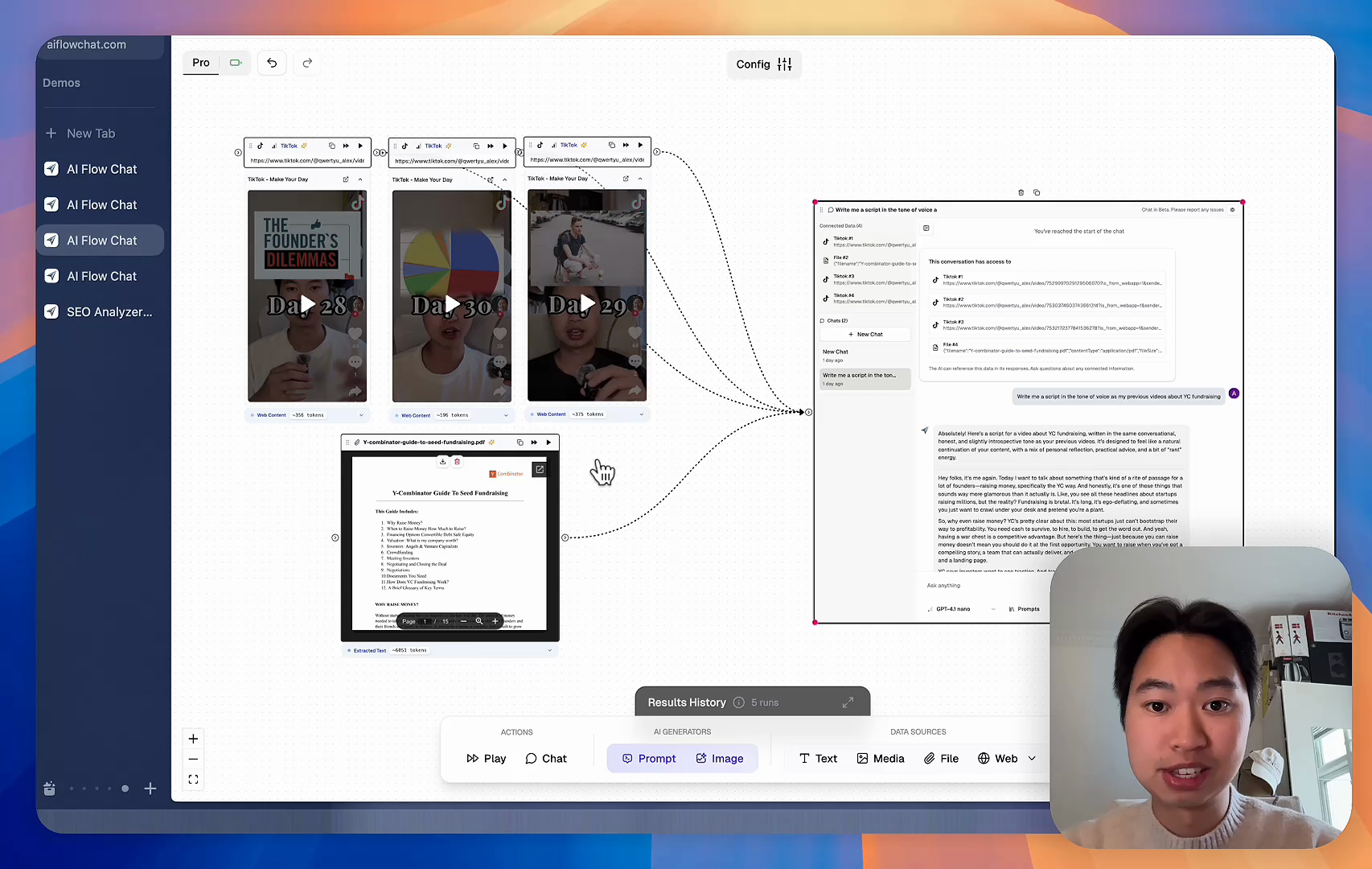
Tired of rewriting the same prompts, juggling ChatGPT and Claude in multiple tabs, and watching your best AI conversations disappear forever?

AI Flow Chat lets you save winning prompts to a reusable library, test all models in one workspace, and convert great chats into automated workflows that scale.
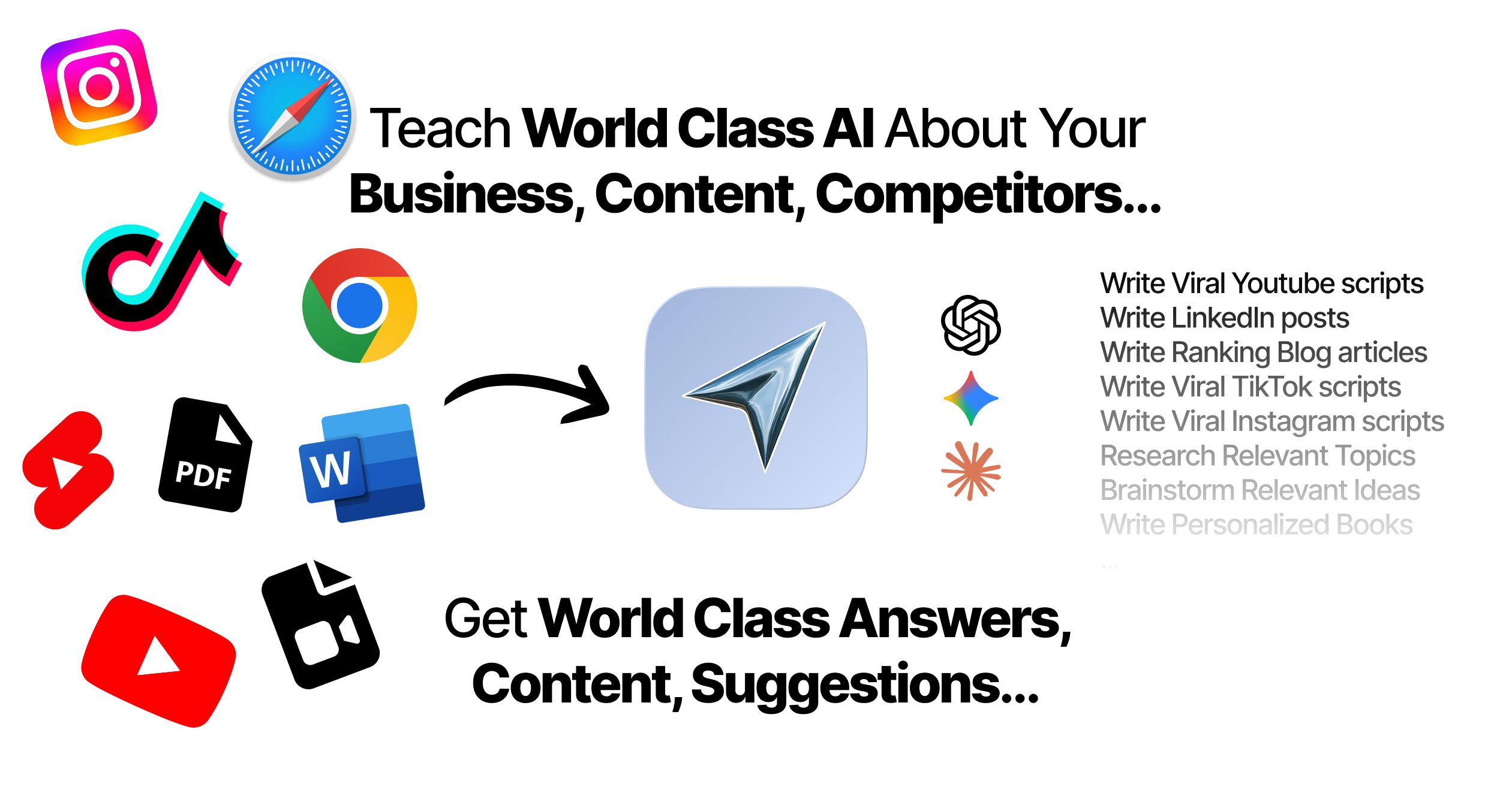

Teach World Class AI About Your Business, Content, Competitors… Get World Class Answers, Content, Suggestions...
AI Flow Chat powers our entire content strategy. We double down on what’s working, extract viral elements, and create stuff fast.
Video thumbnail

Reference Anything

Bring anything into context of AI and build content in seconds

YouTube

PDF

DOCX

TikTok

Web

Reels

Video Files

Twitter Videos

Facebook/Meta Ads

Tweets

Coming Soon

Audio Files

Coming Soon

Choose a plan to match your needs

Upgrade or cancel subscriptions anytime. All prices are in USD.

Basic

For normal daily use. Ideal for getting into AI automation and ideation.

$30/month
  • See what Basic gets you
  • 11,000 credits per month
  • Access to all AI models
  • 5 app schedules
  • Free optional onboarding call
  • 1,000 extra credits for $6
Get Started

No risk, cancel anytime.

ProRecommended

For power users with high-volume needs.

$100/month
  • See what Pro gets you
  • 33,000 credits per month
  • Access to all AI models
  • 10 app schedules
  • Remove AI Flow Chat branding from embedded apps
  • Free optional onboarding call
  • 2,000 extra credits for $6
Get Started

No risk, cancel anytime.

Frequently Asked Questions

Everything you need to know about AI Flow Chat. Still have questions? Contact us.