More Prompts:

Best prompts for LIM using educational tools using LIM

12 practical, copy-ready prompts for using a Large Interactive Model (LIM) to design, adapt, assess, and analyze K–12 educational experiences. Each prompt is specific, includes expected outputs, and an example you can paste and run immediately.


GPT-5
Claude Opus 4
Gemini 2.5 Pro
Claude Sonnet 4
Gemini 2.5 Flash
You've spent hours crafting the "perfect" AI prompt for your lesson planning, only to get a generic response that feels like it was written for any classroom, anywhere. Sound familiar? We've all been there, staring at our screens wondering why AI keeps missing the mark when we need practical, ready-to-use educational content that actually works in our real classrooms.
These 12 battle-tested prompts transform your AI from a vague assistant into your personal curriculum design partner. Each prompt is engineered to deliver specific, classroom-ready outputs like differentiated lesson plans, adaptive quizzes, accessibility conversions, and grading workflows that you can literally copy, paste, and use immediately. Instead of wrestling with generic responses, you'll get targeted solutions that solve your daily teaching challenges and save you precious planning time.
1
Differentiated one-page lesson plan
Create a one-page 45-minute differentiated lesson plan for {topic} for {grade} aligned to {standardReference}. Include: lesson objective (student-facing), materials, 10-minute hook, direct instruction (10 min), three tiered activities (low/medium/high) with success criteria, formative assessment (exit ticket, 3 questions), technology integration, and specific accommodations for ELL and IEP students. Return in a one-page layout ready to print.
Generate a 45-minute differentiated lesson plan with clear objectives, timeline, three tiered activities (low/medium/high), formative assessment, and accommodations for ELL and IEP students. Output a one-page printable format.
2
Interactive formative quiz with distractor rationales
Create an 8-question multiple-choice formative quiz for {topic} at {grade} level. For each question include: question text, 4 answer choices (A–D), correct answer, one-sentence rationale for why each incorrect distractor is wrong, difficulty label (easy/medium/hard). Provide a 3-point auto-grading rubric and export-ready CSV rows with columns: QuestionID, QuestionText, ChoiceA, ChoiceB, ChoiceC, ChoiceD, CorrectChoice, Difficulty, RationaleCorrect, RationaleA, RationaleB, RationaleC, RationaleD.
Produce a short formative quiz with answer keys and rationales for each distractor, difficulty labels, auto-grading rubric, and an LMS-importable CSV format.
3
Standards-aligned rubric generator
Create a 4-level analytic rubric for assessing {assignmentType} on {topic} for {grade}. Align descriptions to {standardReference}. For each criterion (content accuracy, reasoning/analysis, organization, use of evidence), provide level descriptors for 4 = Exceeds, 3 = Meets, 2 = Approaching, 1 = Beginning, and give one concrete example of evidence a student would provide for each level. Also include a total-point conversion table.
Generate a clear rubric aligned to specified learning objectives and standards with performance descriptors and example evidence for each level.
4
Adaptive practice sequence with branching rules
Design a 6-step adaptive practice sequence for {skill} for {grade}. For each step include: activity description, expected student output, hint scaffolds (2 levels), time estimate, and a branching rule: if student scores >= {masteryThreshold}% proceed to step X, else go to remediation step Y. Provide suggested remediation tasks and how to log results to the LMS.
Produce a short adaptive practice sequence with scaffolds, hints, branching rules based on responses, mastery threshold, and suggested timing for each step.
5
Actionable feedback and revision tasks for student writing
You are an instructional coach. Given this student writing sample: "{studentText}", provide: 1) a one-paragraph summary of strengths, 2) three prioritized, actionable revision tasks tied to the rubric criteria (content, organization, clarity), 3) two model sentence or paragraph rewrites, 4) suggested score with justification, and 5) a 3-item re-assessment checklist for the student.
Provide specific, rubric-aligned feedback on a student writing sample, with prioritized revision tasks, sentence-level rewrites, and a suggested re-assessment checklist.
6
Convert materials for accessibility
Convert the following lesson slide text and images into accessible formats. Input: Title: {slideTitle}; Slide text: {slideText}; Images: describe images as {imageDescriptions}. Output: 1) alt text (max 125 characters) for each image, 2) one-paragraph plain-language summary, 3) dyslexia-friendly formatting suggestions (font size/type, contrast, layout), 4) audio narration script for the slide (60–90 seconds), 5) closed caption transcript for the narration.
Turn lesson materials into accessible formats: alt text for images, plain-language summary, dyslexia-friendly formatting suggestions, audio narration script, and closed caption text.
7
ELL scaffolded lesson with language objectives
Create a scaffolded lesson for ELL students on {topic} at {grade} with: 1) one content objective and one language objective, 2) 8 targeted vocabulary words with visual/verbal explanations, 3) three scaffolded activities with sentence frames and modeling, 4) two formative comprehension checks (with answer keys), and 5) assessment modifications for beginner, intermediate, and advanced ELL levels.
Create an ELL-friendly lesson plan including explicit language objectives, targeted vocabulary instruction, sentence frames, comprehension checks, and assessment modifications.
AI Flow Chat

Stop Losing Your AI Work

Tired of rewriting the same prompts, juggling ChatGPT and Claude in multiple tabs, and watching your best AI conversations disappear forever?

AI Flow Chat lets you save winning prompts to a reusable library, test all models in one workspace, and convert great chats into automated workflows that scale.
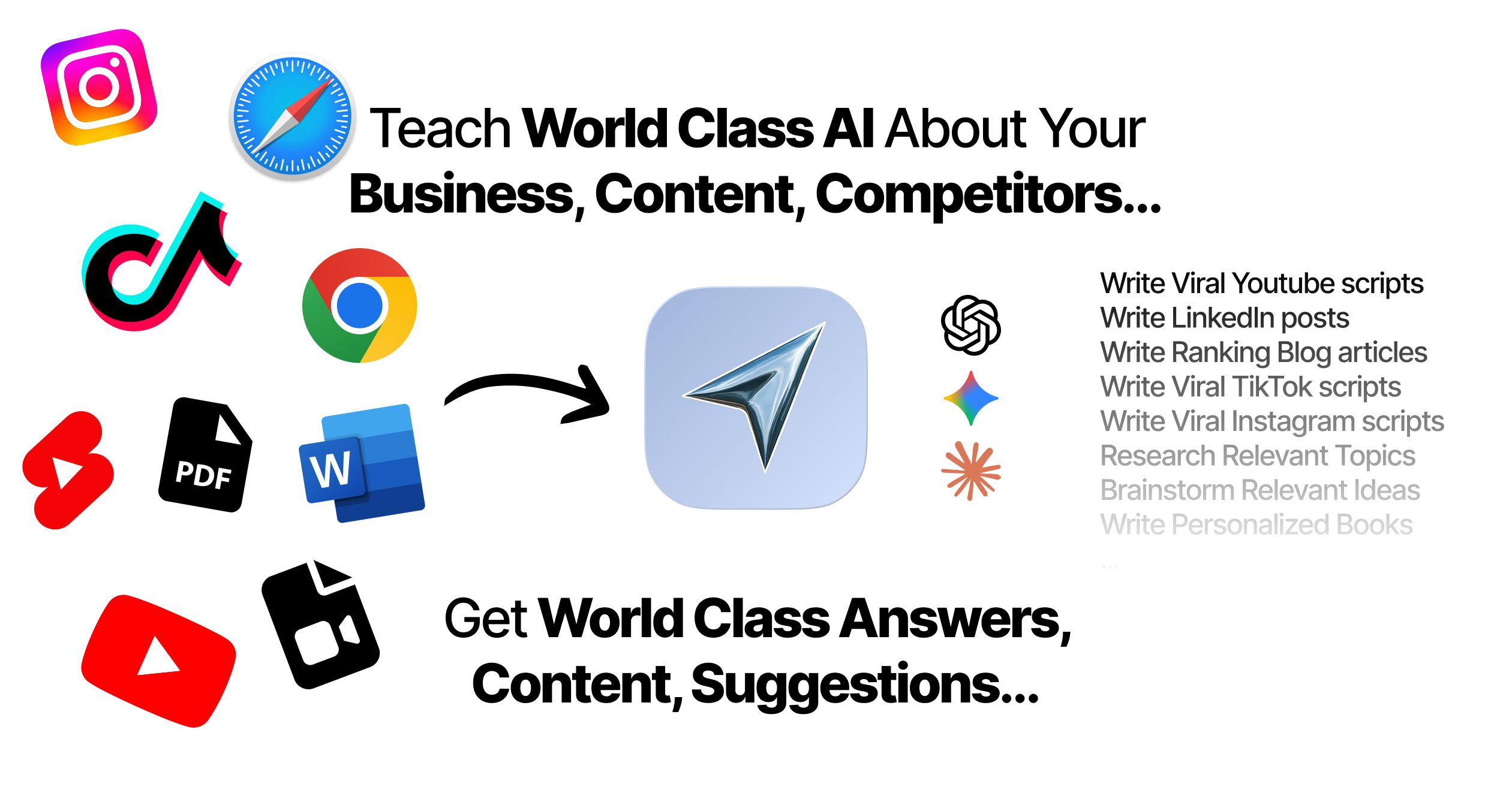
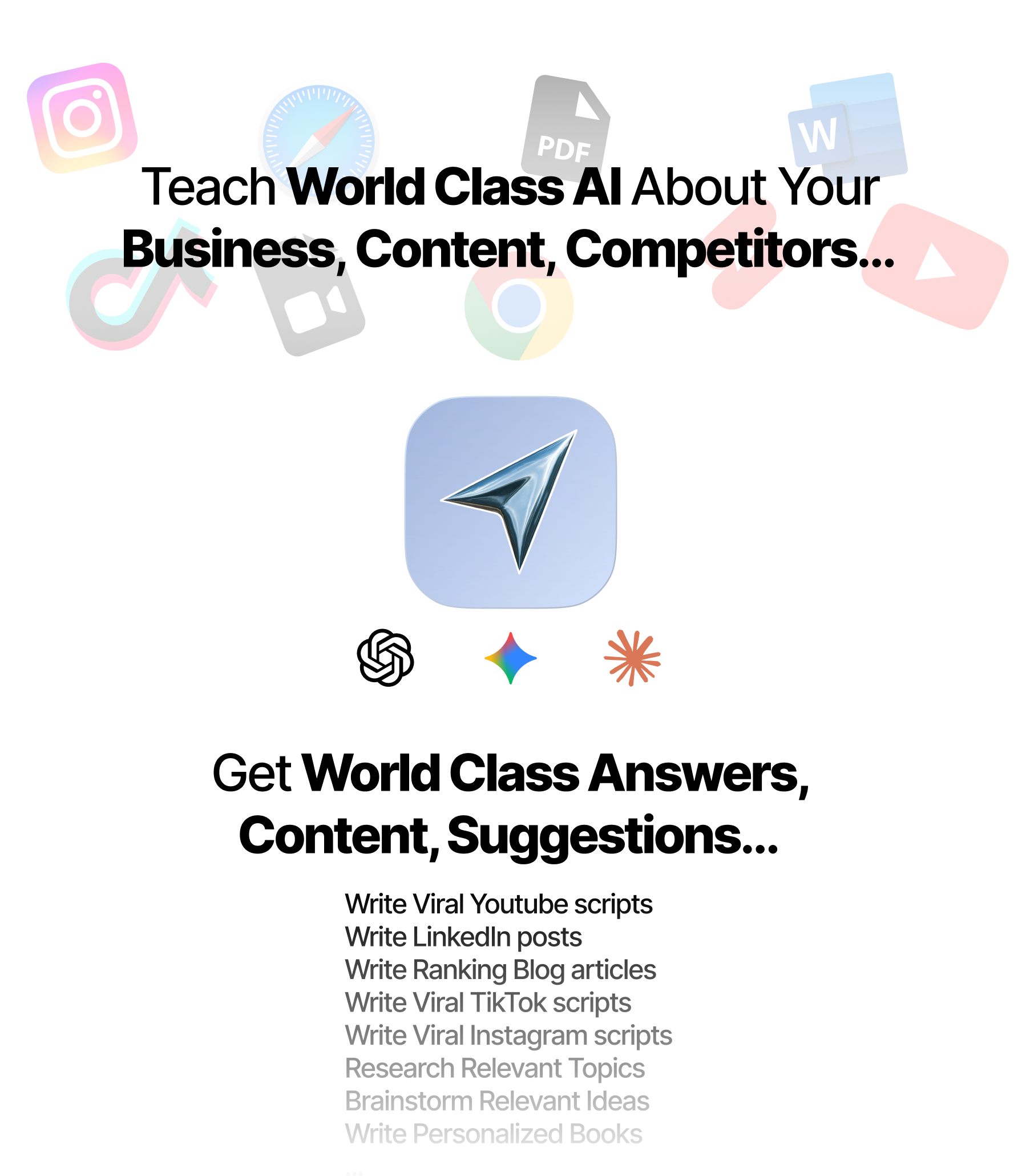
Teach World Class AI About Your Business, Content, Competitors… Get World Class Answers, Content, Suggestions...
AI Flow Chat powers our entire content strategy. We double down on what’s working, extract viral elements, and create stuff fast.
Video thumbnail

Reference Anything

Bring anything into context of AI and build content in seconds

YouTube

PDF

DOCX

TikTok

Web

Reels

Video Files

Twitter Videos

Facebook/Meta Ads

Tweets

Coming Soon

Audio Files

Coming Soon

Choose a plan to match your needs

Upgrade or cancel subscriptions anytime. All prices are in USD.

Basic

For normal daily use. Ideal for getting into AI automation and ideation.

$30/month
  • See what Basic gets you
  • 11,000 credits per month
  • Access to all AI models
  • 5 app schedules
  • Free optional onboarding call
  • 1,000 extra credits for $6
Get Started

No risk, cancel anytime.

ProRecommended

For power users with high-volume needs.

$100/month
  • See what Pro gets you
  • 33,000 credits per month
  • Access to all AI models
  • 10 app schedules
  • Remove AI Flow Chat branding from embedded apps
  • Free optional onboarding call
  • 2,000 extra credits for $6
Get Started

No risk, cancel anytime.

Frequently Asked Questions

Everything you need to know about AI Flow Chat. Still have questions? Contact us.