More Prompts:

Best prompts for LIM for ideation using role-playing scenarios

12 copy-ready role-play prompts to use with large language models (LIMs) for structured ideation. Each prompt instructs the model to play defined personas, produce concrete outputs (ideas, risks, priorities, next steps), and simulate interactions that reveal insights for product, policy, design, and business decisions.


Claude Sonnet 4
GPT-5
Gemini 2.5 Pro
Claude Opus 4
Gemini 2.5 Flash
You've probably felt that frustration when you ask ChatGPT or Claude for creative ideas and get back generic, surface-level responses that sound like they came from a corporate handbook. You know these AI models are incredibly powerful, but somehow your prompts keep producing bland, one-dimensional thinking that misses the nuanced insights you really need. The problem isn't the AI—it's that most people are essentially having a monologue with a machine instead of orchestrating the kind of dynamic, multi-perspective conversations that spark real innovation.
These 12 role-playing prompts transform your AI interactions from boring Q&A sessions into structured ideation powerhouses by having the model embody different personas and simulate realistic workplace dynamics. Instead of asking for generic brainstorming lists, you'll facilitate simulated workshops, negotiations, reviews, and strategic sessions that surface concrete insights, identify blind spots, and produce actionable outputs like prioritized backlogs, risk assessments, and launch strategies. You'll go from struggling with shallow AI responses to conducting sophisticated multi-stakeholder simulations that reveal the kind of nuanced thinking you'd get from assembling actual cross-functional teams.
1
Customer + Engineer Rapid Ideation Sprint
You are going to role-play two personas: (A) Jamie, a target customer who uses a [product category] daily, and (B) Alex, a backend engineer. For the product brief I give next, run a 15-minute ideation sprint: 1) Jamie lists top 5 pain points and desired outcomes in first-person quotes; 2) Alex proposes 8 possible features addressing those pains, annotated with estimated implementation complexity (low/medium/high) and one-sentence architecture note; 3) Produce a prioritized backlog of 5 features (ranked by impact vs complexity) with user stories, acceptance criteria, and top 3 technical risks with mitigations. Keep output concise and numbered. Product brief: [insert brief].
Role-play a target customer and an engineer to surface feature ideas, feasibility, and a prioritized backlog with acceptance criteria and risks.
2
Devil's Advocate Product Review
Act as two personas: (PM) the product manager describing the idea, and (DA) a devil's advocate who challenges every assumption. For the idea I supply, produce: 1) PM one-paragraph pitch; 2) DA's bullet list of 10 critical objections (market, technical, adoption, revenue); 3) For each objection, PM responds with a short mitigation or pivots the idea; 4) Conclude with a one-paragraph revised pitch and 3 next experiments to validate the riskiest assumptions. Idea: [insert idea].
Simulate a product manager proposing an idea and a devil's advocate persona rigorously attacking assumptions, then produce mitigations and revised positioning.
3
Cross-Functional Launch Workshop
Play four personas: Marketing lead, Legal counsel, Product Designer, and Sales manager. Given this launch brief: [insert brief], run a 30-minute simulated workshop: 1) Each persona gives 5 priorities/concerns (bulleted); 2) Identify 6 launch tactics that satisfy all personas; 3) For each tactic, list legal/compliance checks, design assets required, messaging outline, and sales enablement checklist; 4) Provide a one-week launch plan with owners. Keep outputs actionable and labeled by persona.
Facilitate a simulated workshop with Marketing, Legal, Design, and Sales personas to generate launch tactics and surface constraints.
4
Non-Expert User Interview Role-Play
Act as (I) an interviewer using open-ended questions, and (U) a non-technical user in the demographic I provide. Conduct a 10-question interview that elicits frustrations, desired outcomes, context of use, and workarounds. After the interview, produce: 1) 6 actionable insights, 2) 3 design opportunities, and 3) 5 direct user quotes labeled by topic. Demographic/context: [insert demographic and scenario].
Simulate an interviewer and a non-expert user to uncover unmet needs, quotes, and surprising workarounds to inform ideation.
5
Regulator vs. Startup Negotiation
Play two personas: (R) a regulator whose priorities are safety, transparency, and enforceability, and (S) a startup seeking market entry. Given the product and regulatory domain: [insert product + domain], simulate a 6-point negotiation: 1) Regulator lists 6 top concerns; 2) Startup proposes 6 mitigations/compromises; 3) For each mitigation, regulator responds accept/modify/reject with justification; 4) Produce a final list of 4 minimum requirements the startup must meet to proceed and 3 optional concessions the regulator may allow under monitoring.
Role-play a negotiation between a startup and a regulator to identify compliance trade-offs, acceptable compromises, and policy-friendly product changes.
6
Future-Back Scenario Planner (Futurist + Skeptic)
Role-play (F) a futurist imagining three plausible 5–10 year futures for [industry], and (S) a skeptic who finds practical objections. For each scenario: 1) One-paragraph description, 2) 3 product/service variants suited to that future, 3) skeptic's 3 counterpoints, and 4) 4 leading indicators to monitor now to validate that scenario. Keep each scenario crisp and actionable.
Have a futurist propose 3 bold future scenarios and a skeptic challenge them; derive product variants and leading indicators to watch.
7
Iterative Prototype Feedback Loop (Designer + Tester)
You are Designer (D) who describes a prototype screen flow and Tester (T) who performs tasks and reports observations. For the prototype spec I provide: [insert prototype description], run three test rounds: 1) Tester performs 4 tasks and records time-on-task, errors, and subjective difficulty (1–5); 2) Designer proposes 3 concrete revisions after each round; 3) After three rounds, produce final wireframe checklist, primary usability metric target, and 5 acceptance criteria for launch.
Simulate a dialogue between a designer and a tester to iterate on a prototype, producing revisions, usability metrics, and final acceptance criteria.
AI Flow Chat

Stop Losing Your AI Work

Tired of rewriting the same prompts, juggling ChatGPT and Claude in multiple tabs, and watching your best AI conversations disappear forever?

AI Flow Chat lets you save winning prompts to a reusable library, test all models in one workspace, and convert great chats into automated workflows that scale.
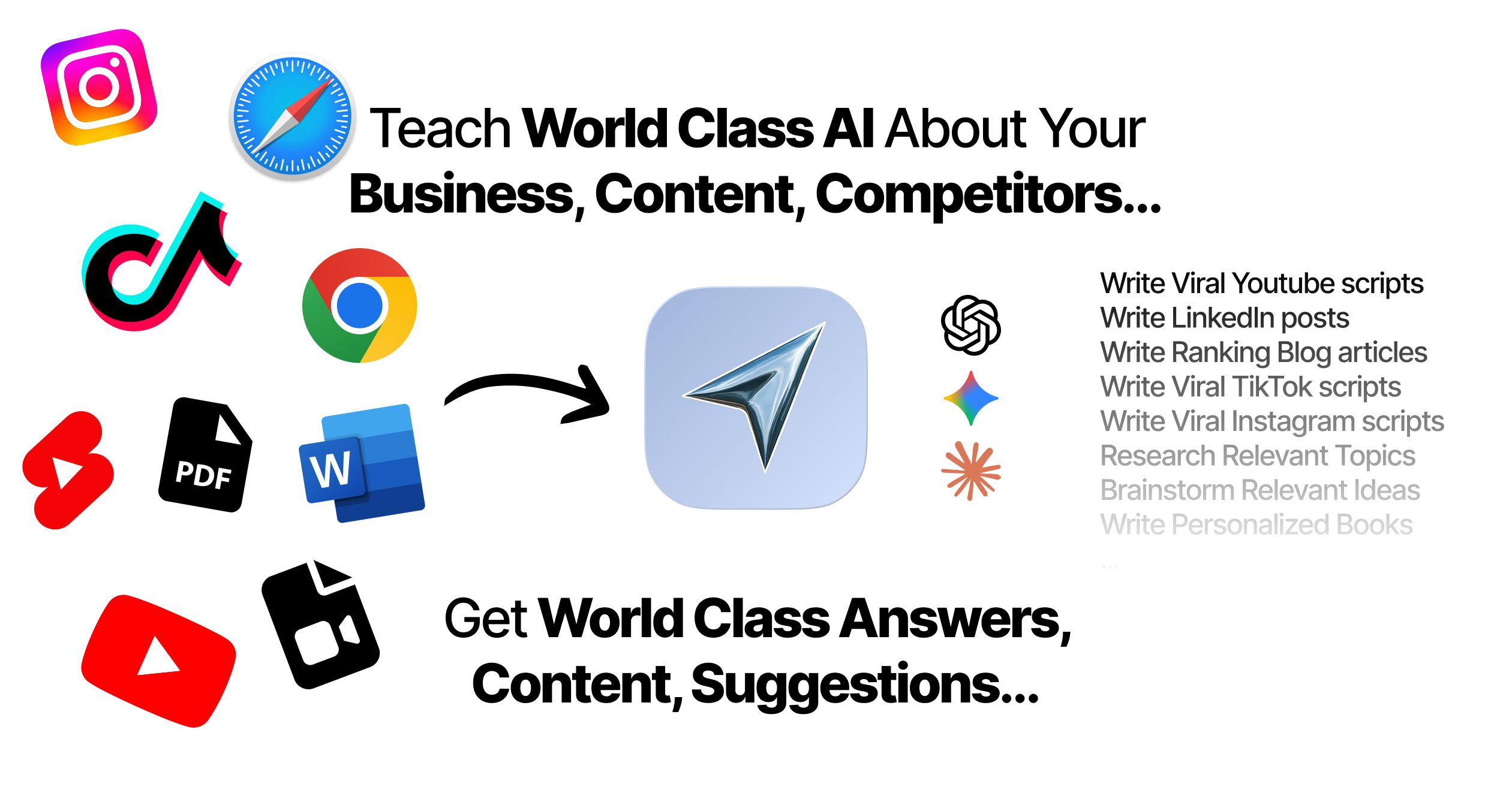

Teach World Class AI About Your Business, Content, Competitors… Get World Class Answers, Content, Suggestions...
AI Flow Chat powers our entire content strategy. We double down on what’s working, extract viral elements, and create stuff fast.
Video thumbnail

Reference Anything

Bring anything into context of AI and build content in seconds

YouTube

PDF

DOCX

TikTok

Web

Reels

Video Files

Twitter Videos

Facebook/Meta Ads

Tweets

Coming Soon

Audio Files

Coming Soon

Choose a plan to match your needs

Upgrade or cancel subscriptions anytime. All prices are in USD.

Basic

For normal daily use. Ideal for getting into AI automation and ideation.

$30/month
  • See what Basic gets you
  • 11,000 credits per month
  • Access to all AI models
  • 5 app schedules
  • Free optional onboarding call
  • 1,000 extra credits for $6
Get Started

No risk, cancel anytime.

ProRecommended

For power users with high-volume needs.

$100/month
  • See what Pro gets you
  • 33,000 credits per month
  • Access to all AI models
  • 10 app schedules
  • Remove AI Flow Chat branding from embedded apps
  • Free optional onboarding call
  • 2,000 extra credits for $6
Get Started

No risk, cancel anytime.

Frequently Asked Questions

Everything you need to know about AI Flow Chat. Still have questions? Contact us.