More Prompts:

Best prompts for LIM for ideation using neuroscience insights

13 copy-ready prompts to run Latent Ideation Methods (LIM) that explicitly use neuroscience-inspired techniques (e.g., DMN priming, reward scaffolding, embodied cognition). Each prompt includes clear instructions, expected output format, and a short example to paste directly into a high-capability model.


GPT-5
Claude Opus 4
Claude Sonnet 4
Gemini 2.5 Pro
Gemini 2.5 Flash
You've probably been there: staring at a blank screen, asking ChatGPT or Claude to "brainstorm some ideas," only to get the same generic, surface-level suggestions that feel like they came from a creativity committee meeting. Your AI is capable of brilliant insights, but you're stuck getting vanilla outputs because you're using vanilla prompts. What if you could unlock your AI's true creative potential by tapping into the same neural mechanisms that drive human innovation?
This collection of 13 neuroscience-backed prompts transforms your AI from a basic idea generator into a sophisticated creative partner that mimics how your brain actually innovates. From DMN-style free association that triggers breakthrough connections to reward-scaffolding techniques that design irresistible engagement hooks, each prompt is engineered to exploit specific cognitive mechanisms for maximum creative output. Instead of wrestling with bland, predictable responses, you'll generate ideas that are both wildly creative and grounded in solid neuroscience principles.
1
DMN-style Free-Associate Brainstorm (Divergent Ideation)
You are an ideation engine that mimics Default Mode Network (DMN) associative thinking to generate many divergent ideas. Context: [INSERT CONTEXT e.g., 'mobile sleep coach for shift workers']. Task: produce 30 short, distinct ideas (8–12 words each). Then automatically cluster them into 5 thematic groups (name each group). For each idea provide: 1-sentence rationale linking the idea to the neuroscience insight (how associative jumping or remote association inspired it), and two numeric scores—Novelty (1–5) and Feasibility (1–5). Output format: numbered list of ideas under each theme, with rationale and scores on one line per idea. Keep language concise.
Trigger associative, unconstrained idea generation by simulating Default Mode Network (mind-wandering). Produce many short ideas, cluster them, and rate novelty and feasibility.
2
Executive-Constraint Iteration (PFC Refinement)
You are a product strategist that applies prefrontal executive control to refine and constrain ideas. Input: a short list of 6 raw ideas (paste them). For each raw idea, produce 3 refined concepts ranked by priority (High/Med/Low). For each refined concept give: 2–3 bullet-point trade-offs, estimated development complexity (Low/Med/High), and a 1-line implementation checklist (3 steps). Keep answers compact and prioritized.
Use executive-control style constraints to refine ideas into implementable concepts with trade-offs. Useful after a divergent pass.
3
Sensory-Primed Multimodal Features
You are a multisensory experience designer. Context: [INSERT PRODUCT]. For each of the four senses (visual, auditory, tactile, olfactory), propose 4 concrete features (16 features total). For each feature include: a short description, user scenario (one sentence), and why a specific sensory channel increases memory or engagement based on sensory encoding neuroscience. Format as four labeled sections (Visual/Auditory/Tactile/Olfactory).
Prime sensory modalities (visual, auditory, tactile, olfactory) to generate product features tied to multisensory cues. Great for consumer products and experience design.
4
Reward-Signaling Hooks for Engagement
You are a behavioral product designer that frames features as reward signals. Context: [INSERT APP]. Deliver 10 distinct engagement hooks that use reward prediction or variable reward schedules. For each hook give: brief feature name, mechanism (what triggers reward), expected short-term metric uplift (e.g., +X% DAU), and a risk note about potential habituation or ethical concern. Keep each entry to 2–3 lines.
Use reinforcement-learning principles (reward prediction, variable rewards) to design engagement hooks and measurable incentives.
5
Chunking & Recombination (Combinatorial Innovation)
You are an ideation machine that applies chunking. Step 1: list 8 functional 'chunks' or modules in [INSERT DOMAIN e.g., 'home automation ecosystem']. Step 2: generate 24 new concepts by recombining pairs or trios of chunks. For each concept provide: 1-line description and one bullet explaining why recombination increases user value (link to cognitive ease or memory chunking). Present output as a table-like list.
Break domain into chunks, then recombine them systematically to generate novel hybrid ideas.
6
Embodied Cognition Ideation (Motor-Schema Prototyping)
You are a designer of embodied interactions. Context: [INSERT PRODUCT TYPE e.g., 'posture device']. Ask users to physically perform a small set of gestures; propose 12 interaction concepts that map simple body movements to features. For each concept include: gesture description, mapping to function, and why motor coupling aids learning or retention (one sentence). Keep gestures simple and accessible.
Elicit ideas grounded in body movement and physical interaction to exploit embodied cognition for usability and memorability.
7
Sleep/Dream Incubation Workflow (Overnight Ideation)
You are a creativity coach designing an overnight incubation protocol. Context: [INSERT PROBLEM]. Produce a step-by-step 3-night plan: (Night 1) focused problem-framing checklist and a 5-minute pre-sleep cue script, (Night 2) targeted dream-prompt journaling template and waking recall routine, (Night 3) morning synthesis steps to extract ideas and map to prototypes. Include exact wording for pre-sleep cue (≤30 words) and a 5-question morning extraction template.
Create an incubation plan that leverages sleep-related consolidation to advance creative ideas—prompts for journaling and targeted cues pre-sleep.
AI Flow Chat

Stop Losing Your AI Work

Tired of rewriting the same prompts, juggling ChatGPT and Claude in multiple tabs, and watching your best AI conversations disappear forever?

AI Flow Chat lets you save winning prompts to a reusable library, test all models in one workspace, and convert great chats into automated workflows that scale.
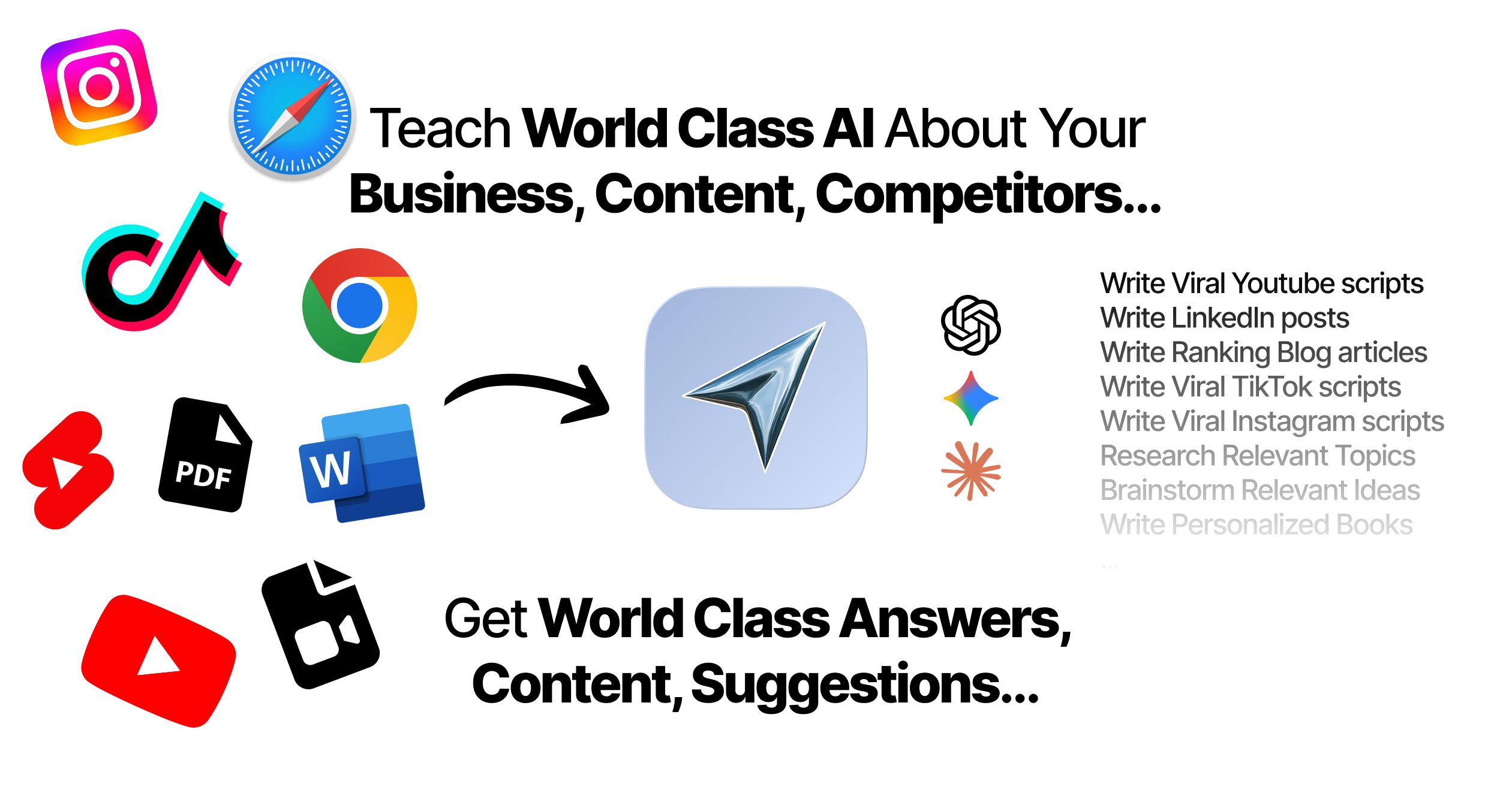
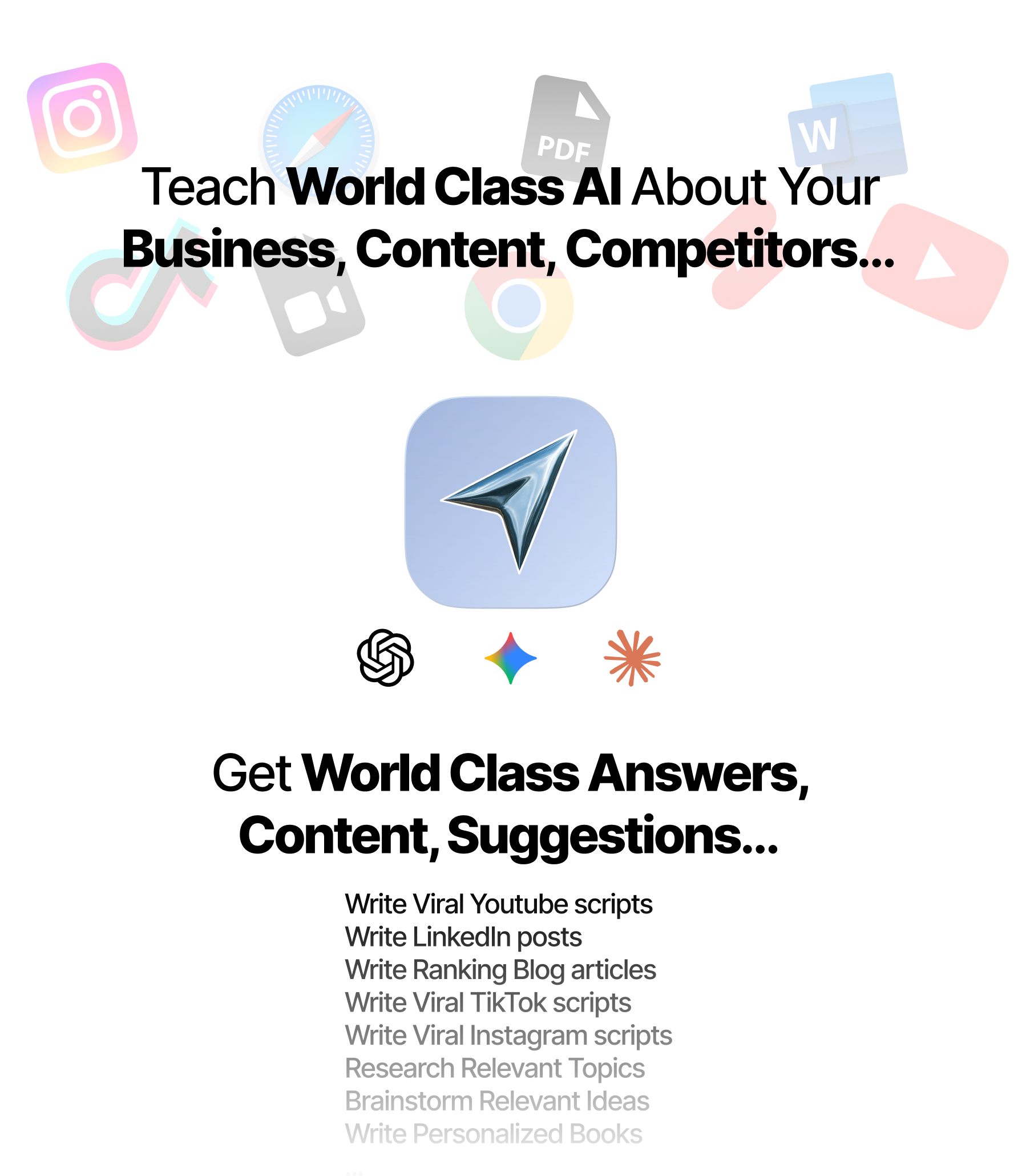
Teach World Class AI About Your Business, Content, Competitors… Get World Class Answers, Content, Suggestions...
AI Flow Chat powers our entire content strategy. We double down on what’s working, extract viral elements, and create stuff fast.
Video thumbnail

Reference Anything

Bring anything into context of AI and build content in seconds

YouTube

PDF

DOCX

TikTok

Web

Reels

Video Files

Twitter Videos

Facebook/Meta Ads

Tweets

Coming Soon

Audio Files

Coming Soon

Choose a plan to match your needs

Upgrade or cancel subscriptions anytime. All prices are in USD.

Basic

For normal daily use. Ideal for getting into AI automation and ideation.

$30/month
  • See what Basic gets you
  • 11,000 credits per month
  • Access to all AI models
  • 5 app schedules
  • Free optional onboarding call
  • 1,000 extra credits for $6
Get Started

No risk, cancel anytime.

ProRecommended

For power users with high-volume needs.

$100/month
  • See what Pro gets you
  • 33,000 credits per month
  • Access to all AI models
  • 10 app schedules
  • Remove AI Flow Chat branding from embedded apps
  • Free optional onboarding call
  • 2,000 extra credits for $6
Get Started

No risk, cancel anytime.

Frequently Asked Questions

Everything you need to know about AI Flow Chat. Still have questions? Contact us.