More Prompts:

Best prompts for LIM for summarization using financial reports

12 practical, copy-ready prompts designed for LIM/LLM use to summarize financial reports (10-K/10-Q, earnings releases, annual reports, MD&A, cash flow statements, etc.). Each prompt includes a concise explanation, a realistic example input, and recommended AIs that perform best with the task.


Claude Sonnet 4
GPT-5
Claude Opus 4
Gemini 2.5 Flash
Gemini 2.5 Pro
You've been there: staring at a 200-page 10-K filing at 11 PM, knowing you need insights for tomorrow's meeting, but your AI keeps giving you generic summaries that miss the critical details. The frustration of wrestling with 12 prompts that either produce surface-level fluff or overwhelming walls of text has become all too familiar. What if you could transform those late-night document marathons into focused, actionable insights in minutes?
This collection of 12 battle-tested prompts turns your AI into a financial analyst that actually gets what you need. From executive-ready 5-bullet summaries to red flag checklists with confidence indicators, each prompt is designed to extract the exact information that matters for your specific audience and use case. Instead of drowning in generic AI outputs, you'll get targeted insights that help you make faster decisions, spot critical risks, and communicate financial data with confidence.
1
Concise 5-bullet executive summary (10-K/annual report)
You are given a full annual report or 10-K. Produce a 5-bullet executive summary for investors: 1) one-sentence company description, 2) primary revenue drivers and recent trend, 3) margin and profitability trend (last 3 years), 4) current cash/debt position and liquidity risk, 5) top 3 business risks with one-line impact each. Use plain language suitable for an investor memo. Limit to 80–120 words.
Produce a short executive summary in 5 bullets highlighting business overview, revenue drivers, margin trends, cash position, and top 3 risks. Keep it non-technical and investor-ready.
2
KPIs and metrics table from earnings release
Given an earnings release or financial statements, extract the following metrics into a 3-column table labeled 'Current', 'Prior', '% Change': Revenue, Operating Income (or EBITDA), Net Income, EPS (diluted), Cash Flow from Ops, Capital Expenditures. If non-GAAP items are used, add a short footnote explaining them (max 2 sentences). Provide the table and the footnote only.
Extract and present key financial metrics in a compact table with current period, prior period, and % change. Include revenue, EBITDA (or operating income), net income, EPS, cash flow from operations, and capex. Note any non-GAAP adjustments.
3
Risks-focused summary and materiality ranking
From the provided 'Risk Factors' section, list up to 8 most relevant risks, give a 1-sentence rationale for why each is important, assign a materiality (High/Medium/Low), and for each 'High' risk provide one concrete monitoring/action recommendation. Keep each item to one line (max 20 words per line after the label).
Extract all risk factors and offer a short rationale and materiality ranking (High, Medium, Low) for each, limited to the top 8 risks. Include suggested monitoring/action for 'High' risks.
4
Management discussion: 3 key takeaways for the board
Read the MD&A section and produce three board-focused takeaways. For each takeaway include: (a) 1–2 sentence summary of the issue/insight, (b) one recommended decision or question the board should ask management. Keep each takeaway under 40 words.
Summarize the MD&A into three concise takeaways specifically tailored for a board meeting, each with one recommended decision or question for management.
5
One-page investor brief (250 words) with headline
Using the attached annual report or earnings release, write a one-page investor brief (~250 words): start with a 12-word headline summarizing the quarter/year, then 4 paragraphs (business snapshot, financial performance highlight, near-term catalysts/concerns, one-sentence investment view). Use neutral, investment-analyst tone.
Produce a one-page (approx. 250 words) investor brief beginning with a 12-word headline, then 4 short paragraphs: business snapshot, latest financial performance, catalysts/concerns, and bottom-line investment view.
6
Segment performance summary with attribution
From the segment notes, for each reporting segment provide: (1) current period revenue and % of consolidated revenue, (2) operating margin (or operating income), (3) one-line explanation of drivers (volume, pricing, FX, one-offs). Limit to 6 segments. Output as bullet list, one segment per bullet.
Summarize performance by reporting segment: revenue, margin, drivers of change, and any one-off items per segment. Include attribution (percentage contribution to total revenue) if available.
7
Cash flow health check and short risks list
Analyze the cash flow statements and balance sheet. Provide: (A) one-line summary of operating cash conversion (OCF/Net Income), (B) free cash flow trend (3-year), (C) capex as % of revenue, (D) two-sentence assessment of liquidity, and (E) list 3 cash-related risks (one line each). Keep total output under 120 words.
Assess cash flow statement health: operating cash conversion, free cash flow, capex trend, financing activity. Provide 3-5 short risk items related to liquidity and cash.
AI Flow Chat

Stop Losing Your AI Work

Tired of rewriting the same prompts, juggling ChatGPT and Claude in multiple tabs, and watching your best AI conversations disappear forever?

AI Flow Chat lets you save winning prompts to a reusable library, test all models in one workspace, and convert great chats into automated workflows that scale.
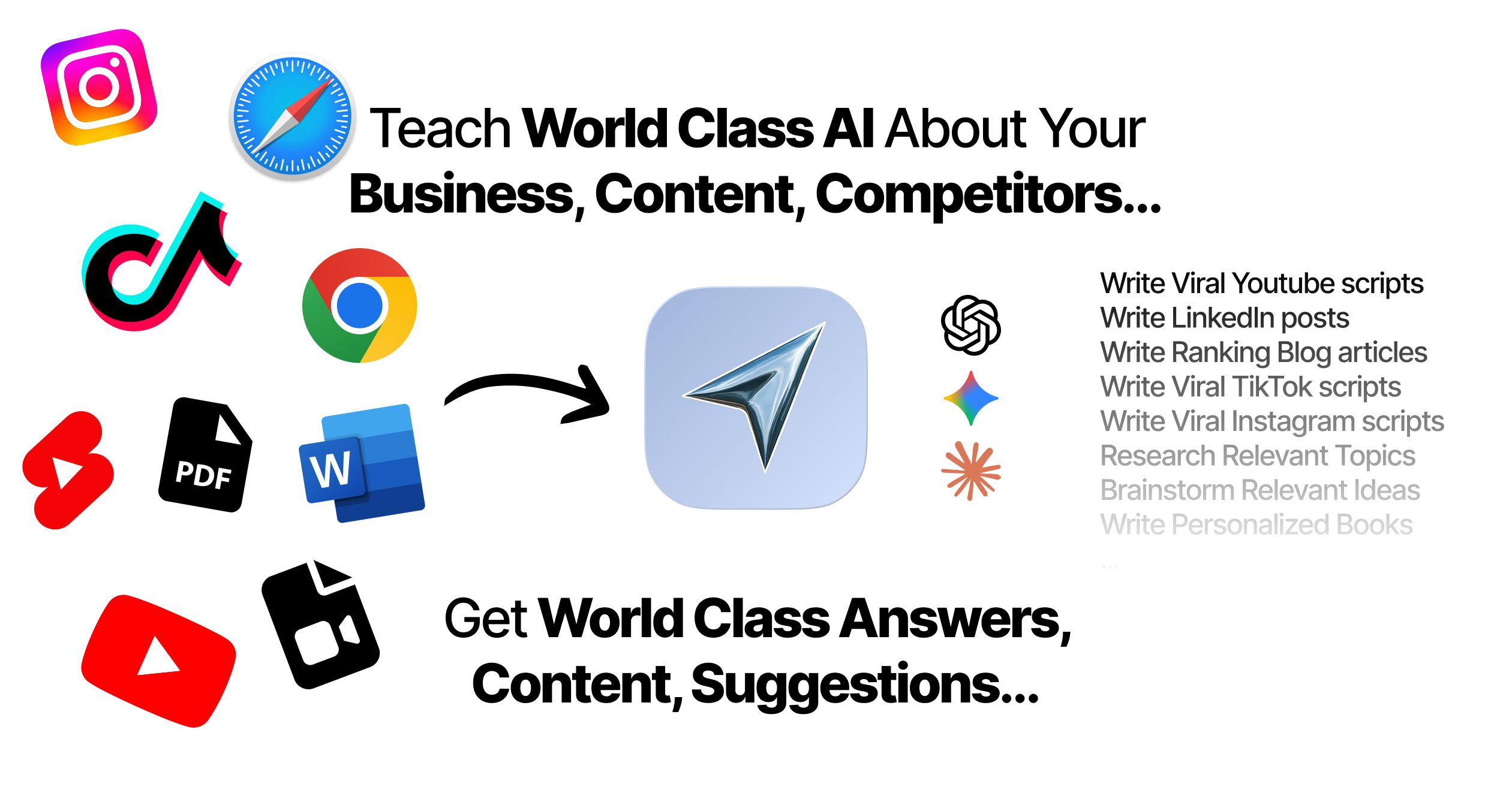

Teach World Class AI About Your Business, Content, Competitors… Get World Class Answers, Content, Suggestions...
AI Flow Chat powers our entire content strategy. We double down on what’s working, extract viral elements, and create stuff fast.
Video thumbnail

Reference Anything

Bring anything into context of AI and build content in seconds

YouTube

PDF

DOCX

TikTok

Web

Reels

Video Files

Twitter Videos

Facebook/Meta Ads

Tweets

Coming Soon

Audio Files

Coming Soon

Choose a plan to match your needs

Upgrade or cancel subscriptions anytime. All prices are in USD.

Basic

For normal daily use. Ideal for getting into AI automation and ideation.

$30/month
  • See what Basic gets you
  • 11,000 credits per month
  • Access to all AI models
  • 5 app schedules
  • Free optional onboarding call
  • 1,000 extra credits for $6
Get Started

No risk, cancel anytime.

ProRecommended

For power users with high-volume needs.

$100/month
  • See what Pro gets you
  • 33,000 credits per month
  • Access to all AI models
  • 10 app schedules
  • Remove AI Flow Chat branding from embedded apps
  • Free optional onboarding call
  • 2,000 extra credits for $6
Get Started

No risk, cancel anytime.

Frequently Asked Questions

Everything you need to know about AI Flow Chat. Still have questions? Contact us.