More Prompts:

Best prompts for ChatGPT for marketing using customer feedback sentiment analysis

12 practical, copy-ready prompts for marketing teams to turn sentiment-analyzed customer feedback into action: dashboarding, segmentation, product prioritization, churn prevention, ad copy, campaign ideas, support templates, A/B tests, competitor positioning, launch messaging, onboarding messaging, and pricing experiments. Each entry includes a concise explanation, a ready-to-use prompt, and a realistic example input/output scenario.


GPT-5
Claude Opus 4
Claude Sonnet 4
Gemini 2.5 Pro
Gemini 2.5 Flash
You've got thousands of customer reviews and feedback sitting in your CRM, but turning that goldmine of sentiment data into actual marketing wins feels like trying to solve a puzzle with half the pieces missing. Your team knows the insights are there, but crafting the right prompts to extract actionable marketing strategies from ChatGPT often leads to generic responses that don't move the needle. Sound familiar?
This collection of 12 battle-tested prompts transforms your sentiment-analyzed customer feedback into immediate marketing action, covering everything from churn prevention and competitor positioning to ad copy generation and campaign ideation. Instead of struggling with vague AI responses, you'll get specific, actionable outputs like customer segmentation strategies, support templates, A/B test hypotheses, and launch messaging tailored to different sentiment groups. These prompts bridge the gap between raw feedback data and marketing execution, turning your customer insights into campaigns, content, and strategies that actually convert.
1
Sentiment Summary Dashboard
Input: a list of customer feedback records in CSV or JSON with fields: id, date, text, sentiment (positive|neutral|negative), and optional category. Output: a short marketing dashboard containing (1) overall sentiment distribution (% positive/neutral/negative), (2) top 5 positive themes and top 5 negative themes with counts and one representative quote each, (3) 30-day sentiment trend (percent change vs previous 30 days), and (4) 3 prioritized marketing actions (one-liners) derived from the themes. Return results in JSON with keys: distribution, positive_themes, negative_themes, trend_summary, recommended_actions. Use the input placeholder <<FEEDBACK_DATA>>.
Produce a concise marketing dashboard from feedback with sentiment labels: distribution, top themes by sentiment, representative quotes, and a 30-day trend summary with recommended actions.
2
Segment Customers by Sentiment and Behavior
Input: table of customers with fields: customer_id, sentiment_score (range -1 to 1 or labels), last_purchase_date, purchase_frequency (per year), lifetime_value. Output: segment customers into 4–6 named segments (e.g., "Promising Promoters", "At-risk Detractors"), provide segment size, defining rules, one-paragraph persona, and 2 prioritized marketing tactics (channel and message). Return as a JSON array of segment objects. Use placeholder <<CUSTOMER_TABLE>>.
Create actionable customer segments using sentiment labels plus basic behavior (recency, frequency, lifetime value) and recommend tailored marketing tactics for each segment.
3
Prioritize Product Improvements by Sentiment Impact
Input: list of feature mentions with fields: feature_name, mention_count, avg_sentiment (-1 to 1), example_comments. Output: ranked list of top 10 improvements with fields: feature, rank_score (computed from mention_count* -avg_sentiment), recommended_priority (Critical/High/Medium/Low), expected_customer_impact (1–5), suggested quick experiment to validate the fix. Return as JSON. Use <<FEATURE_MENTIONS>> placeholder.
Rank product improvements by volume of negative mentions and average sentiment, estimate impact and effort, and provide release-prioritization guidance.
4
Churn Risk Scoring from Negative Feedback
Input: customer-level records with id, recent_feedback_texts (array), sentiment_labels (for each feedback), recency_days, purchases_last_12m. Output: for each customer produce: churn_risk (0–100), top 3 reasons (derived from feedback), confidence_level (High/Medium/Low), and 3-step retention playbook (message, incentive, channel). Return as JSON list. Use placeholder <<CUSTOMER_FEEDBACKS>>.
Produce a churn risk score (0–100) per customer using negative sentiment signals, frequency of complaints, recency, and purchase history, plus a short retention playbook per high-risk customer.
5
NPS Driver & Promoter Activation Analysis
Input: feedback rows with fields: respondent_id, nps_score (0–10), comment, sentiment_label. Output: (1) top 5 drivers for promoters (9–10) and top 5 drivers for detractors (0–6) with frequency and example quote, (2) 3 activation tactics for promoters (cross-sell/up-sell), and (3) 3 recovery experiments for detractors. Provide output as structured JSON. Use placeholder <<NPS_FEEDBACK>>.
Translate feedback into NPS drivers for promoters and detractors: identify top drivers, propose quick promoter activation tactics and detractor recovery steps.
6
Ad Copy Variations Based on Positive Themes
Input: list of positive themes with short descriptions and example quotes. Output: for each theme provide 3 headline variations (max 12 words), 3 short body variations (1–2 sentences), suggested CTA, and recommended channel (e.g., Meta, Google, Email). Return as JSON. Use <<POSITIVE_THEMES>>.
Generate targeted ad headlines and bodies using the most common positive themes from feedback. Provide 3 headline variants and 3 body variants for each theme and recommended CTA and channel.
7
Support Response Templates for Negative Feedback
Input: single feedback record with fields: id, complaint_category, sentiment_severity (low|medium|high), customer_tone (e.g., frustrated, calm). Output: three response templates (Immediate reply, Follow-up after fix, Escalation note to internal team). Include suggested compensation options and whether to auto-escalate. Return as plain text blocks labeled. Use <<FEEDBACK_RECORD>>.
Produce short, empathetic, and brand-aligned support responses tailored to complaint type and sentiment severity, with escalation steps and suggested compensation where appropriate.
AI Flow Chat

Stop Losing Your AI Work

Tired of rewriting the same prompts, juggling ChatGPT and Claude in multiple tabs, and watching your best AI conversations disappear forever?

AI Flow Chat lets you save winning prompts to a reusable library, test all models in one workspace, and convert great chats into automated workflows that scale.
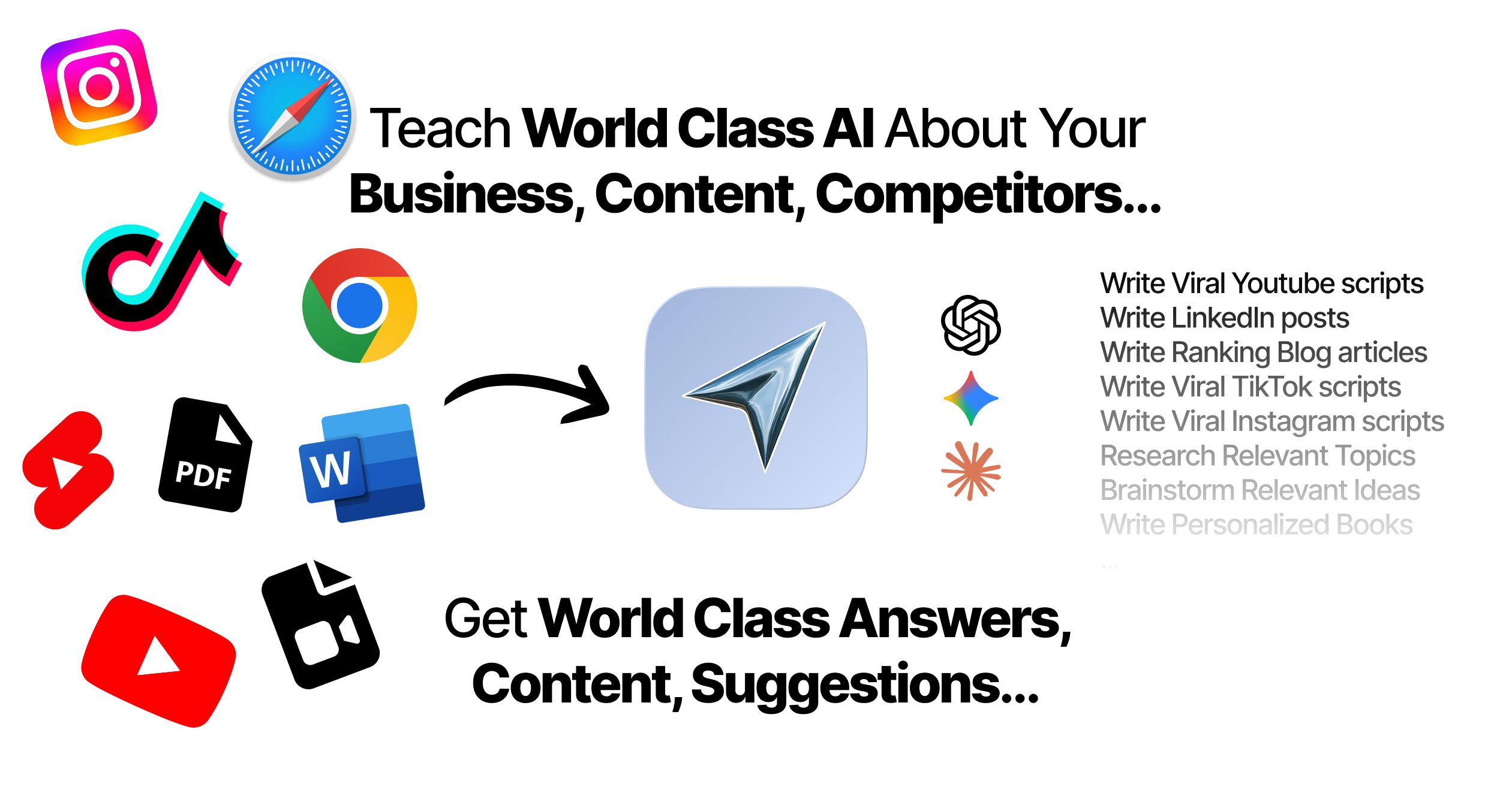

Teach World Class AI About Your Business, Content, Competitors… Get World Class Answers, Content, Suggestions...
AI Flow Chat powers our entire content strategy. We double down on what’s working, extract viral elements, and create stuff fast.
Video thumbnail

Reference Anything

Bring anything into context of AI and build content in seconds

YouTube

PDF

DOCX

TikTok

Web

Reels

Video Files

Twitter Videos

Facebook/Meta Ads

Tweets

Coming Soon

Audio Files

Coming Soon

Choose a plan to match your needs

Upgrade or cancel subscriptions anytime. All prices are in USD.

Basic

For normal daily use. Ideal for getting into AI automation and ideation.

$30/month
  • See what Basic gets you
  • 11,000 credits per month
  • Access to all AI models
  • 5 app schedules
  • Free optional onboarding call
  • 1,000 extra credits for $6
Get Started

No risk, cancel anytime.

ProRecommended

For power users with high-volume needs.

$100/month
  • See what Pro gets you
  • 33,000 credits per month
  • Access to all AI models
  • 10 app schedules
  • Remove AI Flow Chat branding from embedded apps
  • Free optional onboarding call
  • 2,000 extra credits for $6
Get Started

No risk, cancel anytime.

Frequently Asked Questions

Everything you need to know about AI Flow Chat. Still have questions? Contact us.