Content Pillar Framework: How To Build Yours In 7 Steps
At AI Flow Chat
Contents
0%Most creators and marketers post content without a system behind it. Some weeks they're everywhere. Other weeks, radio silence. The result is an inconsistent brand presence, wasted effort, and zero compounding growth. A content pillar framework fixes this by giving you a repeatable structure that turns a handful of core topics into a steady stream of posts, videos, and articles across every platform you care about. It's the difference between guessing what to post and knowing exactly what to create next.
This guide breaks down what content pillars actually are, why they matter, and how to build your own framework from scratch in seven practical steps. You'll walk away with a clear system for organizing your content strategy around themes that align with your audience and business goals, not just whatever trending audio is popular this week.
And once your framework is locked in, a tool like AI Flow Chat makes scaling it realistic. You can drop reference content onto the visual canvas, pull from competitor videos, docs, and ads, and generate on-brand outputs across every pillar without starting from a blank prompt each time.
What a Content Pillar Framework Is and Why It Works
A content pillar framework is a structured approach to content strategy where you organize everything you publish around three to five broad core topics, called pillars, that directly connect to your brand and audience. Each pillar acts as a parent theme, and every blog post, video, and social update you create sits underneath one of them. Instead of posting whatever feels relevant on a given day, you work from a map that tells you exactly what territory you cover and how each piece of content relates to the bigger picture.
A framework does not limit your creativity. It gives your creativity a direction to move in.
The anatomy of a pillar
Each pillar has three layers: the core topic (the broad theme), the subtopics (specific angles within that theme), and the content formats (how you publish each piece). For example, if you run a fitness brand, one pillar might be "nutrition." Subtopics under that could include meal prep, protein timing, and label reading. Formats could include YouTube tutorials, short-form reels, and newsletter deep-dives. This three-layer structure is what separates a real framework from a loose list of content ideas.
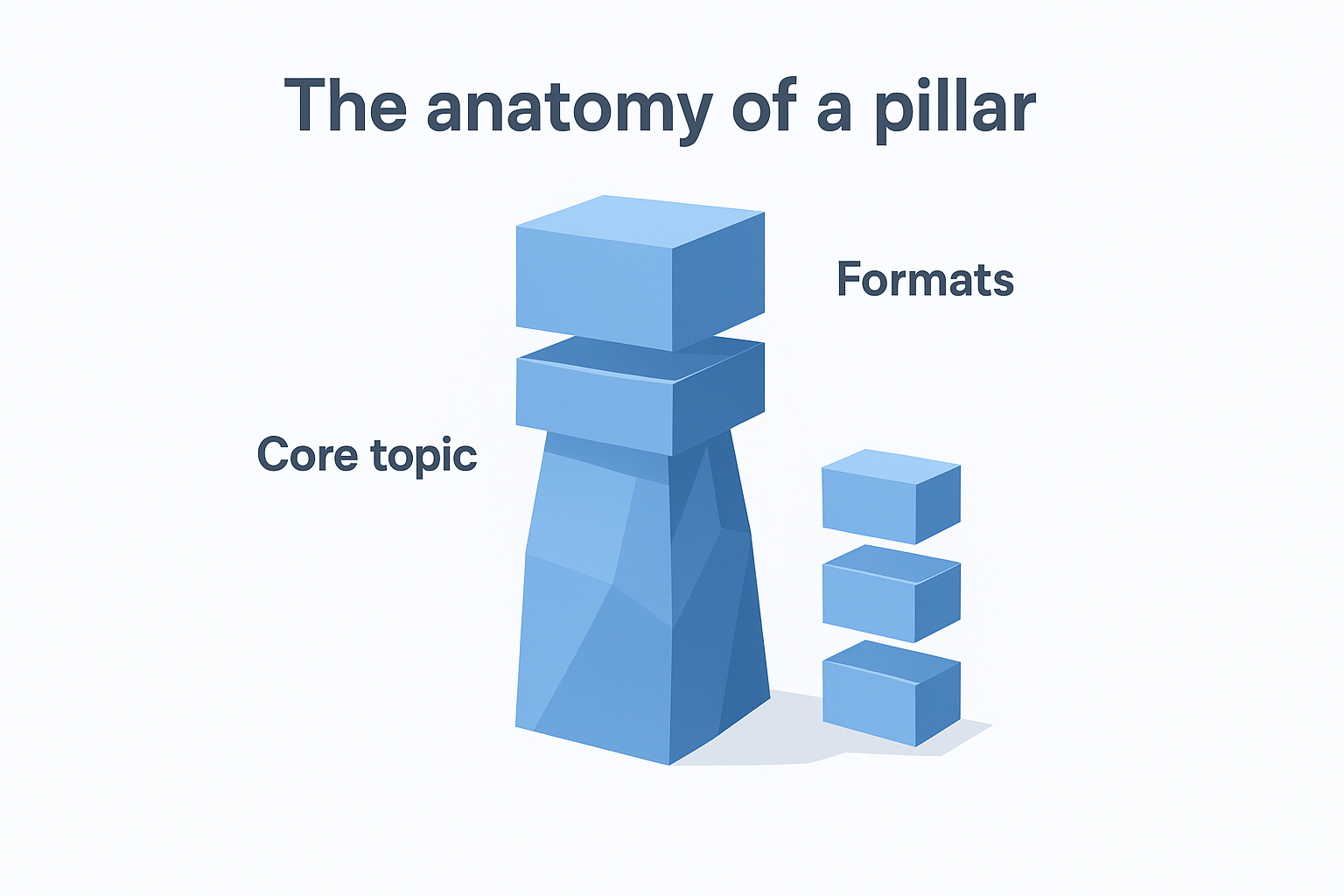
Here is what a single pillar looks like mapped out:
| Layer | Example |
|---|---|
| Core pillar | Nutrition |
| Subtopic 1 | Weekly meal prep |
| Subtopic 2 | Reading food labels |
| Subtopic 3 | Protein sources for athletes |
| Formats | YouTube, Instagram Reels, newsletter |
Why pillars outperform random posting
When you post randomly, no single topic builds authority because your audience never knows what to expect from you, and search engines cannot establish a clear context for your content. Pillar-based content solves both problems. Every piece you publish reinforces the same core themes, which builds topical authority with search engines and trust with your audience over time.
The compounding effect is the real payoff. A strong pillar generates dozens of subtopic pieces, each of which links back to the core theme. Over months, you build a content library that keeps attracting traffic without requiring you to start from zero with every post. Your older content supports your newer content, and the whole system grows stronger the longer you stick with it.
Steps 1 and 2: Set Goals and Define Your Audience
Your content pillar framework needs a foundation before you pick any topics. Steps one and two are about establishing why you are creating content and who you are creating it for. Skip these two steps, and your pillars end up built on assumptions instead of real strategic direction.
Step 1: Set clear content goals
Your goals determine which pillars actually make sense for your business. A creator trying to grow an email list needs different pillars than an agency trying to attract retainer clients. Write down one primary goal and one secondary goal for your content, then make sure every pillar you choose later connects to at least one of them.
If you cannot connect a pillar to a specific business outcome, drop it.
Common content goals to choose from:
- Build topical authority in a niche to rank in search
- Drive organic traffic to a product or service page
- Grow a social following on one or two platforms
- Convert readers or viewers into email subscribers or leads
Step 2: Define your audience
Once your goals are set, build a focused audience profile that captures exactly who you are talking to. You do not need a lengthy persona document. You need a clear description of your ideal reader's role, core frustrations, and what they actively search for when they have a problem you can solve.
Use this template to keep it simple:
| Field | Your answer |
|---|---|
| Role or identity | e.g., solopreneur, marketing manager |
| Biggest frustration | e.g., inconsistent content output |
| Primary platform | e.g., LinkedIn, YouTube |
| What they search for | e.g., "content planning for small teams" |
Fill this in completely before you move to step three, and keep it open while you select your pillars.
Steps 3 and 4: Pick Pillars and Map Subtopics
With your goals and audience profile in hand, you are ready to build the core of your content pillar framework. Steps three and four are where the strategy becomes concrete. You select the broad themes you will own, then break each one into the specific angles you will actually cover.
Step 3: Choose Your Pillars
Your pillars should sit at the intersection of three things: what your audience consistently wants to learn, what connects to your business goals, and what you can speak to with real depth. Aim for three to five pillars. Fewer than three leaves your content too narrow. More than five splits your focus and slows down your ability to build authority in any single area.
Use this filter to test each candidate pillar before you commit:
| Filter question | What you are checking |
|---|---|
| Does your audience search for this? | Demand and relevance |
| Can you create 20+ pieces on this topic? | Long-term depth |
| Does it connect to a business goal? | Strategic fit |
| Do you have genuine knowledge here? | Credibility |
Drop any pillar that fails two or more of these filters.
Step 4: Map Subtopics Under Each Pillar
Once your pillars are confirmed, break each one into eight to twelve specific subtopics. These become your actual content assignments. A subtopic should be narrow enough to cover completely in a single piece, not a broad theme by itself.
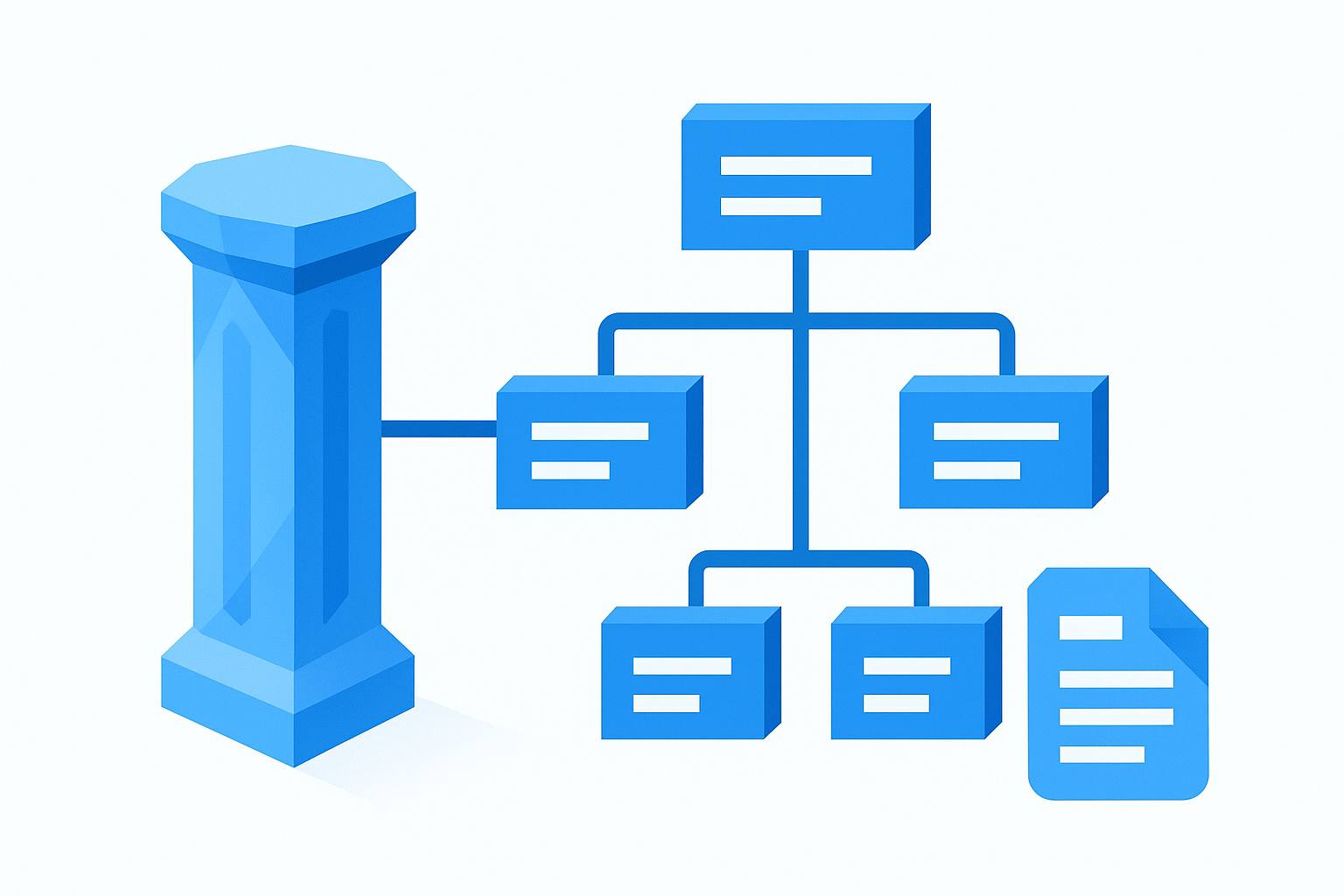
The subtopics you map now are your editorial calendar for the next three to six months.
Here is a subtopic mapping template for one pillar:
| Pillar | Subtopic | Format |
|---|---|---|
| Content strategy | Content audit process | Blog post |
| Content strategy | Repurposing short-form video | YouTube tutorial |
| Content strategy | Measuring content ROI | Newsletter |
| Content strategy | Writing a content brief | Template download |
Steps 5 and 6: Build a Hub and Plan Distribution
Once your pillars and subtopics are mapped, the next two steps turn your content pillar framework from a planning document into a functioning system. Step five gives you a central place to host your content. Step six ensures that content reaches your audience consistently across the right platforms.
Step 5: Build a Content Hub
A content hub is a dedicated section of your website where all long-form content lives, organized by pillar. Think of it as the home base every other piece links back to. Each pillar gets its own hub page, which acts as a table of contents for every subtopic piece you publish under that theme.
Your hub page does not need to be long. It needs to be organized and internally linked.
Build your hub page with this structure:
| Element | Purpose |
|---|---|
| Pillar title and summary | Tells readers and search engines what the page covers |
| Links to each subtopic post | Creates internal link structure for SEO |
| Brief intro to each subtopic | Helps readers navigate to what they need |
Step 6: Plan Your Distribution
Publishing to your hub is only half the job. You also need a distribution plan that specifies which platform gets which format and how often. Match your format to the platform rather than posting the same thing everywhere, since short-form clips perform on TikTok and Reels while long-form guides belong on your blog and newsletter.
Use this simple distribution template for each piece of content you publish:
| Content piece | Primary format | Platform | Repurposed format | Platform |
|---|---|---|---|---|
| Meal prep guide | Blog post | Website | 60-second clip | Instagram Reels |
| Content audit process | Newsletter | Email list | Carousel |
Step 7: Measure Performance and Refine Pillars
Your content pillar framework only improves if you track what is working and cut what is not. Step seven is not a one-time audit. It is a monthly habit that keeps your pillars aligned with real performance data instead of gut feelings.
Track the Right Metrics
Pull data from your analytics tools every 30 days and focus on metrics that directly reflect audience interest and content reach. You are looking for signals at the pillar level, not just individual posts. If one pillar consistently drives traffic and engagement while another sits flat after four months, that tells you something concrete about where to invest your effort.
Do not wait six months to review your pillars. Catch underperformance early and redirect resources before you waste more time on a dead end.
Use this tracking template for each pillar:
| Pillar | Avg. monthly traffic | Top subtopic | Avg. engagement rate | Leads or conversions |
|---|---|---|---|---|
| Pillar 1 | ||||
| Pillar 2 | ||||
| Pillar 3 |
Fill this table after each monthly review period.
Refine Based on What the Data Shows
Once you have one to two months of data, apply a simple rule: double down on the pillar generating the most traction and either restructure or replace the weakest one. Restructuring means shifting the subtopics under a pillar, not scrapping the whole theme. Replacing means swapping a pillar that has no traction for a new topic that better fits your current audience and goals. Run this review monthly for the first quarter, then move to quarterly once your top pillars are clearly established.
Wrap-Up and What To Do Next
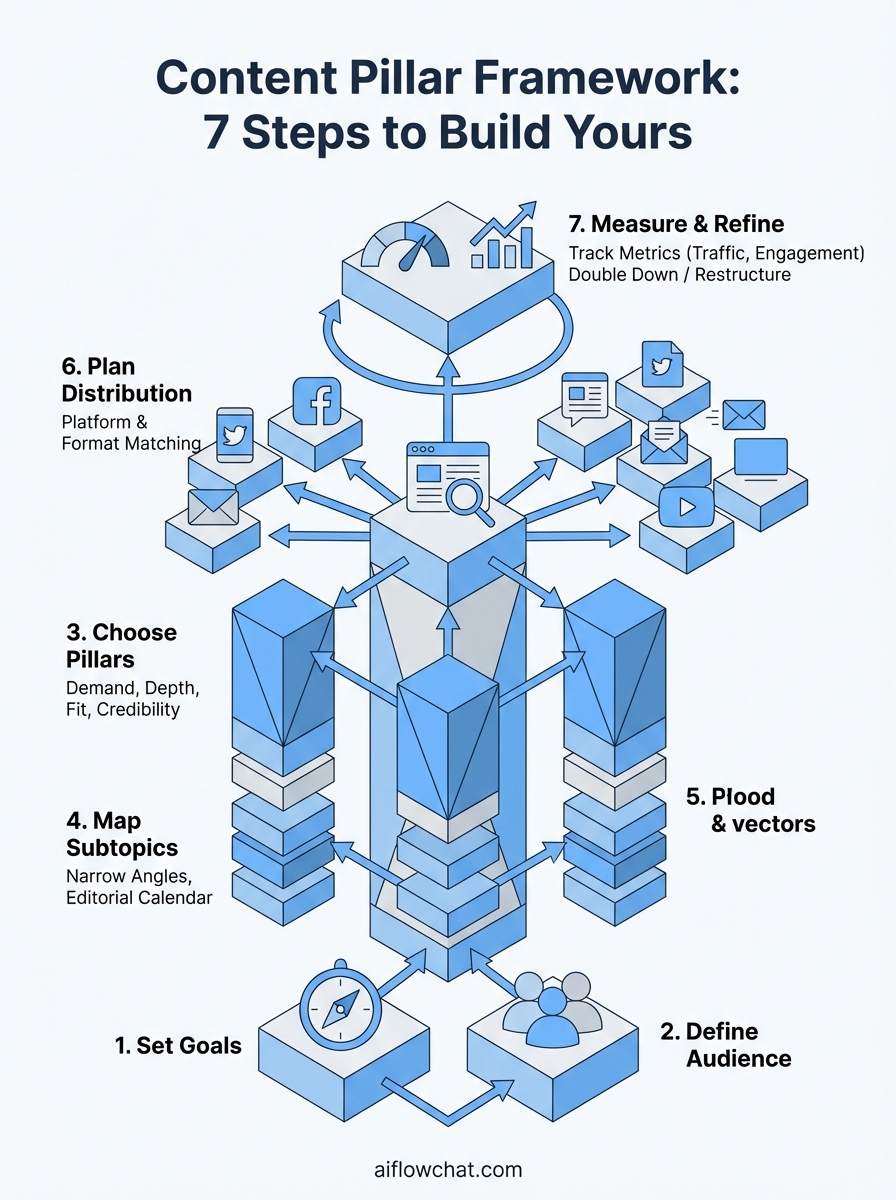
You now have a complete content pillar framework built across seven concrete steps. Start with goals and audience, select three to five pillars that pass the relevance and depth filters, map eight to twelve subtopics under each one, build a hub page with internal links, distribute each piece to the right platform in the right format, and review your pillar-level metrics every 30 days. That is the full system. Executing it consistently is what separates creators who compound their growth from those who keep starting over.
Putting this into practice gets faster when you have the right tool behind it. AI Flow Chat lets you pull competitor videos, ads, and reference docs directly onto a visual canvas, then generate on-brand content across every pillar without rebuilding your workflow from scratch each time. If you are ready to scale your framework, that is the logical next step.
Continue Reading
Discover more insights and updates from our articles
Choose an AI model for scripts, marketing copy, coding, research, long documents, and quick everyday work using a practical quality, speed, and credit-cost framework.
Compare eight current Poppy AI alternatives for visual research, creator workflows, general AI work, grounded synthesis, automation, and reusable delivery.
A practical method for turning a scattered content process into a clear AI-assisted flowchart with source context, review checks, and a reusable output.