More Prompts:

Best prompts for VEO3 for cinematic shots using perspective shifts

12 copy-ready, practical prompts for VEO3 to create cinematic perspective-shift shots. Each entry includes a concise explanation, a realistic example, and recommended AI assistants for generating shot plans or automating parameters.

Claude Sonnet 4
Claude Opus 4
Gemini 2.5 Pro
GPT-5
Gemini 2.5 Flash
You know that moment when you're staring at VEO3, wanting to create those jaw-dropping cinematic shots you see in movies, but your prompts keep producing generic, flat footage? You've probably spent hours tweaking settings and descriptions, only to get camera movements that look more like security footage than Hollywood magic. The gap between your creative vision and what AI actually delivers can be frustrating enough to make you want to give up on cinematic storytelling altogether.
These 12 battle-tested VEO3 prompts eliminate the guesswork by giving you precise, copy-ready instructions for creating professional perspective shifts that rival big-budget productions. Each prompt combines specific camera movements like dolly-ins, whip pans, and crane shots with detailed technical parameters, so you'll know exactly what to type and what results to expect. Instead of wasting time on trial and error, you'll have a complete toolkit that transforms your basic AI footage into cinematic gold with perspective shifts that captivate viewers and elevate your storytelling.
1
Low-Angle Dolly-In Reveal
VEO3: Low-angle dolly-in from 6.0m to 2.0m over 4s. Start camera height 0.8m, end 0.4m. Maintain subject centered; tilt up smoothly +12° during move (ease-in 0.2, ease-out 0.2). Lens: 35mm, aperture f/2.8, shutter 1/50. Keep exposure constant and stabilize roll to 0°.
Combines a forward dolly with a slight upward tilt to reveal a taller background or make the subject feel monumental.
2
Orbiting Parallax Shift
VEO3: Orbit clockwise 90° around subject at radius 3.5m while dolly backward from 2.0m to 4.5m over 6s. Simultaneously pan to keep subject on left third, hold camera height 1.6m. Lens: 50mm, aperture f/4 for moderate DOF. Use smooth bezier path, ease-in 0.15, ease-out 0.15.
Creates strong parallax between foreground subject and background, emphasizing depth and environment.
3
Whip Pan Perspective Jump
VEO3: Execute a whip pan right 120° in 0.3s with motion blur on; immediately hold a new framing 60° off-axis for 3s. Pre-mark in and out focus positions; perform frame hold at new perspective with a 0.6s settle. Lens: 24mm, aperture f/5.6 to keep both planes readable.
A quick whip pan to jump perspective and reveal a new spatial relationship; use motion blur for continuity.
4
Rack Focus with Dutch Tilt Shift
VEO3: Start with Dutch tilt -8° and subject in foreground focus (0.8m). Over 2.5s, rack focus to background at 5.0m while leveling camera to 0° roll and shifting right 0.9m. Lens: 85mm, aperture from f/1.8 (foreground) to f/4 (background). Maintain manual exposure adjustments to compensate.
Combines focus rack and a simultaneous roll/slide to change viewer alignment and emphasize narrative shift.
5
Vertical Crane Foreground-to-Background Transition
VEO3: Pedestal up 1.8m to 3.0m while dolly forward 1.5m over 5s. Start with tight foreground element occupying left third; lift to reveal background landscape and subject. Maintain neutral roll and slow pitch up +5°. Lens: 35mm, aperture f/5.6.
Lifting and moving forward simultaneously transitions attention from a small foreground detail to a wide background scene.
6
Over-the-Shoulder Push-Through
VEO3: Start OTS at 1.2m behind shoulder, push through past subject to 0.8m in front over 3s, creating foreground-to-background parallax. Slight tilt down -6° as you pass to keep eye-line stable. Lens: 50mm, aperture f/2.8, keep autofocus on subject face with face-tracking fallback.
A push-through that moves the camera through a foreground element to change perspective while maintaining narrative continuity.
7
Lens-Flare Leading Lines Pullback
VEO3: Pull back from 1.0m to 5.0m over 6s on axis with the sun or strong practical light at upper-right. Slight tilt down -8° and slide left 0.6m to keep leading lines aligned. Use ND to retain aperture f/2.0 for controlled flare. Add gentle roll compensation to keep horizon level.
A pullback that leverages a flare and compositional leading lines to shift perspective and reveal context.
AI Flow Chat

Stop Losing Your AI Work

Tired of rewriting the same prompts, juggling ChatGPT and Claude in multiple tabs, and watching your best AI conversations disappear forever?

AI Flow Chat lets you save winning prompts to a reusable library, test all models in one workspace, and convert great chats into automated workflows that scale.
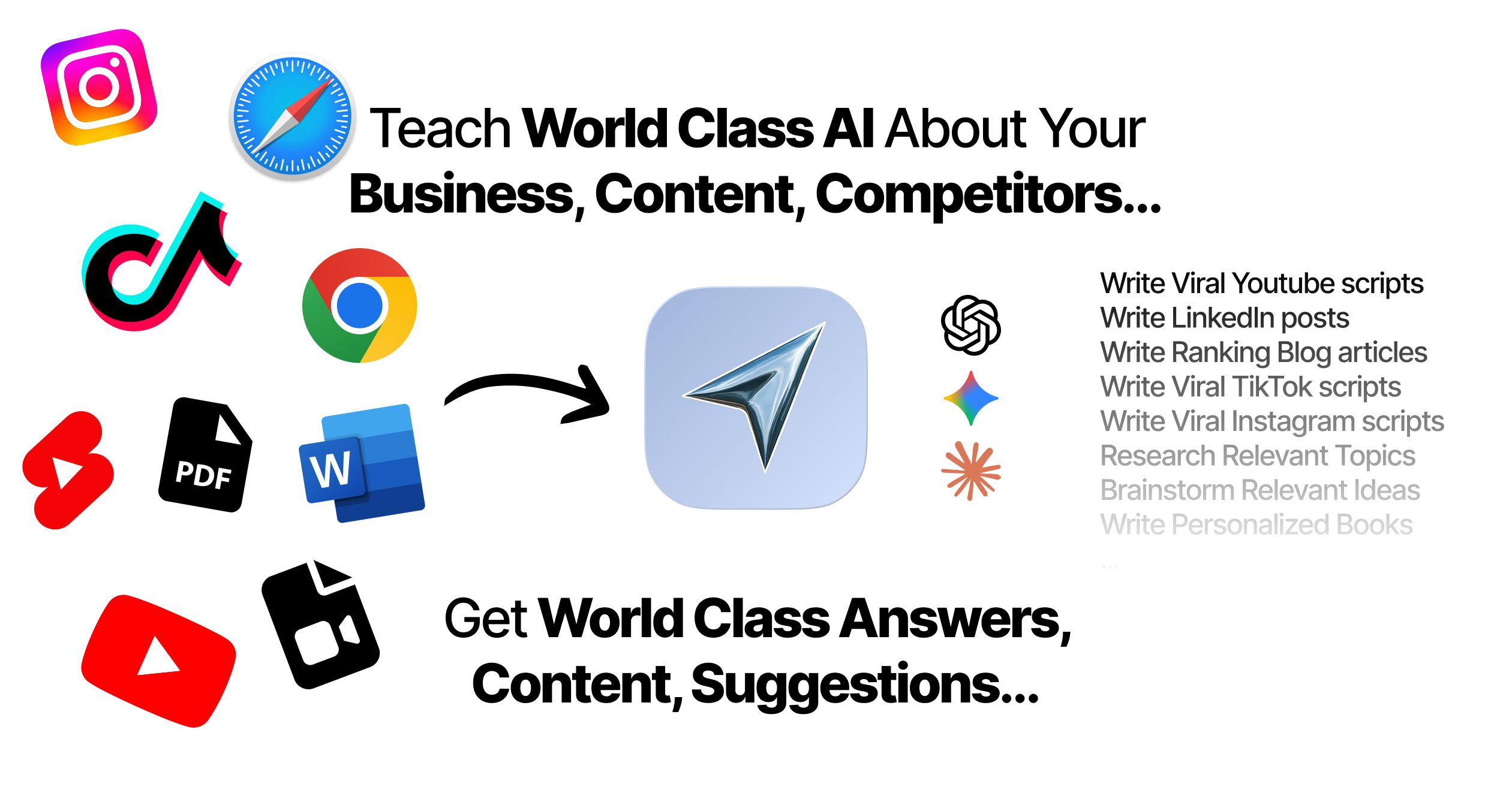

Teach World Class AI About Your Business, Content, Competitors… Get World Class Answers, Content, Suggestions...
AI Flow Chat powers our entire content strategy. We double down on what’s working, extract viral elements, and create stuff fast.
Video thumbnail

Reference Anything

Bring anything into context of AI and build content in seconds

YouTube

PDF

DOCX

TikTok

Web

Reels

Video Files

Twitter Videos

Facebook/Meta Ads

Tweets

Coming Soon

Audio Files

Coming Soon

Choose a plan to match your needs

Upgrade or cancel subscriptions anytime. All prices are in USD.

Basic

For normal daily use. Ideal for getting into AI automation and ideation.

$30/month
  • See what Basic gets you
  • 11,000 credits per month
  • Access to all AI models
  • 5 app schedules
  • Free optional onboarding call
  • 1,000 extra credits for $6
Get Started

No risk, cancel anytime.

ProRecommended

For power users with high-volume needs.

$100/month
  • See what Pro gets you
  • 33,000 credits per month
  • Access to all AI models
  • 10 app schedules
  • Remove AI Flow Chat branding from embedded apps
  • Free optional onboarding call
  • 2,000 extra credits for $6
Get Started

No risk, cancel anytime.

Frequently Asked Questions

Everything you need to know about AI Flow Chat. Still have questions? Contact us.