More Prompts:

Best prompts for Suno AI for background tracks using minimalist compositions

12 copy-ready, practical prompts for generating minimalist background tracks with Suno AI. Each entry includes a concise title, a short explanation of intent, a ready-to-paste prompt with concrete parameters (BPM, key, length, instrumentation, structure, mix notes) and a realistic example output/metadata. Works best with recommended LLMs for prompt refinement.


Claude Opus 4
GPT-5
Claude Sonnet 4
Gemini 2.5 Pro
Gemini 2.5 Flash
You've spent hours tweaking Suno AI prompts, only to get tracks that are too busy, too melodic, or just plain distracting for your background needs. The frustration is real when you need something subtle and minimal, but every generated track sounds like it wants to be the main character. What if you could nail the perfect understated vibe every single time?
These 12 battle-tested prompts give you instant access to professional-quality minimalist compositions that know how to stay in the background where they belong. From sparse ambient pads to delicate vibraphone loops, each prompt includes specific parameters like BPM, key signatures, and mix notes that eliminate the guesswork. Instead of wrestling with vague descriptions and getting overpowering results, you'll generate exactly the kind of subtle, atmospheric tracks that enhance your content without competing for attention.
1
Sparse Ambient Pad with Soft Piano Motif
Produce a 2:30 minimalist background track. Tempo 60 BPM, Key: E minor, 4/4. Instruments: lush evolving synth pad (low-passed), soft felt piano, subtle high triangle hits. Structure: 8-bar loopable motif; piano plays a sparse 4-note motif every 8 bars, pads swell slowly with 8-bar crescendos. Dynamics: keep piano -10 dB under pad; reverb: long hall on pad, short plate on piano; stereo: wide pad, centered piano. No percussion, no lead melody. Export: 24-bit WAV and stems (pad, piano, ambience).
Create a calm, minimal ambient bed with one repeating piano motif and long evolving pads suitable for background use or cinematic underscoring.
2
Minimal Marimba Pulse with Soft Ambience
Generate a 1:30 background loop. Tempo 72 BPM, Key: C major, 4/4. Instruments: muted marimba (dry), soft synth pad (very low volume), filtered acoustic bass drone under 100 Hz. Pattern: marimba plays a 2-bar repeating rhythmic motif with sparse rests; add a single soft synth stab on the downbeat of every 8 bars. Arrangement: keep consistent throughout with a small 8-bar modulation at 1:00 (slightly widen stereo and add micro-delay). Mixing: tighten low end (high-pass at 40 Hz), light tape saturation on marimba, short plate reverb on synth. Export loop-friendly 16-bar stems.
Create a rhythmic minimal loop driven by marimba/percussive mallets with a subtle ambient bed for gentle forward motion.
3
Sparse Electric Piano and Subtle Pulse
Create a 3:00 background track. Tempo 80 BPM, Key: A major, 4/4. Instruments: warm electric piano (80% wet chorus), soft analog sub-bass pulse (sidechain to piano), very light shuffled hi-hat (low volume) only to suggest groove. Structure: intro (0:00-0:30) pad fade in, core loop (0:30-2:30) with small variations, outro (2:30-3:00) fade out. Keep harmonic motion minimal: two chords alternating every 8 bars. Mixing: sidechain sub gently to piano, gentle reverb, stereo width moderate. Export 24-bit WAV and separate stems.
Minimal electric piano with a soft electronic pulse and no obvious melody—ideal for podcasts or product videos.
4
Single-Note Guitar Pluck with Long Reverb Bed
Generate a 2:00 ambient background track. Tempo free (no strict BPM) but feel ≈ 65 BPM, Key: D major (open voicings). Instruments: clean nylon-acoustic plucked guitar with heavy long hall reverb, low sustaining synth pad underlay, occasional distant bowed cello drone at 30% volume. Composition: single-note plucks spaced widely (2–6 seconds apart), no melodic runs, maintain large negative space. Dynamics: keep elements sparse and soft. Deliver WAV with a version looped for 8 bars and stems.
Minimal acoustic/electric plucked guitar pattern emphasizing space and reverb for contemplative background music.
5
Minimal Modular Synth Drone with Subtle Arpeggio
Produce a 3:30 minimal background track. Tempo 50 BPM (for arpeggio feel), Key: B minor, 4/4. Instruments: warm modular synth drone (rich low-mid content), soft metallic arpeggio (low velocity, repeating 1-bar figure), very light filtered noise for texture. Structure: drone constant, arpeggio enters at 0:16 and repeats with tiny modulation every 32 bars. Mix: heavy low shelving under 60 Hz removed, use slow evolving LP filter on arpeggio, apply wide chorus on drone. No percussion or lead lines. Export 24-bit WAV + stems (drone, arpeggio, texture).
Textural modular synth drone anchored by a quiet, repeating arpeggio to create understated motion.
6
Delicate Vibraphone Loop with Subdued Electronics
Create a 2:00 loopable background track. Tempo 68 BPM, Key: G major, 4/4. Instruments: bright vibraphone (soft mallet), thin ambient synth pad, low analog sine sub. Pattern: 4-bar vibraphone motif that repeats with micro-variations every 16 bars; synth pad sustains, sub holds root tone. Production: light stereo ping-pong delay on vibraphone, short reverb, soft compression on master (-1.5 dB gain reduction at peaks). Export: loopable 4-bar and full 2:00 WAV, stems.
A gentle vibraphone loop layered with minimal electronic pads and subtle low-frequency warmth for introspective tracks.
7
Quiet Piano Cluster and Low Drone
Generate a 2:45 minimal ambient background. Tempo free (suggested 60 BPM feel), Key: centered on C (use modal clusters), 4/4. Instruments: felt piano playing soft clusters and single low octave hits; low analog drone under 60 Hz; occasional soft bell harmonics at the top of the spectrum. Structure: random-like sparse hits every 4–12 seconds; maintain overall minimalism. Mix: limit high transients, gentle multiband compression on master. Export 24-bit WAV and dry/wet piano stems.
Sparse cluster chords on piano with a barely audible low drone to create tension without a pronounced melody.
AI Flow Chat

Stop Losing Your AI Work

Tired of rewriting the same prompts, juggling ChatGPT and Claude in multiple tabs, and watching your best AI conversations disappear forever?

AI Flow Chat lets you save winning prompts to a reusable library, test all models in one workspace, and convert great chats into automated workflows that scale.
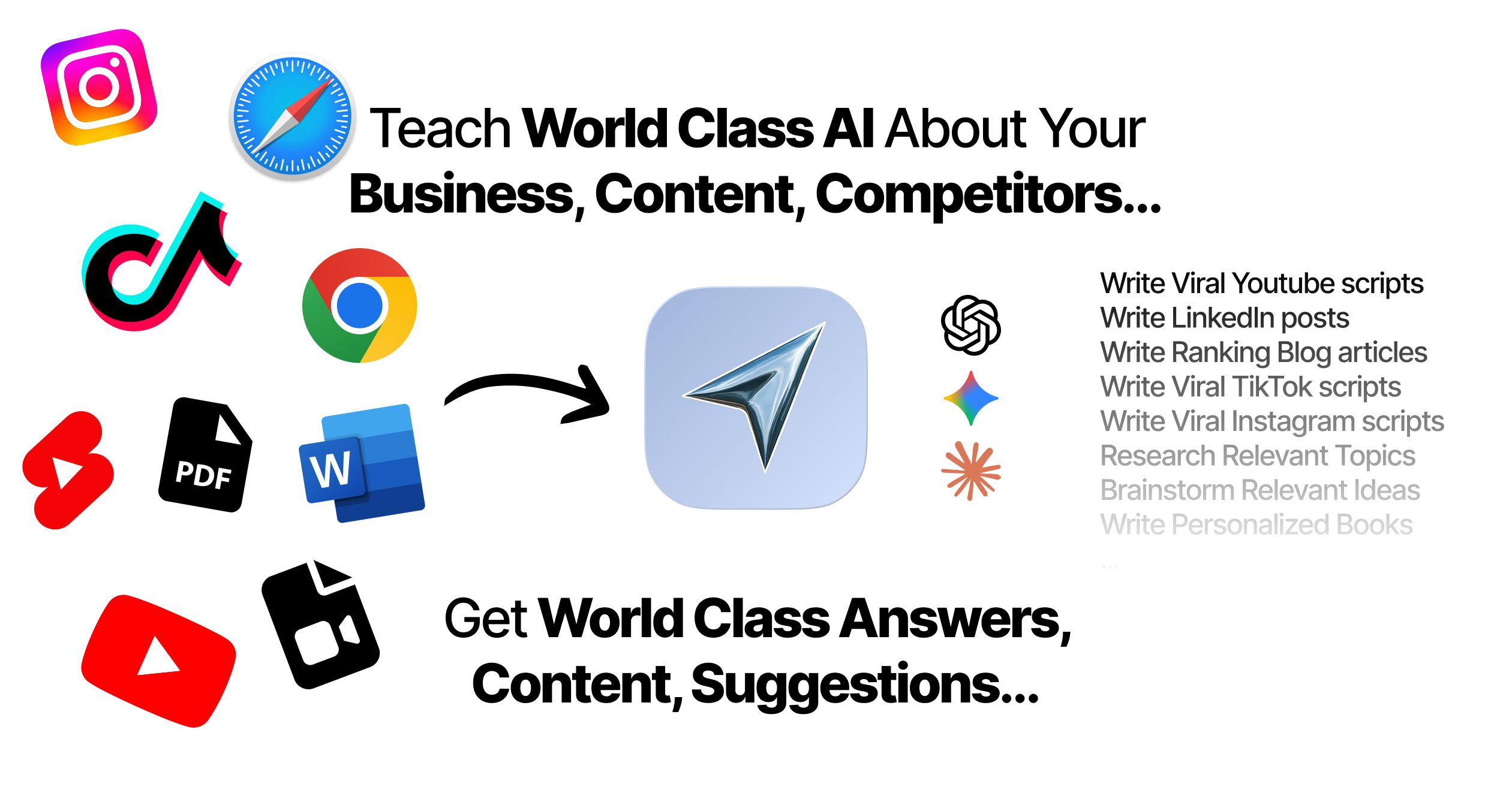

Teach World Class AI About Your Business, Content, Competitors… Get World Class Answers, Content, Suggestions...
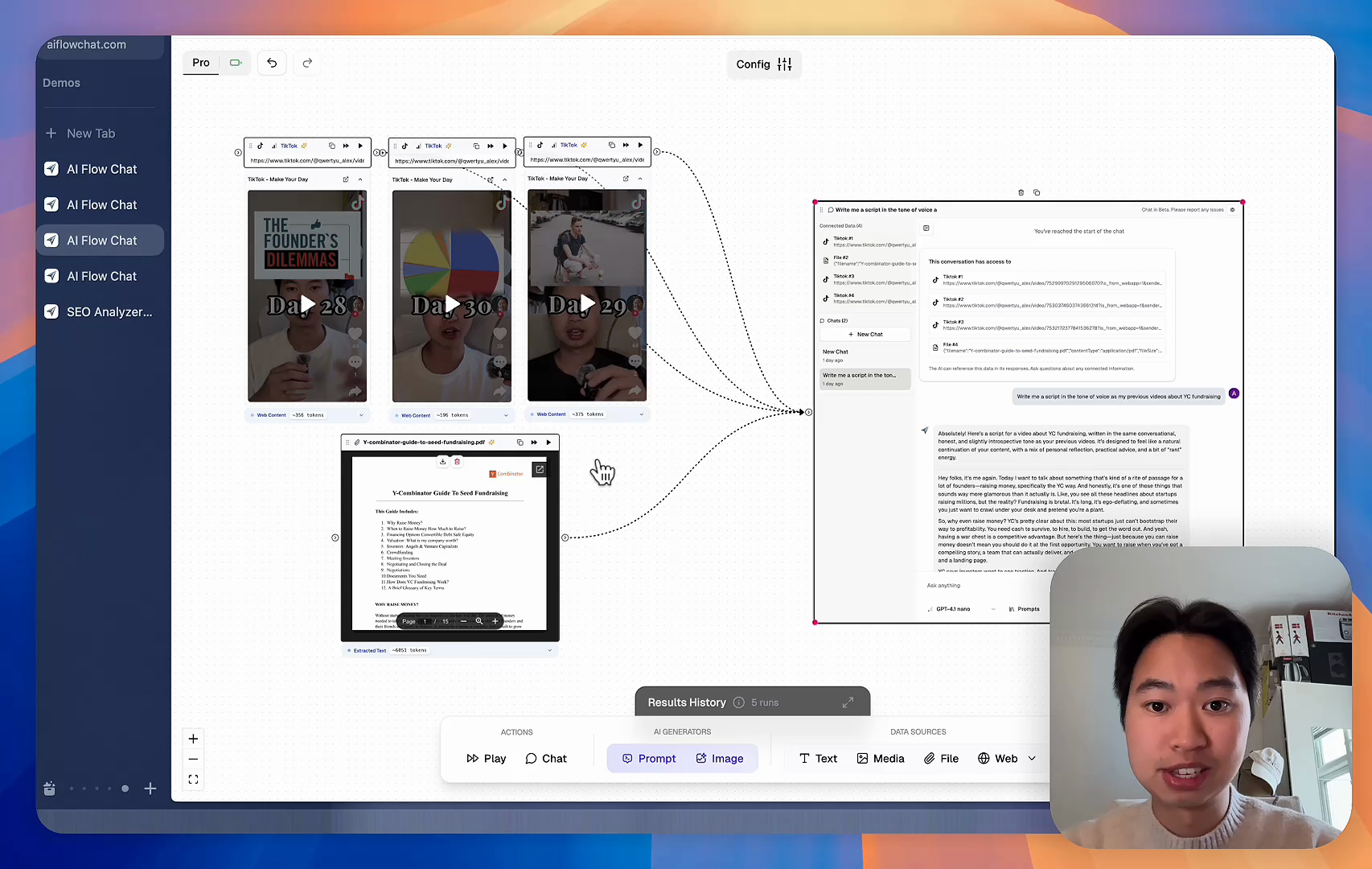
AI Flow Chat powers our entire content strategy. We double down on what’s working, extract viral elements, and create stuff fast.
Video thumbnail

Reference Anything

Bring anything into context of AI and build content in seconds

YouTube

PDF

DOCX

TikTok

Web

Reels

Video Files

Twitter Videos

Facebook/Meta Ads

Tweets

Coming Soon

Audio Files

Coming Soon

Choose a plan to match your needs

Upgrade or cancel subscriptions anytime. All prices are in USD.

Basic

For normal daily use. Ideal for getting into AI automation and ideation.

$30/month
  • See what Basic gets you
  • 11,000 credits per month
  • Access to all AI models
  • 5 app schedules
  • Free optional onboarding call
  • 1,000 extra credits for $6
Get Started

No risk, cancel anytime.

ProRecommended

For power users with high-volume needs.

$100/month
  • See what Pro gets you
  • 33,000 credits per month
  • Access to all AI models
  • 10 app schedules
  • Remove AI Flow Chat branding from embedded apps
  • Free optional onboarding call
  • 2,000 extra credits for $6
Get Started

No risk, cancel anytime.

Frequently Asked Questions

Everything you need to know about AI Flow Chat. Still have questions? Contact us.