More Prompts:

Best Prompts for Image Generation ChatGPT for Branding Using Color Psychology

A practical set of 13 copy-ready image-generation prompts focused on branding assets that apply color psychology. Each prompt gives clear instructions, required outputs, and an example you can paste and adapt for your brand.

Claude Opus 4
Gemini 2.5 Pro
GPT-5
Claude Sonnet 4
Gemini 2.5 Flash
You know that feeling when you ask ChatGPT to create a logo and get back something that looks like it was designed by a colorblind robot? You're not alone if you've spent hours tweaking generic prompts, only to end up with bland visuals that completely miss your brand's emotional target. Most creators struggle with this because they're missing the secret ingredient: color psychology prompts that actually tell AI how colors should make people feel.
This collection gives you 13 battle-tested prompts that merge AI image generation with proven color psychology principles, covering everything from logo variations and packaging mockups to social media templates and storefront signage. Each prompt includes specific color guidance, psychological reasoning, and ready-to-use examples you can customize for any brand. Instead of getting generic visuals that blend into the background, you'll generate branded assets that strategically use color to influence emotions, build trust, and drive conversions.
1
Logo Variations Focused on Color Psychology
Design 6 distinct logo concepts for the brand "{{BRAND_NAME}}" (industry: {{INDUSTRY}}, target audience: {{AUDIENCE}}). For each concept provide: a) 3 color palettes (primary + two accents) with hex codes chosen using color psychology explaining why each palette fits the brand mood (one palette for trust/calm, one for energy/urgency, one for luxury/exclusivity), b) a one-line concept description, c) vector-friendly composition (mark if logomark, wordmark, or combination), d) 1024x1024 PNG with transparent background and monochrome black/white variations. Style: clean, modern, geometric. Deliver: 6 labeled image files + a JSON block listing palette hex codes and color usage proportions (e.g., Primary 60%, Accent1 25%, Accent2 15%).
Generate multiple logo concepts with color palettes chosen for a specified brand mood and audience, including hex codes and usage suggestions.
2
Brand Moodboard Using Color Psychology
Generate a 1920x1080 brand moodboard for "{{BRAND_NAME}}" (industry: {{INDUSTRY}}, audience: {{AUDIENCE}}) that visually pairs three color palettes with corresponding photographic/illustrative examples and typography pairings. For each palette include: hex codes, emotional keywords (2–4), recommended font families (serif/sans weights), contrast ratio notes for accessibility, and three thumbnail imagery references. Layout: left column palettes + notes, center image collage, right column typography + application examples (business card, app splash, hero banner). Output as a high-resolution PNG and a JSON summary of palette hexes and rationale.
Create a visual moodboard that ties color palettes to brand emotions, imagery, and typography guidance.
3
Product Packaging Mockup with Color Psychology Guidelines
Create 3 distinct product packaging mockups (front, back, top views) for "{{BRAND_NAME}}" {{PRODUCT_TYPE}}. Include: a primary color palette (hex codes) selected for desired consumer response using color psychology (explain 3 bullet points why each color affects purchase behavior), label typography, recommended tactile finishes (matte/gloss/foil), and color usage percentages per panel. Provide high-resolution 2000x2000 PNGs for each mockup and a second set of PNGs showing alternative palettes (two variations). Also include a short printable PDF-style guide (single page) summarizing accessibility contrast ratios and suggested retail shelf placement color callouts.
Produce packaging mockups and a color-usage guide explaining how chosen colors influence perception and sale behavior.
4
Social Media Carousel Templates with Color Psychology
Design a 5-slide Instagram carousel template set (1080x1080 each) for "{{BRAND_NAME}}" promoting {{CAMPAIGN_TYPE}}. Provide: a primary color system (primary, secondary, accent) with hex codes and recommended percentage use per slide, CTA color choice rationale using color psychology, 3 sample content layouts (quote, feature list, testimonial) and exportable PNGs for each slide. Include a style JSON with exact padding, grid sizes, and font sizes for headings/body/CTA to replicate in design tools.
Design multi-slide social templates that follow a color hierarchy to influence engagement and CTA conversions.
5
Website Hero Image + Color Layering
Produce a responsive website hero image (desktop 1440x700, mobile 820x360) for "{{BRAND_NAME}}" (goal: {{GOAL}}). Include: base photography/illustration style, two overlay color gradients with hex stops and opacity values selected to steer focus to the CTA using color psychology, safe-area guidance for text contrast, and suggested CTA button color (with hover color). Deliver JPEGs for both sizes and a small schematic PNG showing safe text zones and overlay specs.
Create a website hero visual with layered color overlays chosen to guide attention and conversion.
6
App Icon + Microbrand Color System
Design 4 app icon variants for "{{APP_NAME}}" (category: {{CATEGORY}}). For each icon provide: main & accent hex codes, contrast verification against common OS backgrounds (light/dark), simplified mono version for favicons, and a 64x64 PNG and 512x512 PNG export. Also produce a microbrand color system: primary, secondary, accent, neutral, and error colors with recommended usage percentages and WCAG AA contrast checks against white/black.
Design an app icon and microbrand color system optimized for recognizability at small sizes, including accessible contrast tests.
7
Business Card Mockup with Color Psychology Notes
Create a double-sided business card design for "{{PERSON_NAME}}" at "{{BRAND_NAME}}". Card size 3.5x2 in, 300 DPI. Provide front and back PNGs and a print-ready PDF. Include: primary brand palette (hex codes), color psychology notes explaining how chosen colors support credibility/memory, recommended ink/finish (spot UV, matte), and a small 1:1 ratio swatch showing dominant vs accent color usage.
Create a double-sided business card design that uses color to communicate trustworthiness and memorability.
AI Flow Chat

Stop Losing Your AI Work

Tired of rewriting the same prompts, juggling ChatGPT and Claude in multiple tabs, and watching your best AI conversations disappear forever?

AI Flow Chat lets you save winning prompts to a reusable library, test all models in one workspace, and convert great chats into automated workflows that scale.
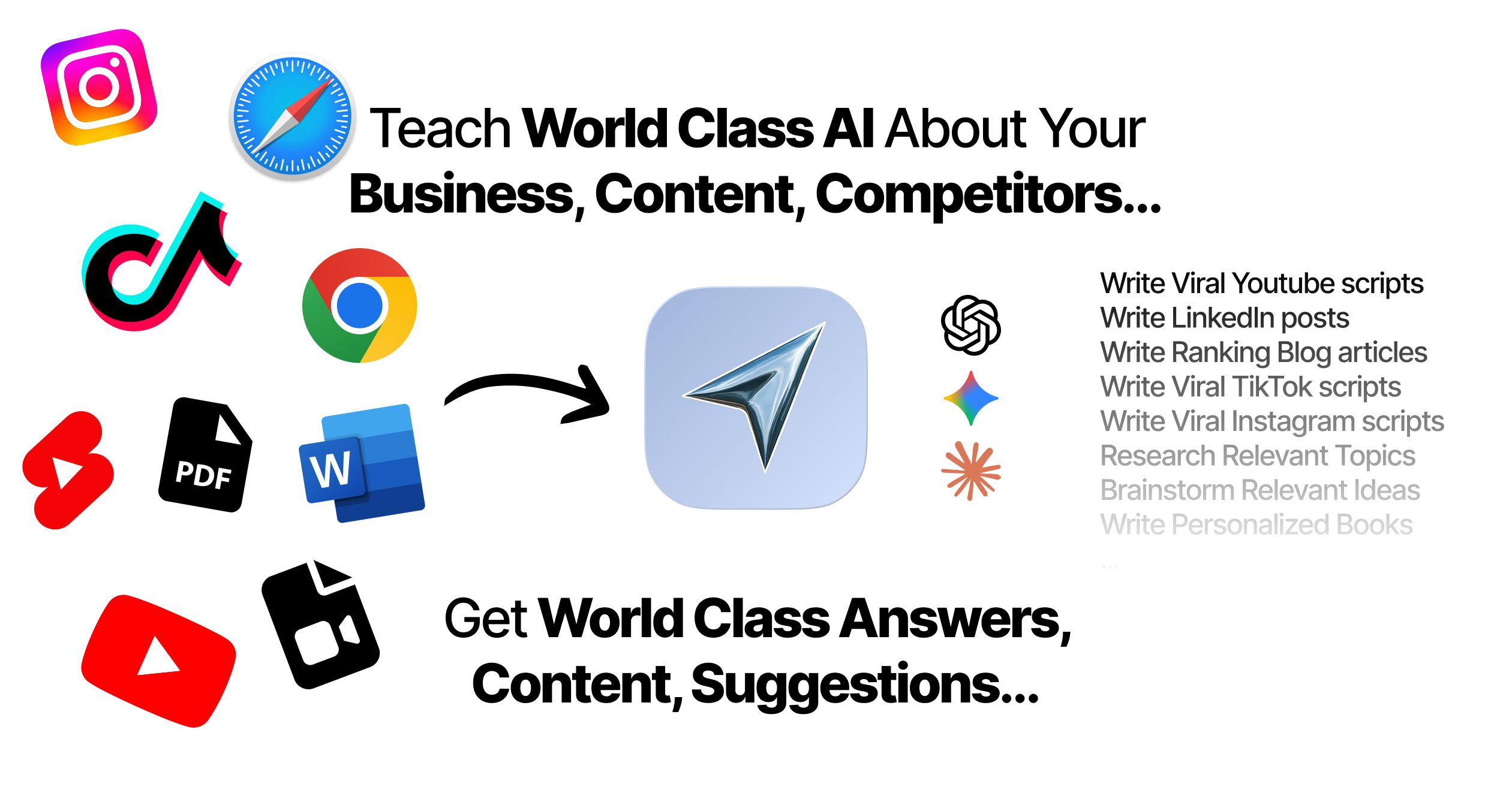
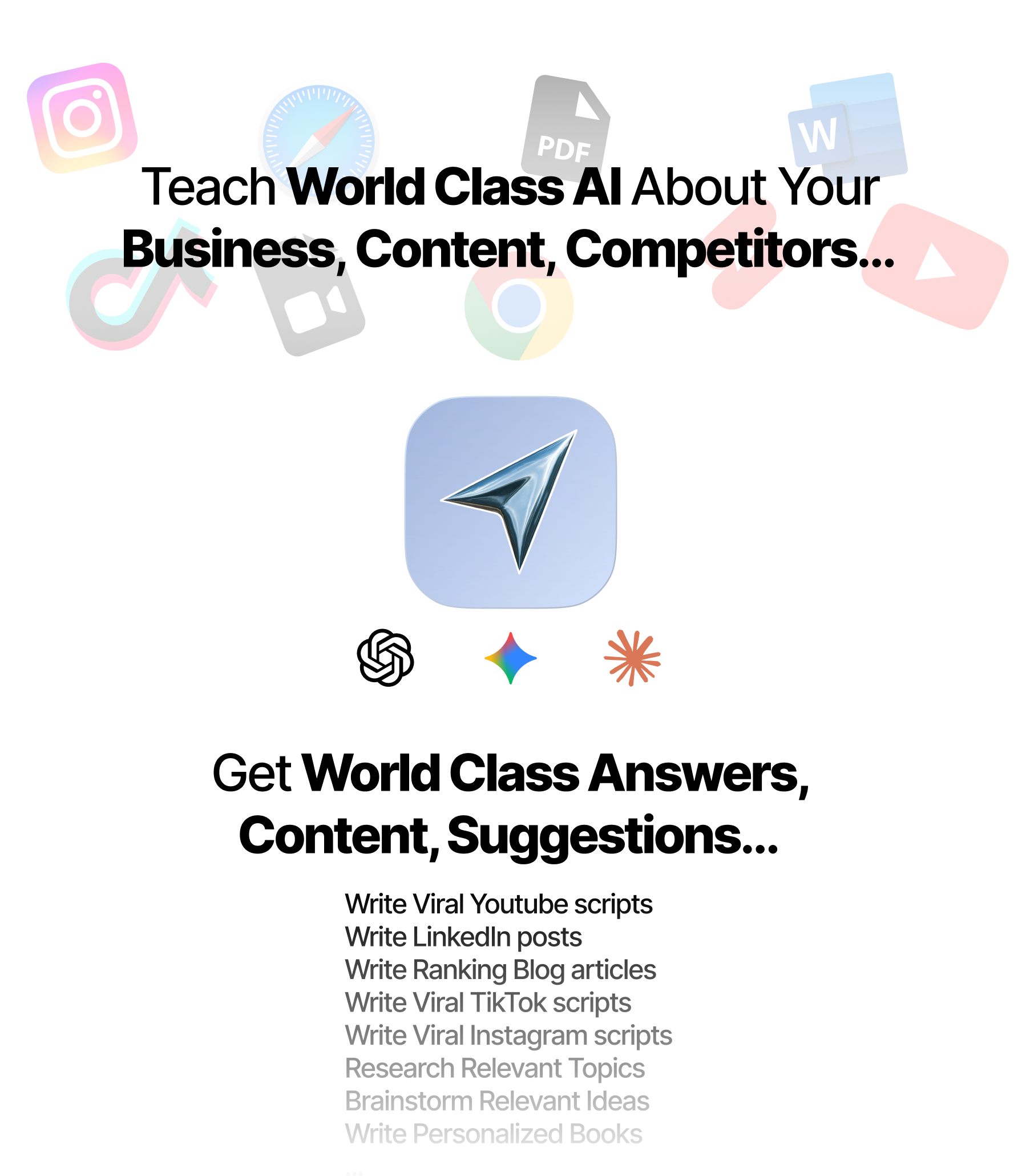
Teach World Class AI About Your Business, Content, Competitors… Get World Class Answers, Content, Suggestions...
AI Flow Chat powers our entire content strategy. We double down on what’s working, extract viral elements, and create stuff fast.
Video thumbnail

Reference Anything

Bring anything into context of AI and build content in seconds

YouTube

PDF

DOCX

TikTok

Web

Reels

Video Files

Twitter Videos

Facebook/Meta Ads

Tweets

Coming Soon

Audio Files

Coming Soon

Choose a plan to match your needs

Upgrade or cancel subscriptions anytime. All prices are in USD.

Basic

For normal daily use. Ideal for getting into AI automation and ideation.

$30/month
  • See what Basic gets you
  • 11,000 credits per month
  • Access to all AI models
  • 5 app schedules
  • Free optional onboarding call
  • 1,000 extra credits for $6
Get Started

No risk, cancel anytime.

ProRecommended

For power users with high-volume needs.

$100/month
  • See what Pro gets you
  • 33,000 credits per month
  • Access to all AI models
  • 10 app schedules
  • Remove AI Flow Chat branding from embedded apps
  • Free optional onboarding call
  • 2,000 extra credits for $6
Get Started

No risk, cancel anytime.

Frequently Asked Questions

Everything you need to know about AI Flow Chat. Still have questions? Contact us.