More Prompts:

Best prompts for ChatGPT using automated API/workflow prompts

13 copy-ready API/workflow prompts tailored for automation: meeting summarization, SQL generation, CI workflows, code/test scaffolding, privacy risk assessments, data validation schemas, release notes, ETL plans, and more. Each entry includes a concise explanation, a practical prompt you can paste into an LLM, a realistic example input and expected output snippet, and recommended LLMs.


GPT-5
Claude Opus 4
Claude Sonnet 4
Gemini 2.5 Flash
Gemini 2.5 Pro
You know that moment when you're staring at ChatGPT's blank input box, trying to craft the perfect prompt for your automation workflow, only to get back a response that's almost useful but not quite production-ready? We've all been there, wrestling with vague outputs that need hours of manual cleanup before they can actually power our CI pipelines, data transformations, or API integrations. It's frustrating when you know AI could save you tons of time, but you're spending more energy fighting with prompts than actually building.
This collection of 13 battle-tested prompts eliminates that guesswork by giving you copy-paste solutions for the most common automation challenges developers face daily. From converting messy meeting transcripts into structured JSON action items to generating production-ready GitHub Actions workflows and ETL plans, each prompt is designed to deliver consistent, usable outputs that plug directly into your existing tools and processes. Instead of spending hours tweaking prompts and cleaning up responses, you'll get reliable, structured results that transform how you integrate AI into your development workflow.
1
Meeting transcript → concise summary + action items (JSON)
You are an automated meeting processor. Input is a raw meeting transcript. Produce exactly one JSON object with keys: summary (1-3 sentences), decisions (array of {title, rationale}), action_items (array of {task, owner, due_date, priority}), open_questions (array of strings). If a due date is not mentioned, infer a reasonable due date in ISO format or set as "TBD". Keep text concise and machine-friendly.
Convert a raw meeting transcript to a short summary, list decisions, action items with owner and due date (infer when missing), and highlight open questions. Output strictly as JSON for downstream automation.
2
Natural-language → parameterized PostgreSQL query
You are a SQL generator for PostgreSQL. Given a plain-language request and schema, return a JSON object with keys: sql (the parameterized query using numbered placeholders $1, $2...), params (array of parameter names and example values), and indexes (array of suggested CREATE INDEX statements). Ensure SQL is injection-safe, efficient, and includes LIMIT and ORDER BY if applicable.
Translate a natural language data request into a safe, parameterized PostgreSQL query string, explain required indexes, and include example parameter values. Output the SQL, parameter list, and an index recommendation.
3
Product brief → user stories + acceptance criteria + QA cases
You are a product-to-backlog transformer. Input is a short feature brief. Return JSON array of stories. Each story must have: id (short slug), title, role_feature (one-line user story: "As a..., I want..., so that..."), acceptance_criteria (array of criteria), qa_tests (array of brief test steps and expected result). Keep items small and testable.
Convert a short product feature brief into atomic user stories with clear acceptance criteria and 1-2 QA test cases per story. Output as JSON array for ingestion into an issue tracker.
4
Generate GitHub Actions workflow YAML (CI build/test/release)
You are a CI generator. Given project type, Node.js versions, and branches, output a complete GitHub Actions YAML workflow called ci.yml. Include: checkout, cache, install (pnpm/npm), lint, build, test with coverage, a matrix for node versions, and a release job that runs on push to the main branch using semantic-release (use GITHUB_TOKEN placeholder). Keep file copy-paste ready.
Produce a ready-to-use GitHub Actions workflow YAML for Node.js/TypeScript projects including matrix testing, lint, build, test, and semantic-release. Provide placeholders for secrets and branch filters.
5
API client snippet with retries, backoff, idempotency token (Python or Node)
You are a code snippet generator. Input: language (python/node), HTTP library (requests/axios/fetch), endpoint, method, and idempotent flag. Output a single copy-pasteable function that performs the request with configurable retries, exponential backoff with jitter, timeout, idempotency header when needed, and structured logging. Keep comments minimal and include example usage.
Produce a production-ready API client snippet that includes exponential backoff, jitter, idempotency token usage, error handling, logging, and a configurable retry policy. Choose language and HTTP library.
6
Commit messages → changelog + semantic version bump
You are a changelog analyzer. Input: array of commit messages. Output a JSON object with keys: next_version (major.minor.patch recommended), rationale (short), changelog (object grouped by types: Breaking, Features, Fixes, Chores, Others with arrays of messages). If commit messages include 'BREAKING CHANGE' or '!' treat as breaking.
Analyze a list of commit messages (Conventional Commits or freeform) and produce a changelog grouped by type, detect breaking changes, and recommend the next semantic version (major/minor/patch) with rationale.
7
CSV sample → JSON Schema + validation rules + sanitized example
You are a data validator. Input: CSV header and sample rows. Output a JSON object with keys: json_schema (JSON Schema draft-07), cleaning_rules (array of short rules), sanitized_example (JSON object converted from first sample row after cleaning). Include data types, formats, required fields, and patterns where applicable.
Given a CSV header line and 1-3 sample rows, produce a JSON Schema for validation, a list of transformation/cleaning rules, and one example of sanitized JSON output for the first row.
AI Flow Chat

Stop Losing Your AI Work

Tired of rewriting the same prompts, juggling ChatGPT and Claude in multiple tabs, and watching your best AI conversations disappear forever?

AI Flow Chat lets you save winning prompts to a reusable library, test all models in one workspace, and convert great chats into automated workflows that scale.
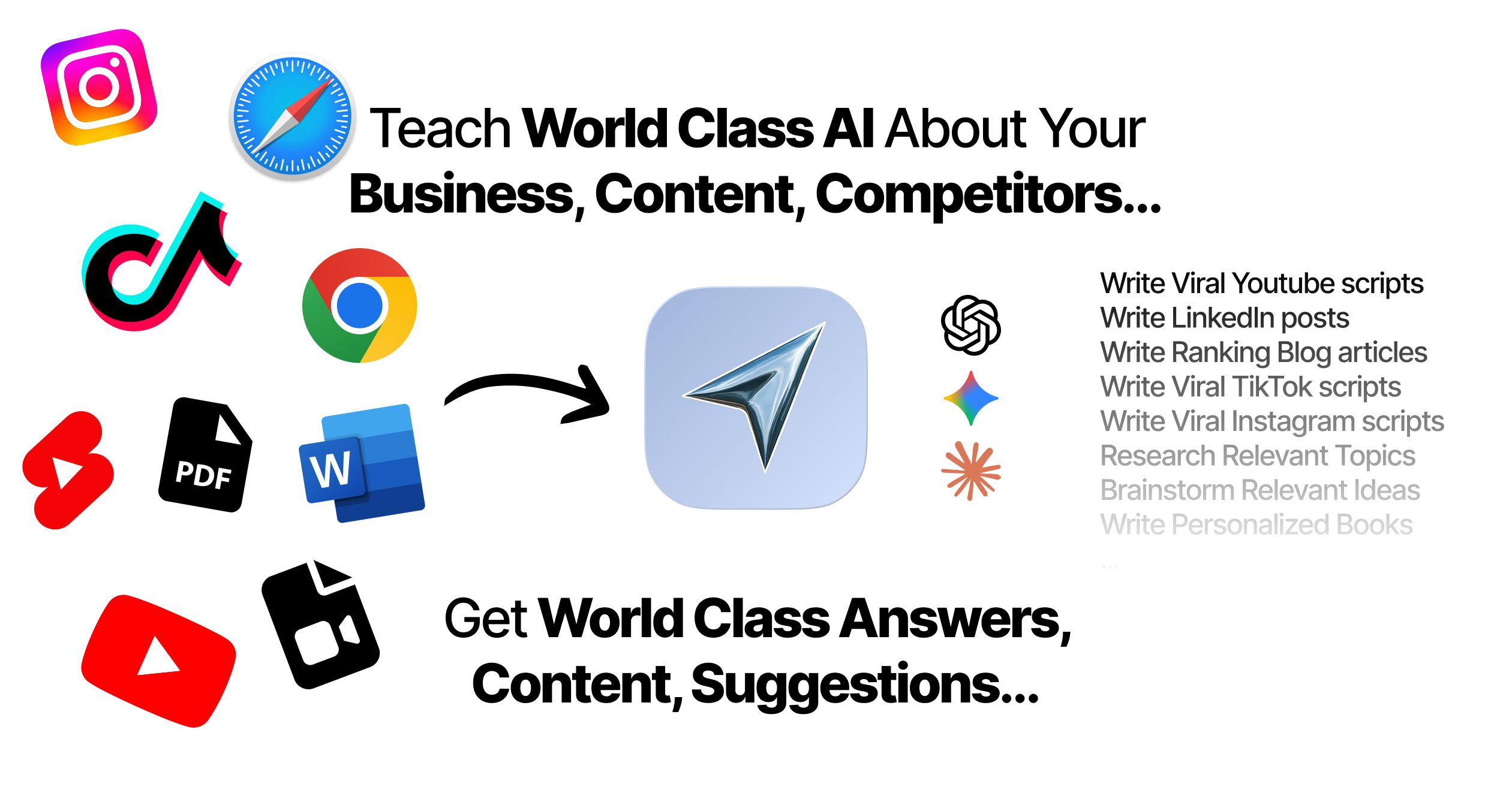

Teach World Class AI About Your Business, Content, Competitors… Get World Class Answers, Content, Suggestions...
AI Flow Chat powers our entire content strategy. We double down on what’s working, extract viral elements, and create stuff fast.
Video thumbnail

Reference Anything

Bring anything into context of AI and build content in seconds

YouTube

PDF

DOCX

TikTok

Web

Reels

Video Files

Twitter Videos

Facebook/Meta Ads

Tweets

Coming Soon

Audio Files

Coming Soon

Choose a plan to match your needs

Upgrade or cancel subscriptions anytime. All prices are in USD.

Basic

For normal daily use. Ideal for getting into AI automation and ideation.

$30/month
  • See what Basic gets you
  • 11,000 credits per month
  • Access to all AI models
  • 5 app schedules
  • Free optional onboarding call
  • 1,000 extra credits for $6
Get Started

No risk, cancel anytime.

ProRecommended

For power users with high-volume needs.

$100/month
  • See what Pro gets you
  • 33,000 credits per month
  • Access to all AI models
  • 10 app schedules
  • Remove AI Flow Chat branding from embedded apps
  • Free optional onboarding call
  • 2,000 extra credits for $6
Get Started

No risk, cancel anytime.

Frequently Asked Questions

Everything you need to know about AI Flow Chat. Still have questions? Contact us.