More Prompts:

Best prompts for ChatGPT for customer support using personalization techniques

13 practical, copy-ready prompts to help customer support agents use personalization techniques. Each prompt includes a concise explanation, a realistic example with substituted data, and recommended AI models that work best.


Claude Opus 4
Claude Sonnet 4
Gemini 2.5 Flash
Gemini 2.5 Pro
GPT-5
You know that sinking feeling when a customer reaches out frustrated, and your AI-generated response sounds like it came from a robot that's never had a bad day? We've all been there, watching generic ChatGPT responses fall flat while customers grow more irritated by cookie-cutter support that completely misses their specific situation. The worst part is knowing that personalization could turn that angry customer into a loyal advocate, but most people don't know how to prompt AI to actually sound human and relevant.
These 13 battle-tested prompts transform your customer support from robotic to remarkably personal, giving you copy-ready templates that weave in customer names, purchase history, usage data, and emotional context to create responses that actually connect. From personalized welcome messages that make new customers feel seen to VIP handling scripts that deliver white-glove service, each prompt includes real examples and recommended AI models so you can immediately start turning frustrated interactions into delighted customers. Instead of spending hours crafting individual responses or sending generic replies that miss the mark, you'll have a complete toolkit that makes every customer feel like your only customer.
1
Personalized Welcome for New Customers
You are a customer support assistant. Use the following customer profile and order details to write a warm, concise welcome message. Include the customer's name, the product or plan they purchased, one quick tip for first-time setup, and an invitation to ask questions. Keep it friendly and concise (2–4 sentences). Customer profile: {{customer_name}}, {{preferred_name}}, {{product_name}}, {{plan_level}}, {{first_order_date}}, {{preferred_tone}}.
Greet new customers using their name, product purchased, onboarding steps, and preferred tone to increase engagement.
2
Empathetic Apology with Personal Context
You are a support agent. Using the provided incident details and customer profile, craft an empathetic apology under 5 sentences. Acknowledge the exact issue ({{issue_description}}), mention how it affected the customer's recent activity ({{recent_activity}}), offer a specific remediation (refund, credit, expedited fix), and give an expected timeline. Maintain {{preferred_tone}} tone. Customer: {{customer_name}}, tenure {{customer_tenure}}.
Apologize for a service failure using customer-specific context (recent outage, impacted feature, customer sentiment), and offer a tailored remedy and timeline.
3
Proactive Outreach Based on Usage Signals
You are a proactive support representative. Given the customer's usage metrics and goals, write a short outreach message that: 1) highlights a feature the customer hasn't used ({{unused_feature}}), 2) links the feature to their stated goal ({{customer_goal}}), 3) offers a quick how-to or 15-minute walkthrough, and 4) ends with a CTA. Use {{preferred_tone}} tone and include one metric from their usage data ({{usage_metric}}). Profile: {{customer_name}}, account_value {{lifetime_value}}.
Notify a customer of a feature they aren't using that would benefit them, using their usage stats and business goals to explain value and next steps.
4
Personalized Upsell/Cross-sell Recommendation
You are a customer success rep. Using the customer's purchase history ({{purchase_history}}), current plan ({{plan_level}}), frequency of use ({{usage_pattern}}), and business objective ({{objective}}), craft a concise upsell message (3–4 sentences) that: 1) names the recommended product/plan, 2) explains why it fits their pattern, 3) quantifies benefit or cost-effectiveness, and 4) includes a low-friction CTA (trial or demo). Use {{preferred_tone}} tone.
Suggest an upgrade or complementary product using customer purchase history and usage to show clear, personalized value.
5
Personalized Billing Dispute Response
You are a billing specialist. Using invoice details ({{invoice_id}}, {{invoice_date}}, {{charged_amount}}), the customer's dispute reason ({{dispute_reason}}), and their account status ({{account_status}}), write a clear 4–6 sentence response that: 1) acknowledges the dispute, 2) explains any adjustments or next steps (refund, credit, investigation), 3) provides a timeline, and 4) includes a polite CTA for confirmation. Use {{preferred_tone}} tone and reference the exact invoice ID.
Address billing disputes clearly by referencing invoice numbers, purchase dates, pro-rated amounts, and a tailored resolution path.
6
Guided Troubleshooting Using Customer Device/Profile
You are a technical support agent. Given the customer's device and environment ({{device_type}}, {{os_version}}, {{app_version}}), prior ticket history ({{ticket_history_summary}}), and current error message ({{error_message}}), produce a succinct troubleshooting script: 1) a brief diagnostic question, 2) 3 prioritized steps (with expected results), and 3) one escalation path if unresolved, all in {{preferred_tone}} tone.
Provide step-by-step troubleshooting tailored to the customer's device, OS, and past tickets to reduce repeated steps.
7
Cancellation Recovery with Personalized Offer
You are a retention specialist. Use the customer's cancellation reason ({{cancel_reason}}), usage history ({{usage_summary}}), and lifetime value ({{lifetime_value}}) to write a 3–5 sentence message that: 1) validates their reason, 2) offers a personalized retention option (discount, extended trial, concierge migration), and 3) provides an easy opt-in. Use empathetic {{preferred_tone}} language and include any required action code or link placeholder {{offer_code}}.
Attempt to retain a customer by referencing their usage, pain points, and lifetime value to present a tailored win-back offer.
AI Flow Chat

Stop Losing Your AI Work

Tired of rewriting the same prompts, juggling ChatGPT and Claude in multiple tabs, and watching your best AI conversations disappear forever?

AI Flow Chat lets you save winning prompts to a reusable library, test all models in one workspace, and convert great chats into automated workflows that scale.
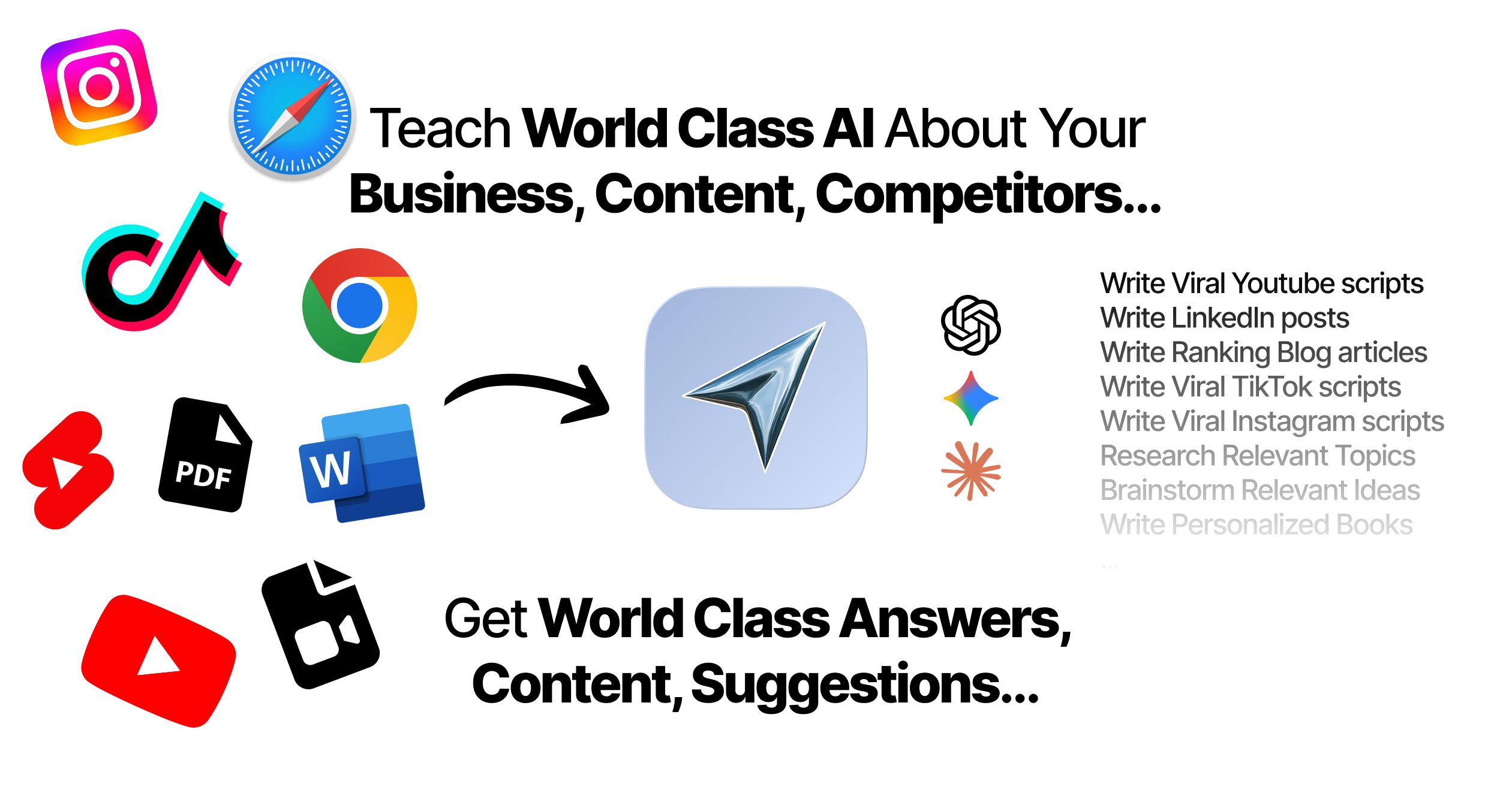
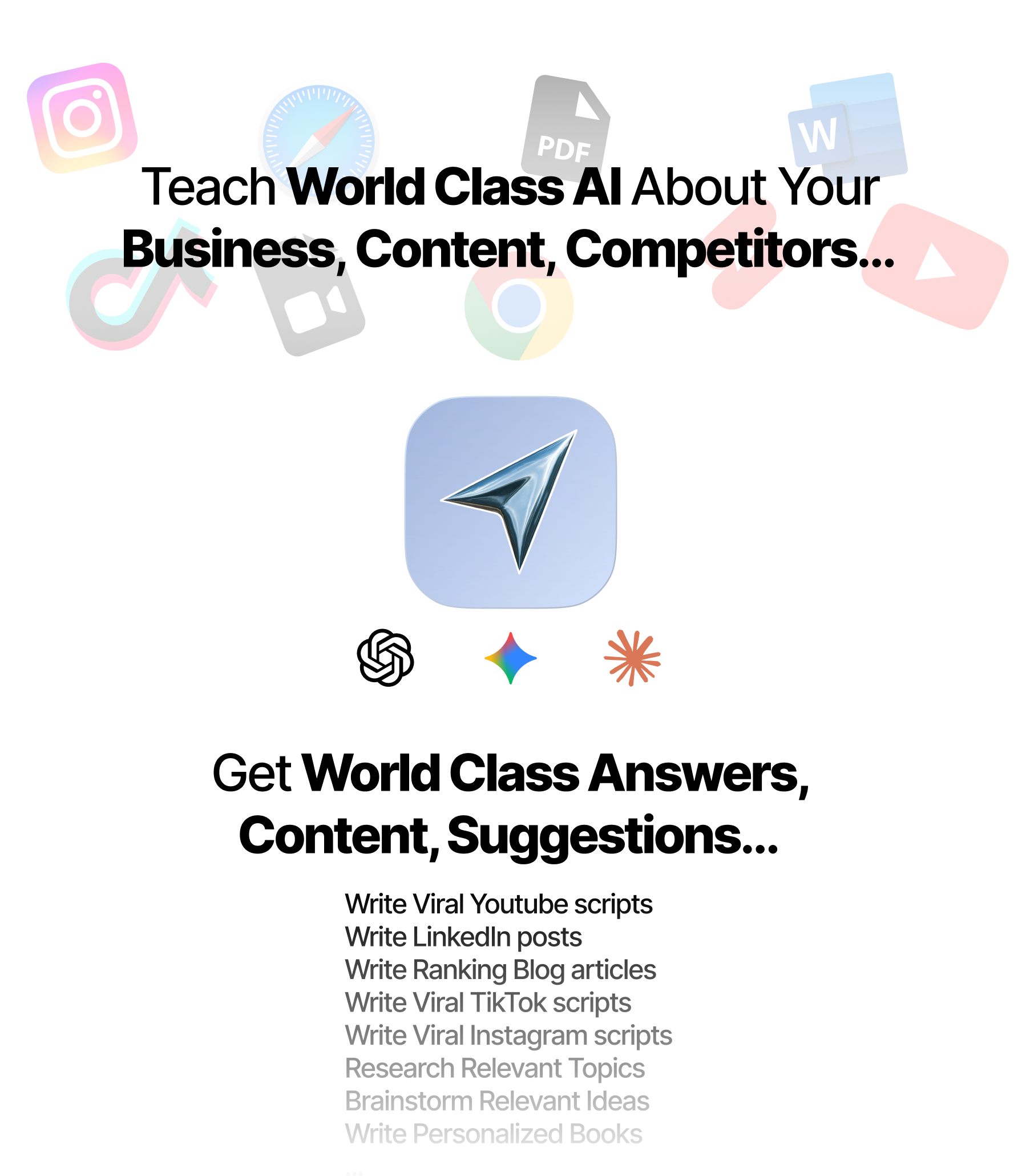
Teach World Class AI About Your Business, Content, Competitors… Get World Class Answers, Content, Suggestions...
AI Flow Chat powers our entire content strategy. We double down on what’s working, extract viral elements, and create stuff fast.
Video thumbnail

Reference Anything

Bring anything into context of AI and build content in seconds

YouTube

PDF

DOCX

TikTok

Web

Reels

Video Files

Twitter Videos

Facebook/Meta Ads

Tweets

Coming Soon

Audio Files

Coming Soon

Choose a plan to match your needs

Upgrade or cancel subscriptions anytime. All prices are in USD.

Basic

For normal daily use. Ideal for getting into AI automation and ideation.

$30/month
  • See what Basic gets you
  • 11,000 credits per month
  • Access to all AI models
  • 5 app schedules
  • Free optional onboarding call
  • 1,000 extra credits for $6
Get Started

No risk, cancel anytime.

ProRecommended

For power users with high-volume needs.

$100/month
  • See what Pro gets you
  • 33,000 credits per month
  • Access to all AI models
  • 10 app schedules
  • Remove AI Flow Chat branding from embedded apps
  • Free optional onboarding call
  • 2,000 extra credits for $6
Get Started

No risk, cancel anytime.

Frequently Asked Questions

Everything you need to know about AI Flow Chat. Still have questions? Contact us.