More Prompts:

Best prompts for VEO3 using educational apps

12 practical, copy-ready prompts for creating, adapting, and evaluating lessons and features for VEO3 educational apps (VR/AR classroom use). Each entry includes a clear title, concise explanation, a realistic example, and recommended AIs.


Claude Sonnet 4
Claude Opus 4
Gemini 2.5 Flash
Gemini 2.5 Pro
GPT-5
Picture this: You've just invested in cutting-edge VEO3 technology for your classroom, but you're staring at a blank screen wondering how to create lessons that actually engage your students. You know the potential is there, but translating your teaching vision into immersive VR/AR experiences feels like learning a completely new language. Every educator using emerging tech has been in this exact spot, caught between excitement and overwhelm.
These 12 battle-tested prompts transform that frustration into action by giving you ready-to-use templates for every aspect of VEO3 educational app development. From creating timed immersive lessons and spatial quizzes to building accessibility features and gamification layers, each prompt comes with clear examples and AI recommendations that work. Instead of spending hours figuring out how to leverage AI for educational content, you'll have specific, practical prompts that generate exactly what your VEO3 classroom needs.
1
15-minute immersive lesson plan (Water Cycle, Grade 5)
Create a 15-minute immersive VEO3 lesson for Grade 5 on the water cycle. Provide: 1) 3 learning objectives, 2) 3 sequential scenes with a 1–2 sentence description for each scene, student actions/interactions per scene (max 3), 3) audio narration text (short) for each scene, 4) required 2D/3D assets and suggested spatial placement, 5) two formative assessment questions and expected answers, 6) estimated seconds per scene and total run time. Format as a concise ordered list teachers can copy into the VEO3 lesson builder.
Generate a timed, scene-by-scene VEO3 lesson with objectives, student actions, assets, assessment, and run-time per scene.
2
Scaffolded reading passages for immersive reader
Given a topic and original text title, create three scaffolded passages (low/medium/high reading level) suitable for VEO3 immersive reading. For each level provide: 1) a 120–160 word passage, 2) 4 comprehension questions (2 multiple choice, 2 short answer), 3) 6 vocabulary words with simple audio pop-up definitions, and 4) suggested hotspot timings for VEO3 (seconds). Output in copy-ready blocks labeled Low/Medium/High.
Produce three Lexile-tiered passages and comprehension questions optimized for VEO3 hotspots and audio pop-ups.
3
Convert MCQ quiz into spatial branching quiz
Take the following 5-question multiple-choice quiz and convert each item into a spatial VEO3 interaction. For each question provide: 1) location suggestion in the scene (e.g., left wall, floating panel), 2) branching immediate feedback scripts for correct/incorrect answers (max 20 words each), 3) follow-up hint if incorrect, 4) badge/reward logic (XP and badge name). Keep output in a numbered list per question.
Transform traditional multiple-choice quizzes into interactive spatial VEO3 quizzes with branching feedback, locations for questions, and reward scripts.
4
VEO3 virtual lab sequence (Middle school chemistry)
Create a 30-minute VEO3 virtual lab for middle school: topic 'acid-base reactions.' Provide: 1) Equipment/models (3D assets) and suggested spatial layout, 2) step-by-step student tasks with timers and expected observations, 3) in-lab data collection fields (3 items), 4) safety prompts with voice lines, 5) a 5-point rubric for teacher assessment (criteria and descriptors). Format as concise labeled sections.
Design a stepwise virtual lab with equipment, safety cues, data collection slots, and assessment rubric optimized for VEO3 interaction.
5
Adapt lesson text for students with dyslexia
Convert the following classroom instructions into dyslexia-friendly text for VEO3 UI and narration. Requirements: 1) Short sentences (<=12 words), 2) high-contrast UI text suggestions, 3) audio narration (one sentence per screen), 4) two alternative assessment methods (oral and visual). Input: paste original instruction paragraph. Output: clearly labeled sections: UI text, narration, assessment alternatives.
Rewrite instructions and UI copy to be dyslexia-friendly, include audio narration scripts and alternative assessment prompts.
6
Teacher analytics dashboard spec
Draft a teacher-facing analytics dashboard specification for a VEO3 classroom app. Include: 1) Top 8 metrics (definitions and calculation), 2) three recommended visualizations (chart type and what they show), 3) two intervention thresholds with actions, 4) export formats and sample CSV column headers. Keep items concise and actionable.
Define the core metrics, visualizations, alerts, and export options for a VEO3 teacher dashboard to monitor student learning.
7
On-device first-time user tutorial script
Write an on-device first-time user tutorial for the VEO3 educational app. Include: 1) three short steps for navigation (gesture names), 2) two troubleshooting tips with voice lines, 3) short caption text for each screen (<=8 words), 4) estimated time per tutorial screen. Provide the output as a numbered script for voiceover and captions.
Produce short, clear step-by-step onboarding script and captions for new VEO3 users covering controls and troubleshooting.
AI Flow Chat

Stop Losing Your AI Work

Tired of rewriting the same prompts, juggling ChatGPT and Claude in multiple tabs, and watching your best AI conversations disappear forever?

AI Flow Chat lets you save winning prompts to a reusable library, test all models in one workspace, and convert great chats into automated workflows that scale.
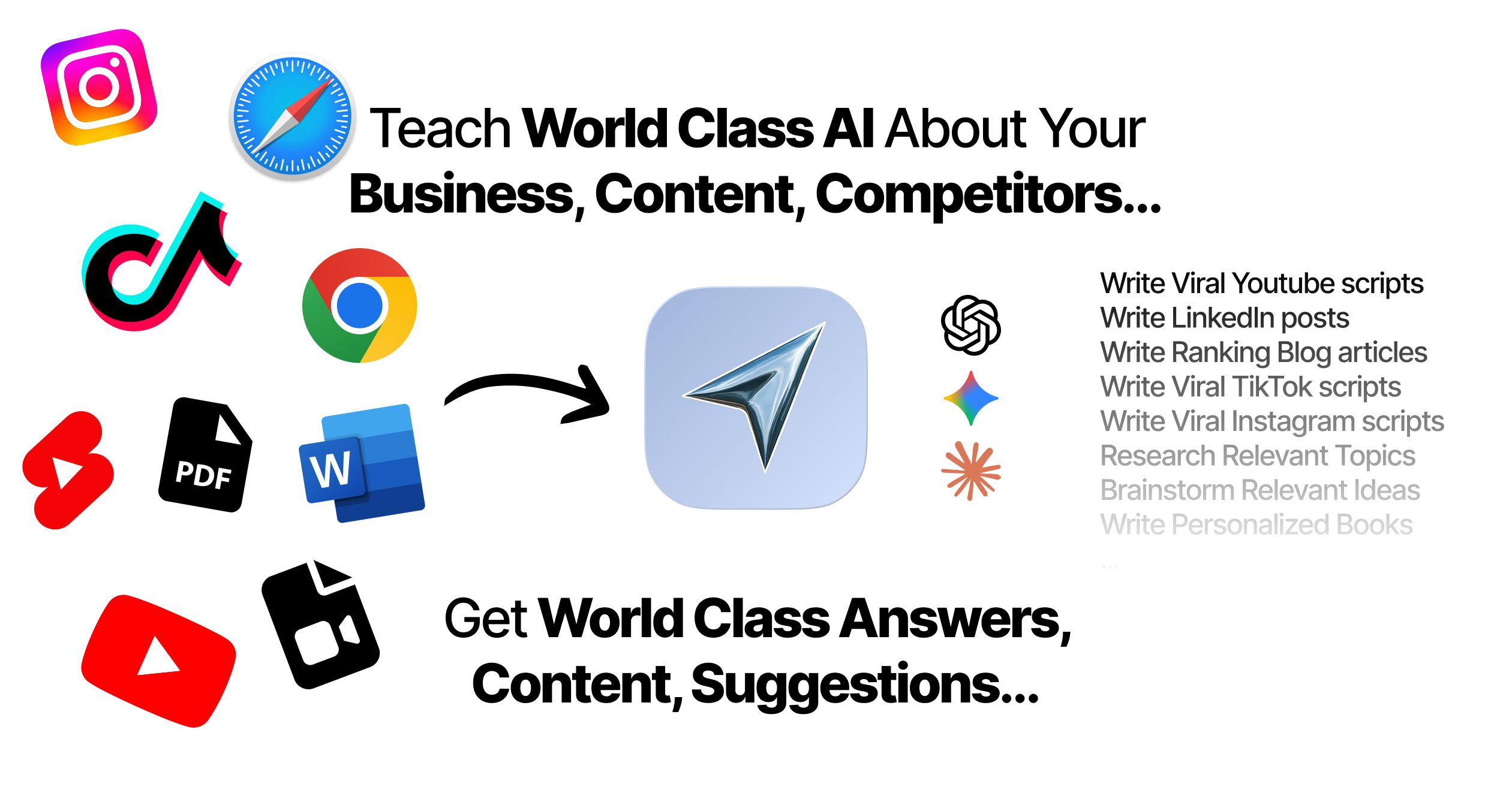

Teach World Class AI About Your Business, Content, Competitors… Get World Class Answers, Content, Suggestions...
AI Flow Chat powers our entire content strategy. We double down on what’s working, extract viral elements, and create stuff fast.
Video thumbnail

Reference Anything

Bring anything into context of AI and build content in seconds

YouTube

PDF

DOCX

TikTok

Web

Reels

Video Files

Twitter Videos

Facebook/Meta Ads

Tweets

Coming Soon

Audio Files

Coming Soon

Choose a plan to match your needs

Upgrade or cancel subscriptions anytime. All prices are in USD.

Basic

For normal daily use. Ideal for getting into AI automation and ideation.

$30/month
  • See what Basic gets you
  • 11,000 credits per month
  • Access to all AI models
  • 5 app schedules
  • Free optional onboarding call
  • 1,000 extra credits for $6
Get Started

No risk, cancel anytime.

ProRecommended

For power users with high-volume needs.

$100/month
  • See what Pro gets you
  • 33,000 credits per month
  • Access to all AI models
  • 10 app schedules
  • Remove AI Flow Chat branding from embedded apps
  • Free optional onboarding call
  • 2,000 extra credits for $6
Get Started

No risk, cancel anytime.

Frequently Asked Questions

Everything you need to know about AI Flow Chat. Still have questions? Contact us.