More Prompts:

Best prompts for VEO3 for transitions using narrative storytelling elements

13 copy-ready VEO3 prompts to generate cinematic transitions that use narrative and storytelling devices (character beats, props, emotion, sound, color motif, pacing). Each entry includes a concise explanation, a realistic example, and recommended AI engines for best results.

Claude Opus 4
Claude Sonnet 4
Gemini 2.5 Flash
Gemini 2.5 Pro
GPT-5
You know that feeling when you're trying to create smooth transitions in your video content, but every attempt feels clunky and disconnected? Most creators struggle with making AI-generated scenes flow together naturally, ending up with jarring cuts that break the viewer's immersion. The secret isn't just technical know-how but understanding how to weave narrative storytelling into your transition prompts.
These 13 VEO3 prompts transform your transitions from basic cuts into cinematic storytelling devices that keep viewers glued to your content. Each prompt combines proven narrative techniques like character beats, emotional pacing, and visual metaphors with specific AI instructions that actually work. Instead of spending hours tweaking awkward transitions, you'll have a toolkit of copy-ready prompts that create seamless, story-driven bridges between scenes that feel intentional and professional.
1
Character-Glance Match Cut
Create a 1.0–1.5s match-cut transition driven by a character's glance: start with a close-up of Character A looking off-frame (right), cut on motion to a close-up of Character B in Scene B looking left. Add 80ms motion blur, maintain 24fps, match skin-tone midtones and exposure, and layer a 300ms soft whoosh plus a 200ms ambient swell beginning 50ms before the cut. Preserve diegetic sound from Scene A for 150ms overlapping into Scene B.
Use a character's gaze to match-cut between two scenes so the viewer follows intent rather than spatial continuity.
2
Prop-Triggered Whip Pan
Design a 0.6–0.9s whip-pan transition anchored to a prop: end Scene A with a rapid pan following Prop X (e.g., a spinning coin) and start Scene B with the same prop in motion, matching pan velocity and axis. Add directional motion blur (high along pan vector), 120ms whoosh, and a subtle shutter wrap. Preserve continuity of prop color and texture.
Use a whip pan anchored to a prop to create a fast, narrative-driven visual bridge.
3
Emotion-Driven Slow-Mo Morph
Create a 1.8–3.0s transition that slows Scene A to 40–60% speed on an emotional moment (tears, gasp, smile), then morph-blend into Scene B over 600–800ms. Match facial framing and eye-line, apply subtle grain and a 400ms low-frequency swell timed to the morph. Keep ambient room tone under the morph for continuity.
Extend a moment into slow motion and morph into the next scene at the peak emotional beat.
4
Color-Motif Gradient Crossfade
Produce a 1.2–2.0s crossfade that shifts Scene A's dominant color (e.g., desaturated blue) into Scene B's dominant color (e.g., warm gold) via a gradient blend. Keep luminance consistent, add a 300ms bell-tone chime synced to the midpoint of the blend, and preserve ambient audio with a 250ms L-cut from Scene A into Scene B.
Link scenes by gradually shifting dominant color tones to create a visual metaphor-driven crossfade.
5
Audio-Motivated Rhythm Cut
Create a series of 3 quick rhythm cuts (each 150–250ms) that land on percussive beats in the soundtrack. Use the beats to accelerate from Scene A to Scene B, ending with a 200ms hit that lands on the reveal. Keep consistent tempo and add a brief reverb tail (180ms) into Scene B.
Make the transition rhythmic: cut on musical or environmental beats tied to the story's pacing.
6
Parallel-Action Crosscut
Build a 2.0–3.0s crosscut transition showing interleaved shots from Action A and Action B (2–3 shots each), increasing shot frequency toward the midpoint, then stabilize on Scene B. Match camera height and motion rhythm, add a shared ambient underscore that rises 6dB at midpoint, and resolve to Scene B's diegetic sound.
Transition by crosscutting between two simultaneous actions to emphasize narrative connection or contrast.
7
Map-to-Scene Zoom-Through
Generate a 1.5–2.5s zoom-through transition: start on a map graphic (pin or highlighted city), digitally zoom and morph into a live-action scene at that location. Smooth scale interpolation, add 500ms wind whoosh and a low rumble that fades as the scene resolves. Match horizon tilt and color temperature between map rendering and footage.
Use a zoom through a map or graphic as a narrative device to travel from macro to micro geography.
AI Flow Chat

Stop Losing Your AI Work

Tired of rewriting the same prompts, juggling ChatGPT and Claude in multiple tabs, and watching your best AI conversations disappear forever?

AI Flow Chat lets you save winning prompts to a reusable library, test all models in one workspace, and convert great chats into automated workflows that scale.
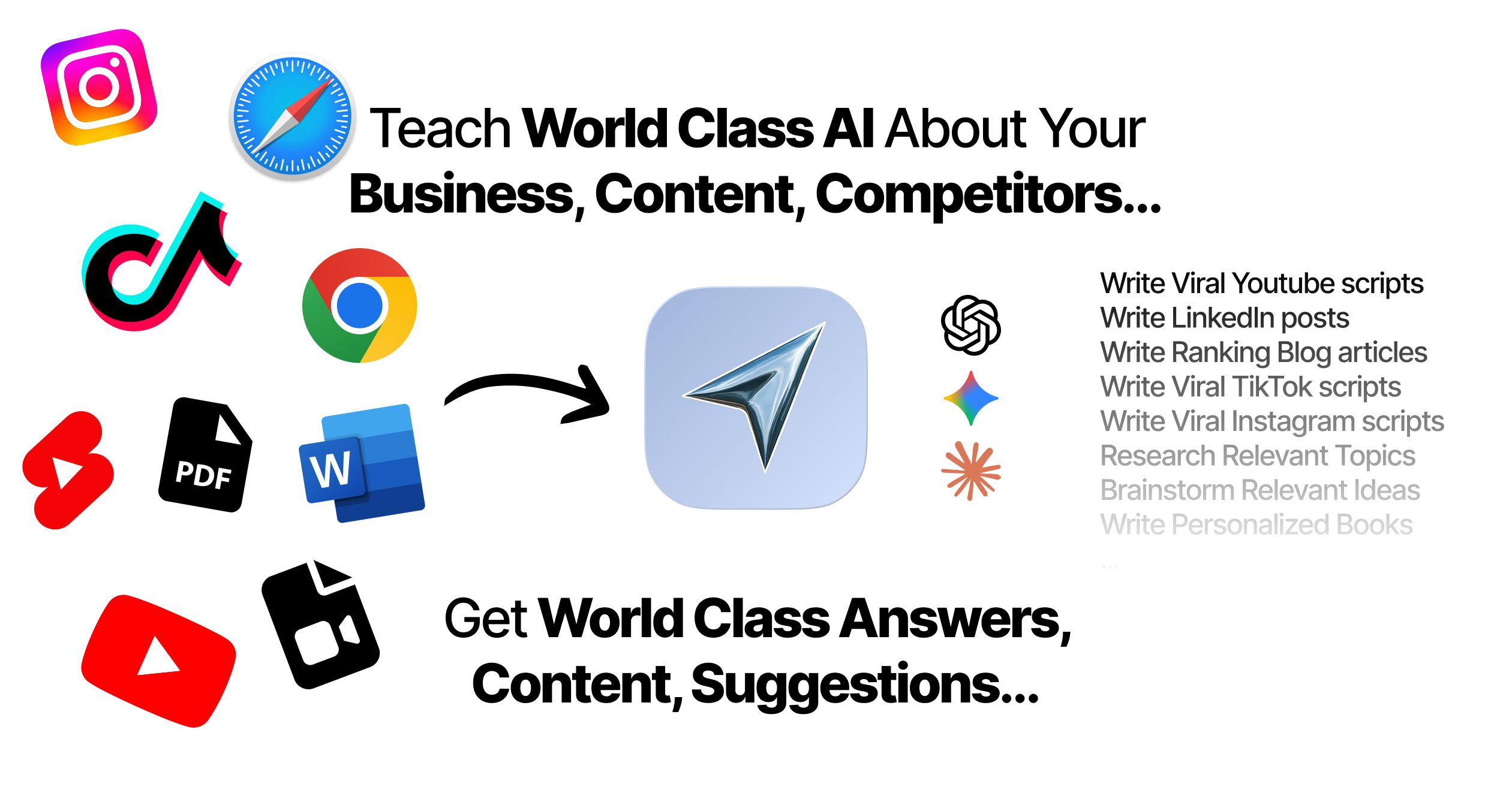
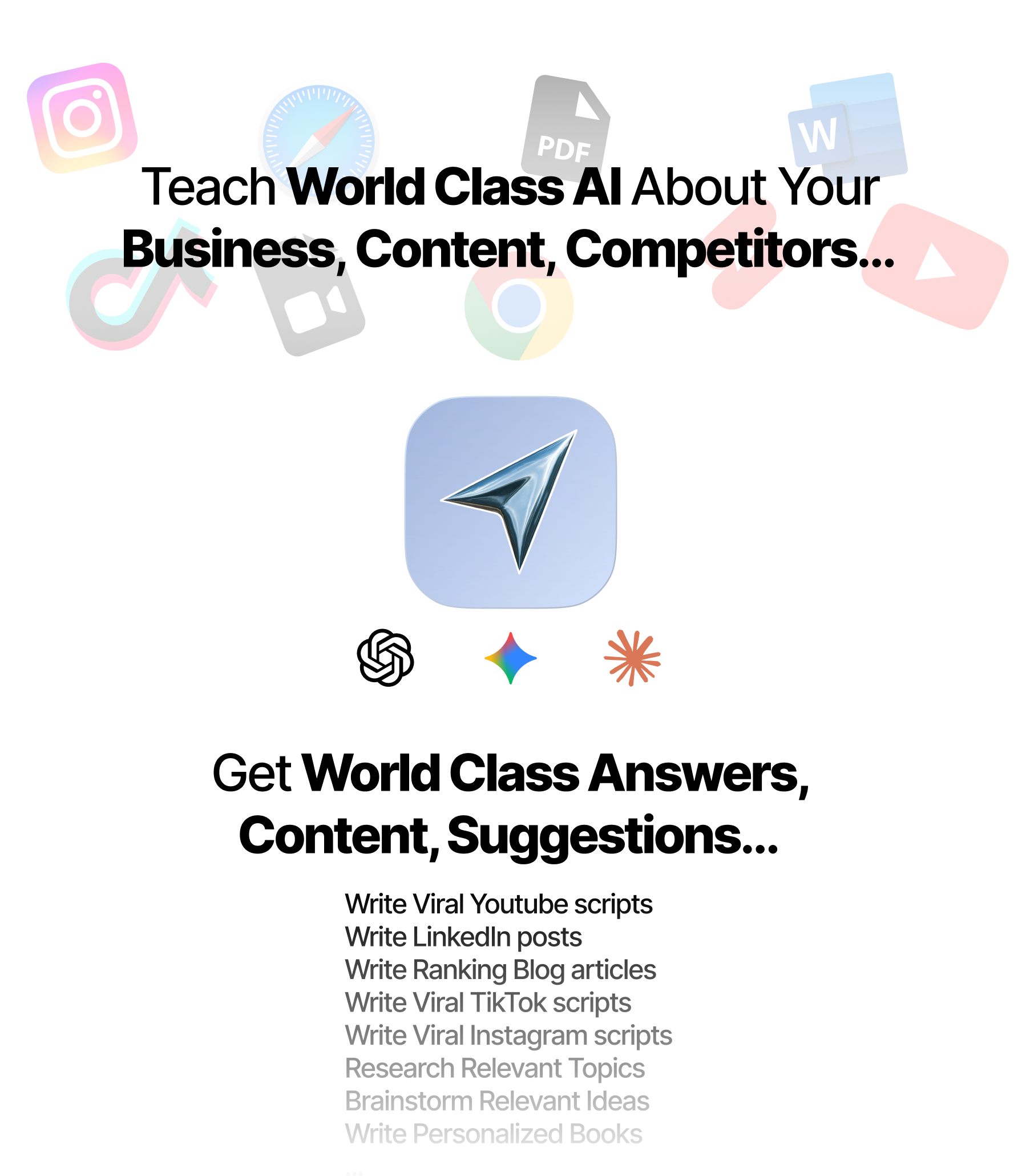
Teach World Class AI About Your Business, Content, Competitors… Get World Class Answers, Content, Suggestions...
AI Flow Chat powers our entire content strategy. We double down on what’s working, extract viral elements, and create stuff fast.
Video thumbnail

Reference Anything

Bring anything into context of AI and build content in seconds

YouTube

PDF

DOCX

TikTok

Web

Reels

Video Files

Twitter Videos

Facebook/Meta Ads

Tweets

Coming Soon

Audio Files

Coming Soon

Choose a plan to match your needs

Upgrade or cancel subscriptions anytime. All prices are in USD.

Basic

For normal daily use. Ideal for getting into AI automation and ideation.

$30/month
  • See what Basic gets you
  • 11,000 credits per month
  • Access to all AI models
  • 5 app schedules
  • Free optional onboarding call
  • 1,000 extra credits for $6
Get Started

No risk, cancel anytime.

ProRecommended

For power users with high-volume needs.

$100/month
  • See what Pro gets you
  • 33,000 credits per month
  • Access to all AI models
  • 10 app schedules
  • Remove AI Flow Chat branding from embedded apps
  • Free optional onboarding call
  • 2,000 extra credits for $6
Get Started

No risk, cancel anytime.

Frequently Asked Questions

Everything you need to know about AI Flow Chat. Still have questions? Contact us.