More Prompts:

Best prompts for ChatGPT Image using color psychology

13 copy-ready image prompts that apply color psychology to practical design tasks, including hero banners, branding, packaging, UI, social posts, infographics, product photography, and A/B tests. Each entry includes a concise explanation, a ready-to-run prompt, a realistic example, and recommended AIs.

GPT-5
Claude Opus 4
Claude Sonnet 4
Gemini 2.5 Pro
Gemini 2.5 Flash
You know that feeling when you ask ChatGPT for a "professional blue" design and get something that looks like a toddler's crayon box exploded? You're not alone in the struggle of getting AI to understand that color isn't just decoration but actual psychology that drives real human behavior. Most designers waste hours wrestling with vague prompts that produce pretty pictures with zero strategic thinking behind the palette choices.
This collection of 13 battle-tested prompts transforms you from someone who gets random colors to a strategist who weaponizes color psychology for real business results. You'll get copy-ready prompts for everything from conversion-optimized CTA buttons to culturally-aware packaging designs, complete with accessibility guidelines and A/B testing frameworks. Instead of playing color roulette with generic requests, you'll have precise prompts that generate hero banners, branding systems, and UI designs that actually move people to feel and act exactly how you want them to.
1
Mood-driven hero banner (calm vs energetic)
Create two high-resolution hero banners (3840x1600, PNG) for a wellness app landing page presented side-by-side: LEFT banner = calm/trust palette (soft teal #2AB2A1, muted blue #6FB3D2, warm gray #F3F6F7), low saturation, lots of negative space, soft rounded typography, single serene subject, 4:1 text-to-background contrast for accessibility; RIGHT banner = energetic palette (vibrant coral #FF6B4A, sunny yellow #FFC947, deep charcoal #111417), higher saturation and micro-contrast, dynamic diagonal composition, bold sans-serif CTA. Add subtle grain texture to calm and slight halftone to energy. Include exact hex codes in metadata and provide recommended WCAG contrast ratios for main text.
Create two hero banners side-by-side using color psychology to convey calm (trust, relaxation) and energy (excitement, urgency). Specify palettes, contrast, and accessibility.
2
Brand palette exploration with emotional labels
Produce 6 brand color palettes for a new sustainable food brand. For each palette: 1) three primary hex colors, 2) one neutral supporting hex, 3) a one-sentence emotional rationale referencing color psychology (e.g., 'evokes trust and freshness'), 4) three UI swatches (logo, CTA, background) mockups at 1200x600, and 5) recommended font weight and contrast target. Ensure one palette is color-blind safe and provide alternate patterns for accessibility.
Generate multiple palette options tied to specific emotions with sample UI swatches and short rationales referencing color psychology.
3
CTA button color and state set
Design a set of four CTA button styles for an e-commerce checkout (Primary, Secondary, Ghost, Danger). For each: provide hex for normal/hover/active/disabled/focus ring, a 72dpi 600x200 PNG mockup, suggested shadow/elevation, microcopy example, and a short note explaining the color psychology behind the choice and expected CTA effect. Ensure WCAG AA contrast for all enabled states and provide color-blind safe variants.
Design a set of CTA buttons (normal, hover, disabled, focus) with colors chosen to maximize conversions while keeping accessibility and brand consistency.
4
Packaging design with cultural color considerations
Design three packaging concepts (front-and-side 2000x2000 PNG mockups) for a specialty tea sold in Japan, India, and the U.S. For each market: choose primary/secondary/accent hex codes, explain cultural color meanings and why chosen, provide matte or glossy finish recommendation, recommend copy color and imagery, and ensure legibility at 16px. Add an optional monochrome pattern for printing cost savings.
Create packaging colorways that respect target-market cultural color meanings and accessibility, plus mockups for shelf display.
5
Product photography color grading for emotion
Given a white background product photo of wireless earbuds (single RAW file), produce two graded 3000x3000 PNG variants: TRUST grade = cool desaturated teal tint (#1E8BAF at 10% overlay), lift shadows toward #E6F2F7, reduce saturation -10%, increase midtone contrast +8; ASPIRATIONAL grade = warm golden tint (#FFB84D at 8% overlay), add highlight bloom, +12 saturation, subtle vignette. Provide captions explaining why each grade influences perception.
Apply color grades to product photos to create two emotional tones (trusted vs aspirational). Specify LUT-like adjustments and hex overlay tints.
6
Interior design vignette using analogous palette
Create a photorealistic 4000x3000 interior render of an urban living room using an analogous cool palette (teal #2E8B8A, seafoam #7CC9BD, powder blue #CFEFF1) with natural oak accents. Include diffuse daylight from left window, soft area rug, fabric textures with specified roughness levels, and a single accent artwork in contrasting warm coral (#FF6B61) to create gentle focal tension. Include hex callouts for each major surface and accessibility notes for switch/controls contrast.
Generate a living room render that uses an analogous color scheme to promote relaxation. Specify materials, lighting, and focal points.
7
Social media carousel using progressive color shifts
Create a 5-card Instagram carousel (1080x1080 PNGs) for a mental health nonprofit. Slide 1: calming indigo #374785; Slide 2: soft blue #5B84B1; Slide 3: teal #2AA7A3; Slide 4: warm mint #8EDFC8; Slide 5: uplifting yellow accent #FFD166 used only for CTA. Ensure typography hierarchy, maintain >4.5:1 contrast where text overlays, and include consistent iconography. Deliver all five images and a one-sentence designer note on how color shift influences user emotion.
Design a 5-card Instagram carousel that uses a progressive color shift to guide emotional narrative (calm → hopeful → action). Provide hexs for each slide.
AI Flow Chat

Stop Losing Your AI Work

Tired of rewriting the same prompts, juggling ChatGPT and Claude in multiple tabs, and watching your best AI conversations disappear forever?

AI Flow Chat lets you save winning prompts to a reusable library, test all models in one workspace, and convert great chats into automated workflows that scale.
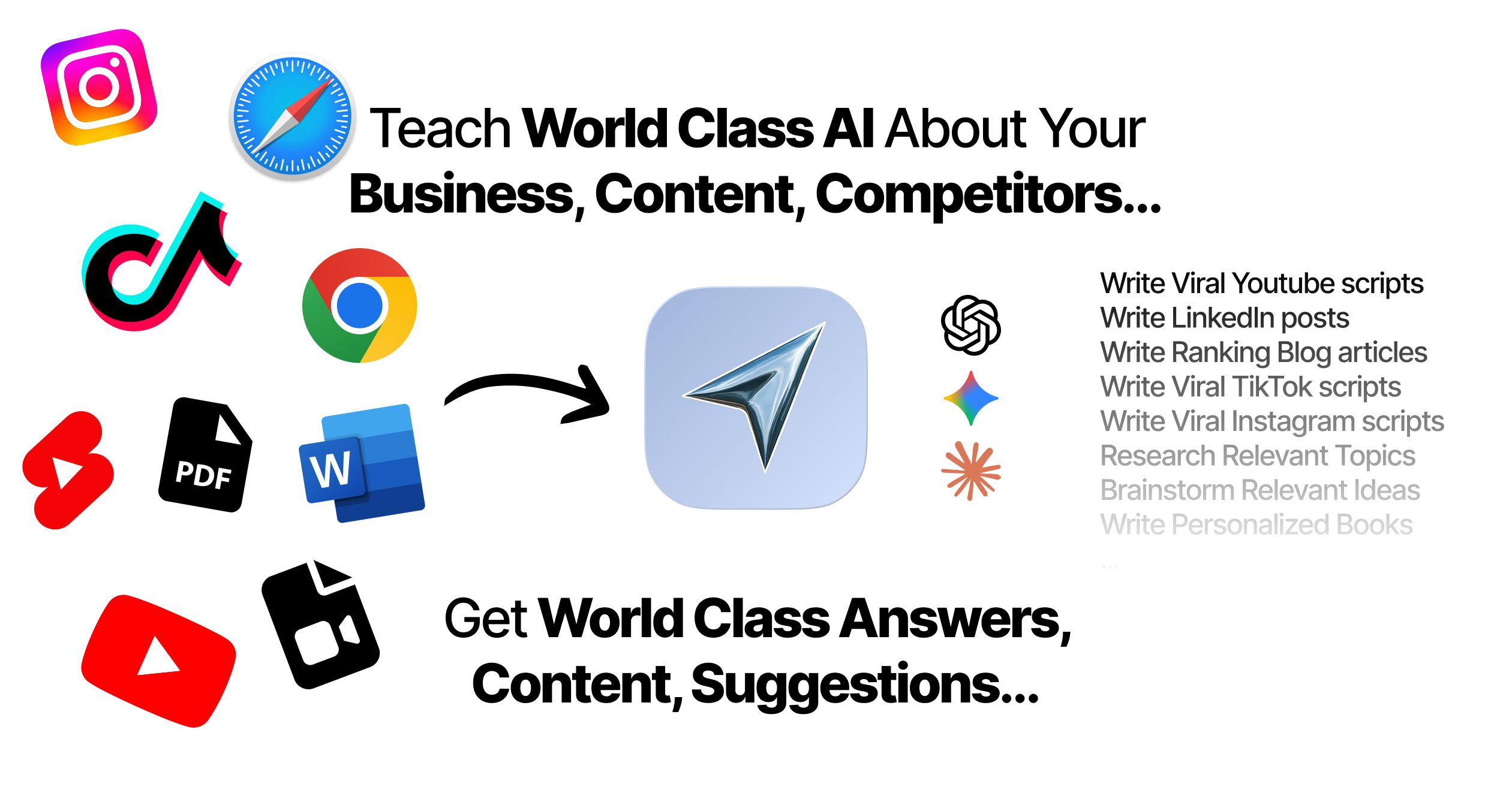
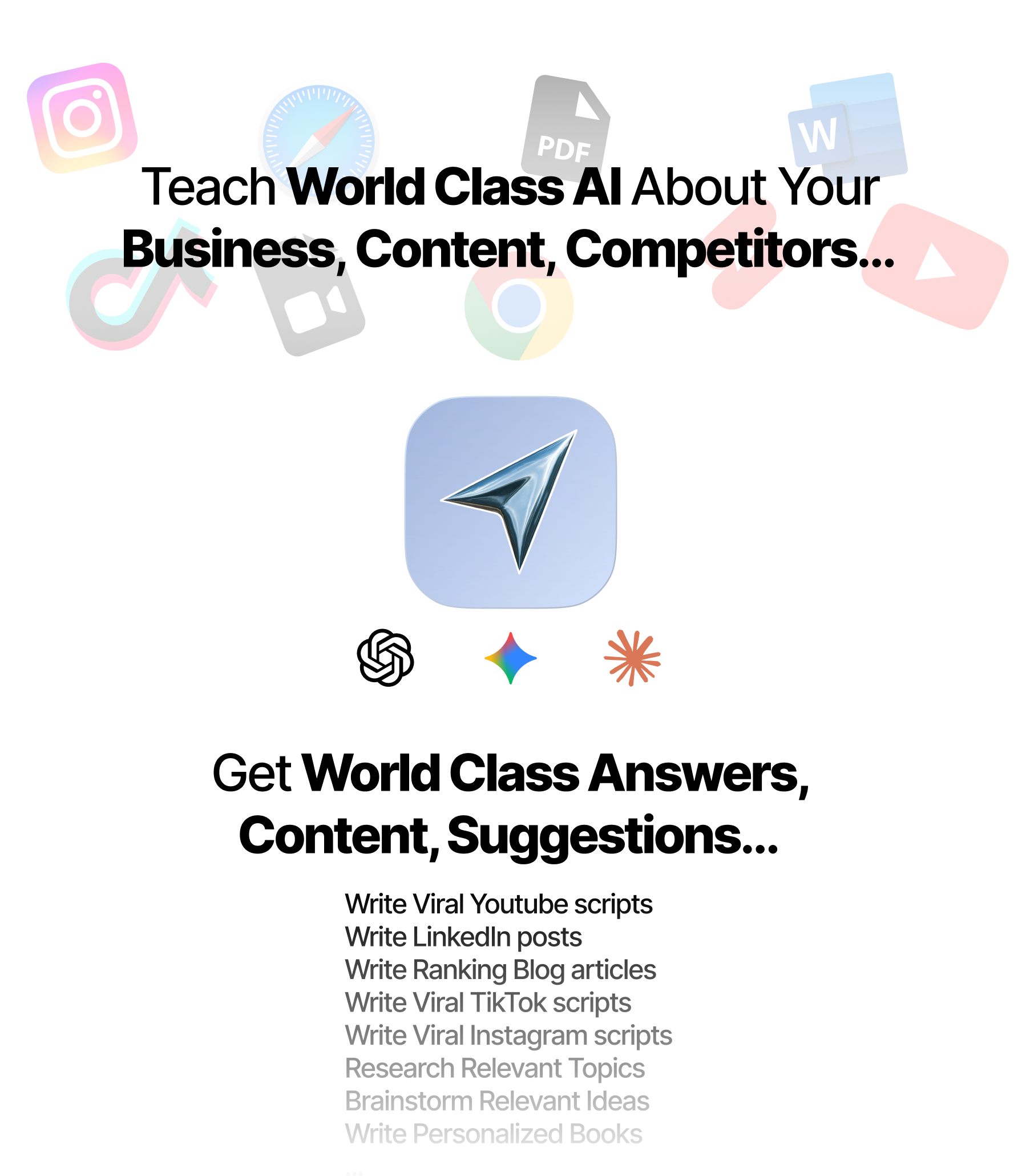
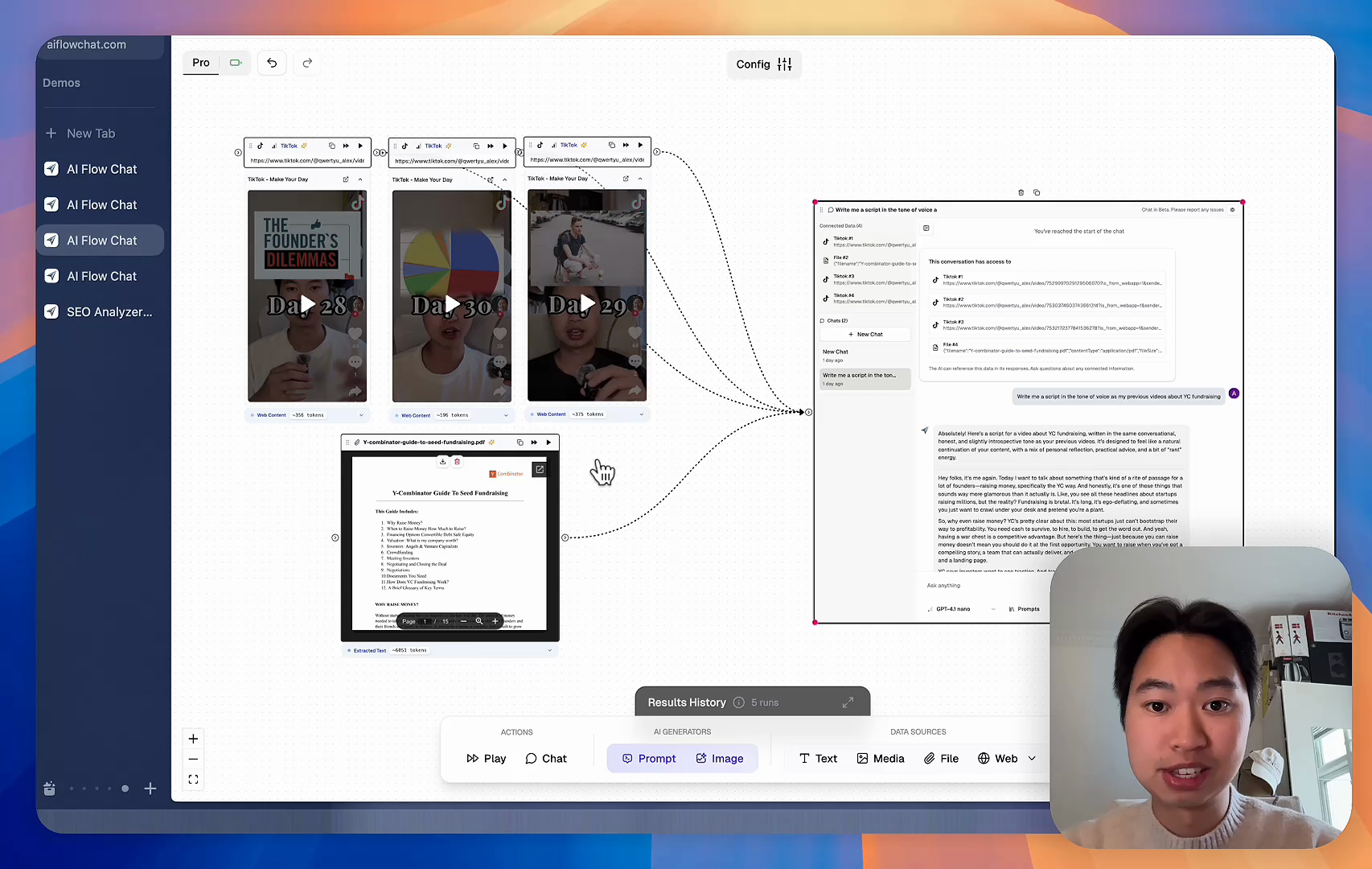
Teach World Class AI About Your Business, Content, Competitors… Get World Class Answers, Content, Suggestions...
AI Flow Chat powers our entire content strategy. We double down on what’s working, extract viral elements, and create stuff fast.
Video thumbnail

Reference Anything

Bring anything into context of AI and build content in seconds

YouTube

PDF

DOCX

TikTok

Web

Reels

Video Files

Twitter Videos

Facebook/Meta Ads

Tweets

Coming Soon

Audio Files

Coming Soon

Choose a plan to match your needs

Upgrade or cancel subscriptions anytime. All prices are in USD.

Basic

For normal daily use. Ideal for getting into AI automation and ideation.

$30/month
  • See what Basic gets you
  • 11,000 credits per month
  • Access to all AI models
  • 5 app schedules
  • Free optional onboarding call
  • 1,000 extra credits for $6
Get Started

No risk, cancel anytime.

ProRecommended

For power users with high-volume needs.

$100/month
  • See what Pro gets you
  • 33,000 credits per month
  • Access to all AI models
  • 10 app schedules
  • Remove AI Flow Chat branding from embedded apps
  • Free optional onboarding call
  • 2,000 extra credits for $6
Get Started

No risk, cancel anytime.

Frequently Asked Questions

Everything you need to know about AI Flow Chat. Still have questions? Contact us.